





When you open my mothers old trunk, Hand Embroidery Kurti Design I’m sure you’ll notice that she refuses to throw away this kurti. Whilst the fabric is definitely not as good as it used to be (it’s gotten quite thin) and it’s not even the right size anymore, you can clearly see the hand stitching here. Tiny pink/white flowers are embroidered around the neckline by her own mother when she was young.
She takes this out every few years to admire the gorgeous design. Great hand embroidery designs like this make you treasure them, whereas machine embroidery gets forgotten about next season.
I’m not the best at embroidery but I’ve got the hang of it! I can definitely do a simple neckline which won’t ruin the design. Whilst it’s not the same as my grandmothers embroidery (it looks as though the thread has grown on the fabric), it still looks nice and you can tell it’s been tried. If you’re wondering why hand embroidered kurtis always seem to come back into fashion every few years or if you’d like to pick or create one yourself, please read on. Here is all we’ve learnt!
Why Hand Embroidery Feels Different
When you put a machine embroidered kurti next to a hand embroidered one, even if you know nothing about sewing, you’ll be able to spot the difference. Machine embroidery is perfect. All the stitches are the same length and the flowers are all identical to each other. Whereas hand embroidery has character. The petals are slightly bent, the French knots are proud and there’s a personal touch given to the item.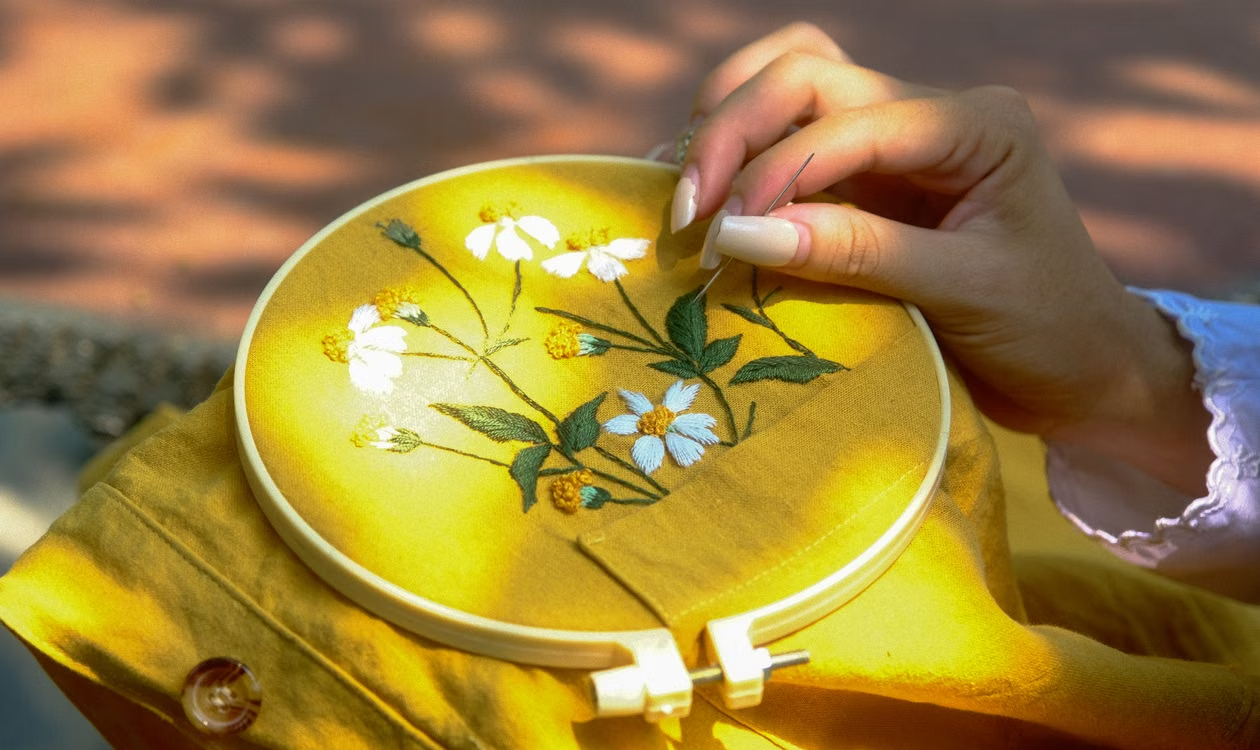
The small imperfections
As my grandma would always say ‘handmade should look handmade. If you want something perfect buy plastic’. The slight irregularities in hand embroidery make it stand out. When you buy a handmade embroidered kurti from a local karigar, you know that someone has spent hours with your dress because of the small imperfections.
Hand embroidered kurti design with floral embroidery on yellow fabric in a hoop.
Looks more aged.
Machine embroidery thread is often glossy and sits on top of the fabric. When it starts to go wrong it will go wrong in patches and lose its freshness quickly. Hand embroidery with good-quality thread will settle into the fabric after a while. As seen in my mums trunk, the fabric is dying after 40 years but the flowers still look great. Use cotton thread for a soft finish and the design can often outlive the kurti. My grandmas would cut out this design and frame it or attach it to a new garment. We never waste anything!
Where To Put Embroidery On Your Kurti
Placement really makes a difference. Some floral embroidery designs can look elegant or busy. Here are some spots that will never go wrong. I’ve watched my mum turn down 100 designs from her tailor before she found one she liked.
Neckline The classic!
The neckline is the most popular spot to put hand embroidery as it frames your face. You can have delicate flowers going up one side of the round neckline, a delicate vine along your V neckline or a fully embroidered gala patti for a more formal look. Keep your party kurtis rich looking and everyday ones light. Just be careful, if the embroidery on the neckline is very busy it can pull the neckline out of shape over time. If the design is busy, ensure the fabric has some body.
Sleeve & Cuff
An embroidered cuff is a subtle luxury. No-one will notice until you wave your hand for a cup of tea! Adding a small motif to the end of your sleeve or simply a thin line of stitches along the cuff will add some personality to an otherwise plain kurti. This is also the kindest place to start as it’s small, flat and forgiving.
Front Panel & Hem
Adding one bunch of embroidery to one side of your chest or a border along your hem will give a modern clean look. Adding embroidery to the hem of your kurti looks super pretty on long kurtis as it moves as you walk. However, if you wear your kurti often avoid putting embroidery on the very bottom of the hem as it will rub against everything and the thread will be the first to go.
Hand embroidered kurti design on light blue outfit with colourful floral embroidery.
Simple Stitches For A Luxurious Look
Often girls will message me thinking that hand embroidery is some secret complicated art. However, most of the most beautiful kurti designs can be achieved with just a few simple stitches. Running stitch can be used for outlines and stems. Chain stitch for vines and borders. Satin stitch for filling in your petals and leaves. French knots for centres of flowers and small dots that look like beads.
Learning these 4 stitches will allow you to copy almost any simple design you see. My first embroidery project was adding a chain stitch vine to the neckline of an old kurti. It took me 3 evenings, resulted in a finger injury and a lot of unpicking but I was so proud of my wonky design and wore it for 2 years!
Hand embroidered kurti design starting with hoop on white fabric.
Start With A Border
If you’re new to embroidery start with a simple border on your cuffs or hems. This will teach you how to space your stitches evenly without the pressure of creating realistic flowers. Flower bouquets aren’t forgiving. Borders are very forgiving and look neat even if they’re simple. My grandma would always start all her granddaughters off with borders. She’s a wise lady!
Never Go Wrong With…
Floral embroidery will never go wrong. Use roses for a romantic feel, small scattered butis for everyday wear or long trailing vines for an elegant look. Paisley, the little mango shape our grandmas call kairi, is another classic. Adding a line of small paisleys to your border will give a luxurious feel in almost any colour.
Birds & Peacocks. Adding a peacock to your front panel will transform an otherwise plain kurti into a functional one. Geometric borders are perfect for girls who don’t like flowers. Using straight lines, small diamonds and cross stitch squares in bright thread will give a fresh modern look to an otherwise plain kurti. This is the easiest motif to start with as the pattern is consistent.
Honestly, just pick a motif that fits your lifestyle. A busy peacock is amazing to wear twice a year but small flowers are amazing to wear every week. Most of us need the latter!
Pick The Right Thread Colour
The colour of your thread will determine if your embroidery will look subtle or bold. There are 2 safe options. Contrast. White thread on a rust coloured kurti. Maroon and gold on a cream kurti. Yellow flowers on a green kurti (this is our favourite mehndi combo!).
Tone on tone. This is when you use thread that’s almost the same colour as your fabric. It will give an expensive subtle look. If you use slightly darker beige thread on a beige kurti you’ll receive compliments from people who can’t even tell you why they like it. They’ll just know it looks beautiful!
Avoid using random colours. 5 bright colours that don’t match will make your small neckline look like a sweet wrapper. Pick 2 or 3 thread colours that go well together and let one colour take the lead.
Use A Fabric That Can Handle Embroidery
Cotton is the friendliest fabric to use. It will keep your stitches clean, is easy for beginners and is perfect for our weather. Khaddar is our winter hero. It’s thick enough for busy designs and warm enough for December evenings.
Lawn can be a bit tricky. It’s a soft thin fabric so busy embroidery will cause it to puff up. Keep your design simple and light. A good tailor will use backing. Chiffon and georgette are for the brave and very skilled. If a shop is offering you busy hand embroidery on a thin chiffon at a suspiciously low price, take a good look at the back of the embroidery. The back never lies!
Do It Yourself Or Get It Done
Both are great options.
Doing it yourself will take longer, cost less and is super rewarding. However, be realistic with how long it will take you. A busy neckline can take a long time for a beginner. If your wedding is on a Saturday don’t start on a Saturday!
Getting it done by a karigar or good tailor will cost more but supports real skill. I absolutely love doing this! When ordering make sure you send a picture of the design you want. Make sure you know exactly where it will go and what colour thread they’ll be using.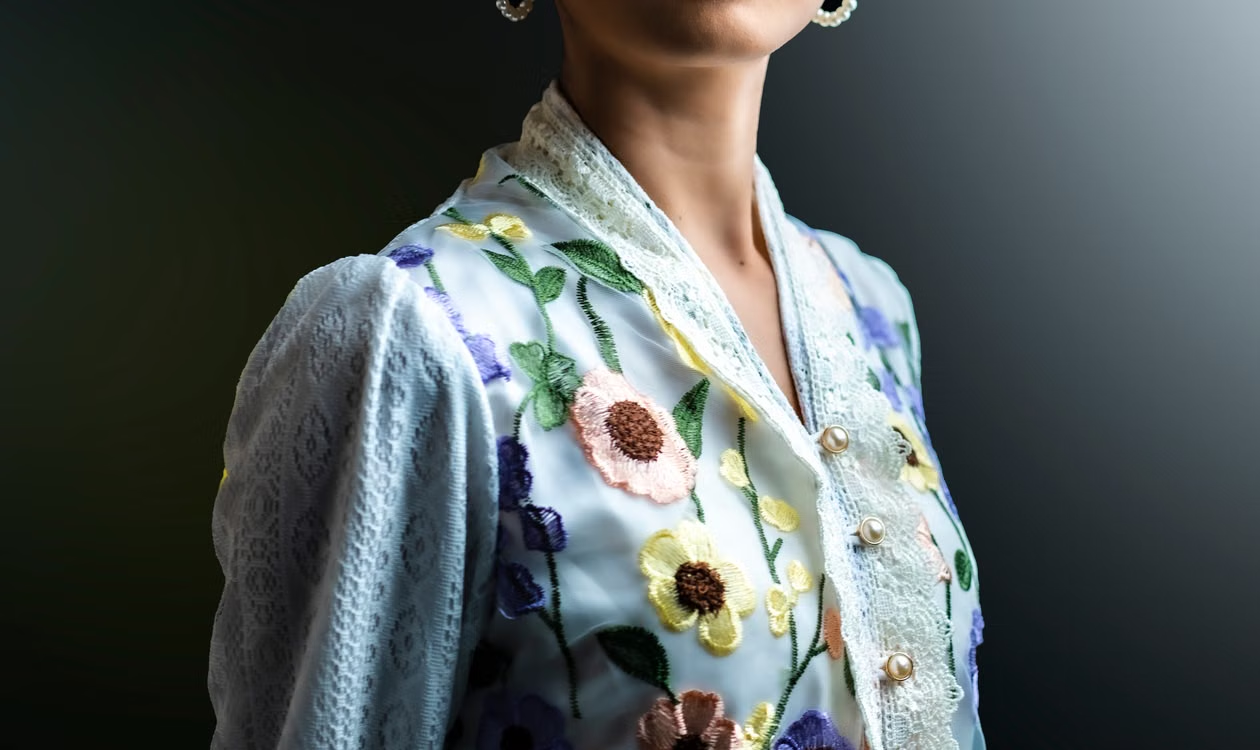 Cotton thread will cost a bit more but will last much longer. Make sure you know how it will be finished. Any loose ends on the back should be tidied up so your beautiful kurti doesn’t start to come undone in the wash like a sad sweater.
How To Style Your Hand Embroidered Kurti
A hand embroidered kurti doesn’t need much styling. For uni or the office keep it plain with simple studs. Don’t overdo the accessories as it will clash with the hand embroidery.
For a small family event add your matching dupatta, a pair of jhumkay and a bit of confidence! A cream kurti with maroon hand embroidery and a maroon dupatta has got me through more dawats than any busy dress I own. For a small home mehndi, a brightly embroidered kurti with a contrasting dupatta will look happy with the more dressed up outfits. Our simple mehndi dress ideas for girls go well with this light look.
White and pastel embroidered kurtis are my go-to for summer. Pair with white trousers. In the winter, khaddar kurtis with dark coloured embroidery and a shawl feel like a big hug!
How To Care For Your Embroidered Kurtis
Hand embroidery can easily go wrong when washed carelessly. Always turn your kurti inside out. Wash your favourites in cold water with a gentle hand wash. Avoid using a machine as it will twist and cause the threads to snap and knots to loosen.
Dry in the shade. The thread will fade quicker than the fabric in bright sunlight. Iron on the reverse or cover with a thin cloth. Store your special ones folded with the embroidery on the inside so no buttons or hooks from other garments will tangle with the threads. My mum wraps hers in old dupattas. It looks over the top but works!
If any threads do start to come undone don’t pull them. This will cause damage. Try and push them to the back with a needle. If this doesn’t work take it to any tailor. They’ll sort it in 2 minutes! If the fabric on your favourite kurti starts to give in before the embroidery, you’ll know it’s in the family tradition! Carefully cut out the embroidery. Frame it or ask a tailor to sew it onto a cushion or new kurti. In our house we never waste good hand embroidery. It’s just waiting for its next life!
Common Mistakes
Too much embroidery. Don’t have too much going on. It’ll make your eyes tired and make your kurti look cheaper than a plain one. Pick one area to be your hero.
Cheap thread that runs. Cheap thread can leave a mark on light fabric when washed for the first time. If you’re doing it yourself try a small sample of embroidery. If you’re buying ask about the thread. Wash your kurti separately for the first time.
Copying a design meant for a busy fabric onto a light fabric. The design isn’t the issue, it’s the pairing. Match them and almost any simple motif will look beautiful.
Easy Designs To Copy
If you’re getting overwhelmed with choices, copy one of these 3. These are what we always copy in our house.
Everyday Kurti Take a plain cotton kurti in a soft colour. Add a thin chain stitch vine going up one side of the neckline. Add some tiny french knot flowers in one contrasting colour. This will take 1 sitting for a skilled hand or a few evenings for a beginner. It will transform your market kurti into everyone’s favourite! My university kurti was exactly this. White with a maroon vine. 3 different strangers asked me where I got it from! It was from my own sofa with my grandma supervising and kindly critiquing!
Office & Formal
Go for a tone on tone design. A deep bottle green kurti with slightly lighter green embroidery on the cuffs and a small motif near the shoulder will give a subtle expensive look. Nothing will glint or stand out but it will never look plain in photos. This is also the safest design to give as it won’t offend anyone’s taste.
Functions & Family Dawats
Borders are your friend here! A plain kurti with a border on the hem and matching embroidery on the cuffs will look happy with much busier outfits. Add your contrasting dupatta and no-one will guess it was the simplest thing in your cupboard! I’ve worn this trick to 2 family functions this year. I change the dupatta but keep the kurti the same and receive fresh compliments!
FAQs
Is Hand Embroidery Better Than Machine Embroidery?
Most people find that hand embroidery gives a warmer, more special feel. The small natural variations can’t be replicated with machine embroidery. Machine embroidery is faster, cheaper and perfectly fine for everyday kurtis. Hand embroidery is the way to go if the kurti means something to you.
Where Should I Put The Embroidery?
The neckline is the most loved spot to put hand embroidery. It frames your face. Cuffs and end of sleeves look elegant and are easy. A border on the hem looks lovely on long kurtis. Pick 1 main area.
Can I Do Hand Embroidery As A Beginner?
Yes! Start with a simple border on the cuffs or hems using running and chain stitches. Use a cotton kurti. Borders are forgiving and will teach you how to space your stitches evenly. Save flower bouquets and busy necklines for your 2nd/3rd project.
What Fabric Should I Use?
Cotton is the easiest and most comfortable. Khaddar is best for winter and busy designs. Lawn can work with light simple designs and proper backing. Very thin fabrics such as chiffon will need skilled hands and light designs.
How Should I Wash My Hand Embroidered Kurti?
Turn inside out. Gently hand wash in cold water. Dry in the shade. Iron on the reverse or over a thin cloth. Developing these habits will protect your thread colour and stop your stitches from loosening.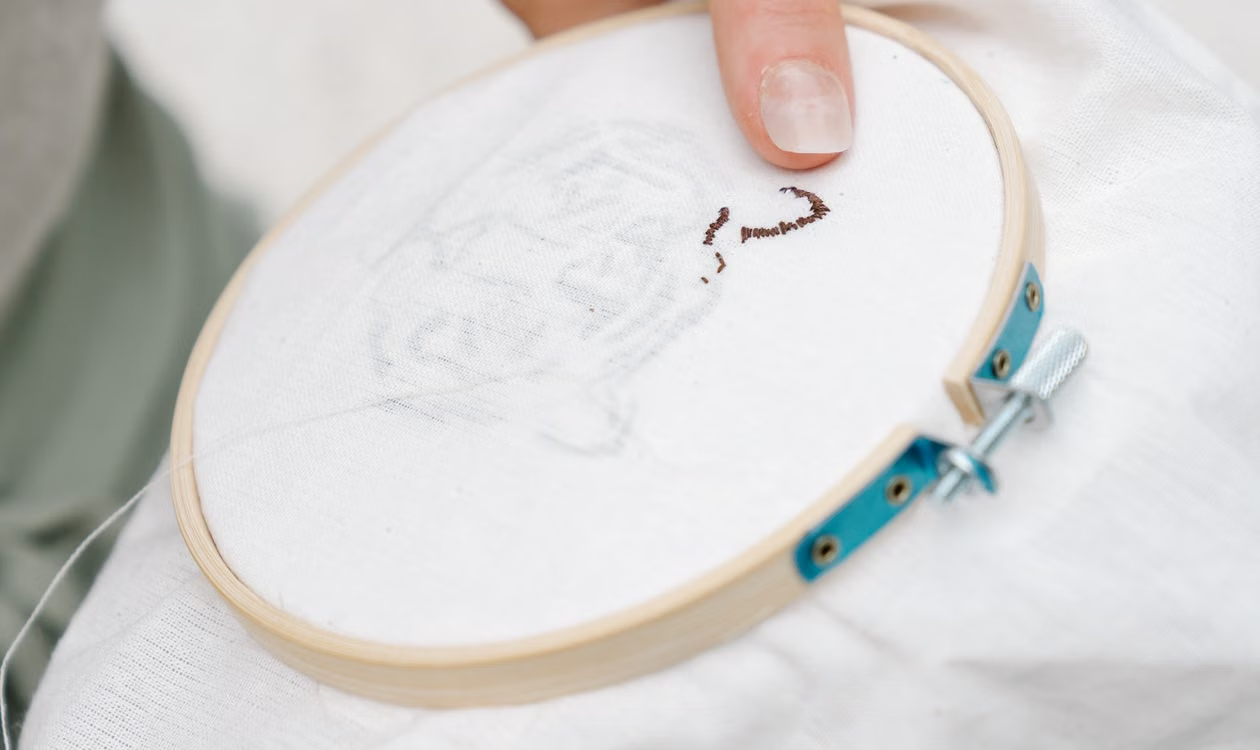
How Many Thread Colours Should I Use?
Most designs will look great with 2 or 3 colours that go well together. Let one colour take the lead. Avoid using too many bright colours that don’t go well together on a small design as it will usually look messy.
Final Thoughts
There’s probably something in a trunk somewhere in your house that has been hand worked by someone for hours. Whether it’s the neckline of a kurti, corner of a dupatta or baby dress we keep them because they mean something to people.
This means a hand embroidered kurti design will never truly go out of fashion. Trends will come and go with the hems but you’ll always feel like you’re wearing something that has been made slowly by someone. If you’d like to learn more about the craft, stitches and long history across cultures I’d recommend having a read through the embroidery page on Wikipedia. It’s a rich and interesting read!