




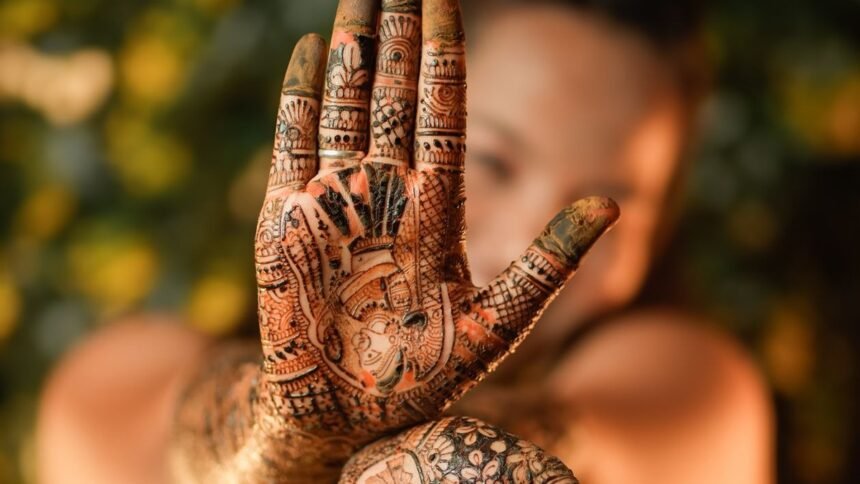
It’s 9:47 on chaand raat. I know because I just looked at my phone with my chin, hands occupied, obviously, and yes, we’re already late.
We were NOT supposed to be late this year.
My plan, my beautiful plan, was mehndi at 7, chai at 9, bed at a sensible hour like a sensible person. Ha. What actually happened: bijli went at 6:30 (load-shedding, right on schedule, thank you very much), the UPS started beeping like it was dying, ammi sent me to buy dahi because somebody forgot dahi, and by the time I came back my three cousins had eaten half the pakoray and claimed the good cushions on the floor.
So. Here we are.
Cone in my right hand. My left hand half done. Mahnoor, she’s 11, she has opinions about everything, is sitting cross-legged in front of me going, “Baji, chand wala. But make the chand BIG. Last year it looked like a banana.”
It did look like a banana, to be fair.
Look, I’m not a professional. I keep saying this because people in my inbox assume I am. I’m just the girl in the family who got handed a cone at like fourteen because my lines were “the least wobbly” (khala’s exact words) and I have never been allowed to retire since. Fifteen, sixteen chaand raats of this now. My back hurts in a very specific place every Eid and I know exactly why.
This post is those years, basically. The mehndi designs for eid that survived real chaand raat conditions, noise, interruptions, a toddler trying to eat the lemon-sugar mixture, that sort of thing. Not the designs that only work if you have silence and three hours and nobody asking where the mithai box went.
Some are dead simple. Some need patience I personally do not possess after 11 pm. I’ll tell you which is which, promise. No pretending everything is “easy and quick” when it isn’t.
Oh, and if you want the huge collection, the non-Eid one, it’s here: simple mehndi designs for girls. This one is just Eid. Eid chaos included free of charge.
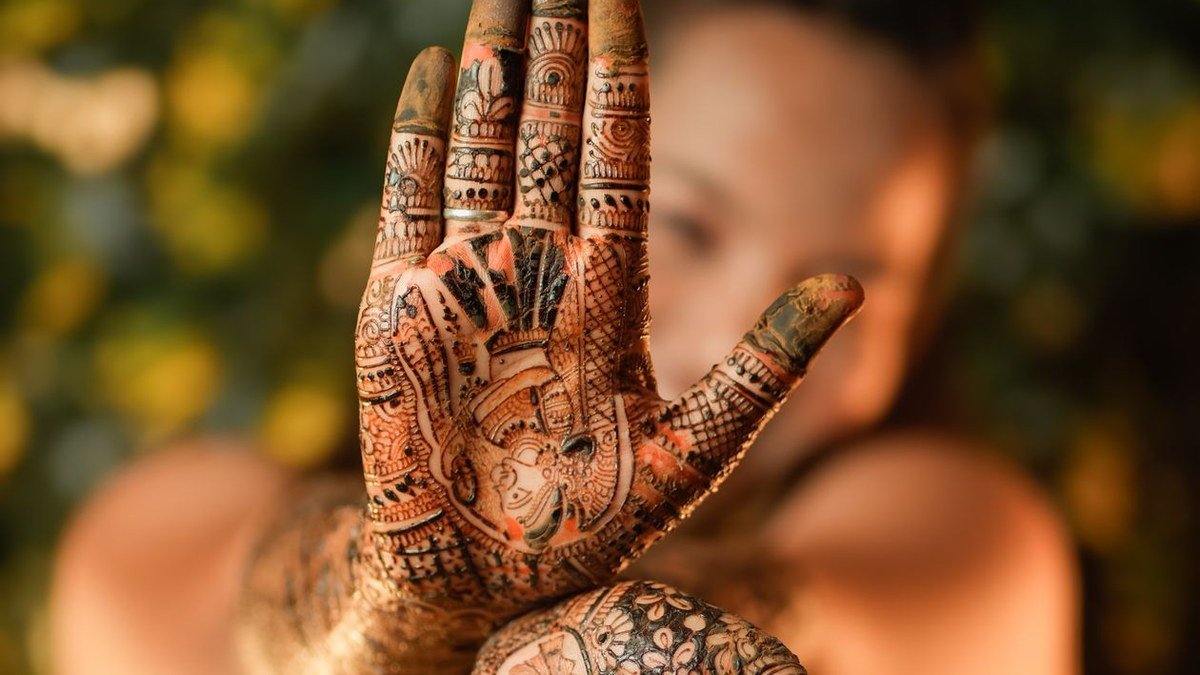
Okay see this one?
Two hands. Full. Proper. The kind of photo you save and show the mehndi wali and she nods like yes of course and then charges you accordingly.
I love it. I also want you to be honest with yourself about it, because I wasn’t, once. This is not a start-at-midnight design. This is a start-after-Maghrib, someone-brings-you-chai, nobody-asks-you-to-get-up design. Two hours if you’re fast. My khala gets this done by an aunty she books in Ramzan, in Ramzan! That’s the level of planning we’re talking about.
I tried it unplanned one year. Cried a little at 2:40 am over a paisley that had smeared into what my brother called “a mango with anxiety.”
Never again.
Simple Mehndi Designs for Eid for the Front Hand
Palm side first. Because Eid morning? Your palm is the photo.
Holding eidi notes up (we all do the money photo, don’t lie). Waving in the family picture where chacha is somehow always mid-blink. Handing a plate of sheer khurma to a guest while ammi watches to make sure you don’t spill. Palm. Palm. Palm.
One Round Tikki in the Middle
My own palm, most years, looks like this: one round thing in the middle, motif, tikki, whatever you want to call it, dots around it, and little flowers going up the fingers like they’re climbing. Done.
Why do I keep coming back to it? It forgives. My hand shakes. Especially by the fourth person. A round centre doesn’t announce the shake the way straight lines do. Nobody has ever, in fifteen years, looked at my palm and said the circle is 2mm off. They can’t tell. Neither can I, frankly, by then.
Paisley, the Other Forgiving Favourite
Paisley second favourite. Kairi. One fat one in the middle, you fill it with dots and those tiny cross-checks, smaller paisley on the thumb side if you’re feeling it, fingertips capped. It reads as complicated. It really, really isn’t. Half of it is dots. Dots are my whole personality at this point.
That bold centre-circle thing, I got obsessed enough that I made it its own post, the tikki mehndi designs one. One strong tikki, neat border, thin wrist line. If you’ve never done your own mehndi and this chaand raat is your first attempt, start there. Seriously. Not with a full bridal palm you saw on some reel at 1 am. Please. I beg you, on behalf of your future self.
Fine Lines? Do Them First
Fine lines, open palm, simple fingers.
College girls, this is yours. It says effort. It doesn’t say “I sacrificed my whole night.”
Hard part isn’t the shapes, they’re nothing, little curves. It’s clean lines, and clean lines only happen when your arm isn’t tired yet. So do this one FIRST. Not after ammi, two cousins, and the neighbour’s daughter who “just happened” to visit. I do mine last some years (stupid, I know) and my left hand ends up looking like a different, angrier person did it.
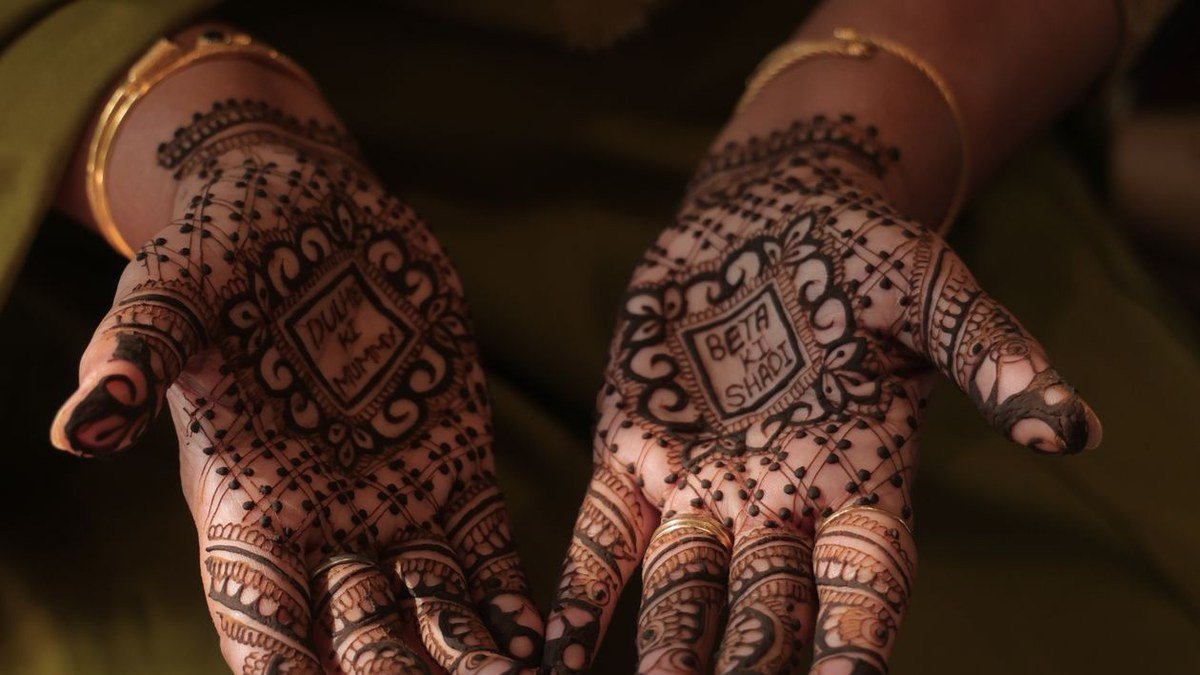
Elbow on a cushion, by the way. Table edge makes your arm go numb. Learned that the itchy way.
The green outfit in this photo!! That’s the whole argument, right there.
Bold filled flowers like these photograph well even in bad light, even in our house where the tube light makes everyone look slightly ill. If your kurta is plain, mine this year is plain bottle green, zero kaam, bought for exactly this reason, then heavy-ish palm mehndi IS the jewellery.
Kurta already full of embroidery? Pull back. You’ll look busy. Visually noisy. Trust me.
Zoom in on the fingers here. That’s where this one lives or dies.
Thin-tip cone. Elbow down. Sitting properly, not perched on a bed edge while a baby cousin bounces the mattress. I attempted finger work like this standing in the kitchen once because ammi wanted me “nearby” while she fried something. The result is in no photograph. We don’t discuss it.
Neat-and-small beats big-and-messy. Tattoo that on my forehead. I will die on this hill.
Back Hand Mehndi Designs for Eid
Back of the hand is where I actually enjoy myself, not gonna lie. Palm feels like a duty. Back feels like doodling.
There’s more flat space, you can see what you’re doing properly (try watching your own palm for an hour, your neck will file a complaint), and chains and nets and trailing things just… work here.
The Jewellery Chain
My favourite, and the one random aunties at weddings ask about, which is how you know, is the jewellery one. Small motif on the back of the hand, a thin dotted chain running down to a little circle on the middle finger like a ring, dots on the other fingers, bangles on the wrist.
It fools people. It genuinely looks like hand jewellery in photos.
Time? Fifteen minutes. Twenty if Mahnoor is narrating, which she does.
The Net That Looks Like Geometry Homework
The net one is the other crowd-pleaser. Criss-cross diagonal lines over the whole back, tiny flower or dot wherever lines cross, one bigger flower parked near the wrist so it doesn’t look empty there. Looks like geometry homework. Is mostly just straight lines and confidence. I put a whole bunch of these in the back hand mehndi designs gallery if you want to scroll through them before chaand raat and pick, instead of deciding at midnight with wet hands, which is my usual system and I do not recommend it.
Full coverage. Don’t panic.
Seriously, zoom. Flowers. Leaves. Dots. Flowers again. That’s the entire trick behind almost every “wow so difficult” design, repetition wearing a fancy outfit.
And full coverage HIDES wobbles. Paste everywhere means nobody can find the one line that went sideways. After two cups of doodh patti my hands are not steady, okay, they’re just not, and this style has rescued me so many times.
Medium effort. Very forgiving. Good girl.
And then this one, which is the opposite mood. Light. Spread out. Airy.
My younger cousins are all over this style right now. Anything filled and heavy gets called “aunty mehndi”, rude, honestly, the aunties have the best mehndi, but I get the aesthetic they’re after. It also dries quicker, which is not a small thing when you still have to roll out parathay or whatever job you’ve been assigned.
Mostly long strokes. Small curves. If you can draw a leaf without it looking like a fish (took me two years), you can do this.
Arabic Mehndi Designs for Eid
Arabic wins. Every year. It’s not a debate in our house anymore, we’ve stopped pretending it’s a debate.
One thick trail. Diagonal. Starts at the wrist, climbs up to one finger, usually index or middle, roses and leaves and maybe a peacock if somebody’s feeling very brave and it’s still early. And empty skin around it. Lots of empty skin. That emptiness is not laziness, that IS the design. That’s what makes it look like you paid a lot for it.
Fast, too. Twenty minutes a hand once your hands remember the shapes. First time will be slower, obviously, don’t time yourself and cry, just, it’s quick for what it looks like.
Everyone suits it?? My 13-year-old cousin: Arabic. Ammi, who announced at iftar, loudly, “I’m not doing mehndi this year, I’m too old for this shughal”, Arabic trail on her left hand by 10 pm. Every single year she says it. Every single year. We don’t even react anymore, we just keep a cone aside for her.
Cut the Cone Tip a Little Bigger
One thing nobody told me and I wish they had: a slightly thick cone tip is BETTER here. Arabic wants bold. Bold wants thickness. If you’re fighting with a needle-thin tip trying to build up a fat rose petal line by line, you’re making your own life hard for no reason. Cut the tip a tiny bit more. Live a little.
Outline Everything First, Then Fill
Watch how it’s being done here, outline first, thick, all of it, then filling. Don’t outline one leaf, fill it, outline the next, you’ll lose the flow and the trail will look like separate stickers.
Also: three-quarter sleeves on your Eid kurta? Drag the trail a bit up the arm like this photo. Looks stunning. And between you and me it’s easier than stopping dead at the wrist and trying to make that edge look intentional.
Now THIS is Arabic showing off.
Big roses. Big leaves. My bhabhi did a version of this her first Eid after shaadi, her mother sent a mehndi wali, very fancy, very not our usual bazaar cone situation, and those photos are still the family group’s favourite. My father, who normally notices nothing, said “yeh wali achi hai.” High praise. Historic.
But. Thirty, forty minutes a hand. If you’re also the designated mehndi wali for six other humans, skip it without guilt. Or do it on ONE hand and a simple trail on the other, asymmetric is a look, I decided this last year and I’m standing by it.
Chand and Star Motifs, the Sweetest Eid Tradition
Okay. Deep breath. My soft spot section.
The chand.
Crescent moon in the middle of the palm, star hanging off its tip like an earring, little dots sprayed around for sky. That’s it. That’s the whole design and I would still pick it over half the complicated stuff in this post.
Every year, every year, the photo that gets the most hearts in our family group is not my most skilled work. It’s my niece’s tiny hand with a chubby little chand on it. Five years old. She sat still for maybe four minutes, which for her is a world record, we were all holding our breath like doctors in surgery.
Make the Moon Bigger Than Feels Right
What I’ve learned about drawing the moon, after the banana incident and several others I won’t confess to: make it BIGGER than feels right. Paste shrinks visually when the stain comes in, small details go soft and blurry at the edges, a moon that looks slightly too big wet will look perfect dry. A moon that looks perfect wet will look like a comma by morning. Commas are not the vibe.
Then, middle finger, one tiny star. Other fingertips, mini crescents if you have the patience, dots if you don’t. Theme repeats, hand looks planned, nobody knows you improvised half of it.
Kids lose their minds over chand designs, by the way. If you’ve got small ones in your chaand raat queue, I made a whole separate thing, mehndi designs for kids, with motifs sized for a attention span of, like, ninety seconds. Go there. Save yourself.
Dense fine work around a chand looks gorgeous, the moon stays the hero, everything else is just the frame.
Real talk though? Those tiny packed spaces punish rushing like nothing else on this page. One smudge in a crowded corner and now your moon has a beard. Patient person’s design. Not for when the house is shouting that the chaand has been sighted and everyone’s suddenly hugging.
My teenage cousins do the cheat version, crescent, one star, ring of dots, ten minutes, and next morning in the photos you honestly cannot tell who sat for an hour. Mostly I feel relief about this. Slightly wounded pride, also.
Packed, traditional, the kind that keeps getting darker and better on day two, day three.
Ammi’s style. She hosts everyone, her hands in every serving photo, so she wants the colour DEEP and the design full. Fair. But it’s harder, small crowded spaces everywhere. Do it in a calm hour or don’t do it at all. Doing this at 1 am while someone shouts for a charger is how mistakes happen. I would know. The charger was in my own bag. Whole other story.
Mehndi Designs for Eid by Age Group
Being the family’s unpaid mehndi wali teaches you fast: who’s sitting in front of you changes everything.
The Small Ones, Five to Ten
Speed is the design. One tiny chand on the palm OR one flower on the back of the hand, five minutes, release the child. Full fingers on a seven-year-old will end up on the sofa, the curtain, and somehow their own forehead. I have watched this exact sequence happen. Twice. Toffee helps. A cartoon episode helps more.
Teenagers, the Harshest Judges
Picky. Experimental. Arabic trails, finger-only designs, chand-and-stars with very specific star placement (“no baji, HERE”). Everything is judged by the Eid photo test. Anything filled and traditional is “ammi mehndi”, their words, I just report. But use them! Steadiest hands in the house. Hand them a cone for their own hand and your queue shrinks by one.
My Lot, Twenties and Thirties
We carry the full Eid look and we’re also applying everyone else’s. So: do your own hands FIRST. Swap with a cousin, pay the bazaar wali, whatever. The family artist who goes last does her own left hand at 2 am with a cramping right hand and it looks like a rough draft. Every year. I am historically always her.
Ammi and the Aunties
“Bas beta, kuch chhota sa.” A small back-hand motif, a simple tikki, one polite trail. They’re right, they’re cooking and hosting all Eid day. Do exactly what they asked. Resist “just one more vine.” One more vine is how ammi can’t make chai and you end up making chai for fourteen people.
Matching Your Mehndi to Your Outfit
You do NOT have to match your mehndi motif to your kurta’s embroidery motif. I’ve seen girls try, with a magnifying glass. They just shouldn’t fight. That’s the whole rule.
Kurti. The kaam is usually up top, neckline, sleeves, so your palm is free. Centred tikki, mandala, neat fingers. Heavy embroidery, simple hands. Plain kurta (mine this year: plain bottle green, zero kaam), go rich on the hands. One of them does the talking. If both talk, it’s noise.
Gharara / sharara. Traditional outfit, traditional mehndi, full permission to go all in, both hands, paisleys, detailed fingers. Light minimal mehndi with a gharara looks weirdly unfinished in photos. I can’t explain why. It just does.
Saree. One wrist disappears under the drape. Light design there, star design on the exposed hand. Don’t waste your best work under fabric.
Frock or maxi. Keep it modern. Minimal Arabic trail, jewellery-style back hand, bare palm. Heavy traditional filling under a flowy frock, both end up looking confused. Tried it.
The Sleeve Rule
And the sleeve rule, learned the hard way: long loose sleeves hide ALL wrist work. I once did a stunning forearm vine that appeared in zero photos because it lived and died under a sleeve. Palms and fingers. Effort where the camera goes.
Last-Minute Eid Mehndi Designs, Ten Minutes, Honestly
Tell me it’s not only my family. 11 pm, chaand raat basically over, and a cousin appears in the doorway in her night suit: “bas thoda sa laga do?”
Zara sa. Sure.
If that cousin is you this year, no judgement, I’ve been her. My actual rescues:
One mandala, centre of palm, nothing else. One strong thing looks planned; five rushed things look like a cry for help. Or one vine of leaves crawling up the side of the hand onto the index finger. Or finger-only, dots, tiny checks, a mini flower per finger, bare palm, which photographs weirdly well and teenagers think is a high-fashion choice. Fine. Let them.
Whatever you pick: both hands THE SAME, and simple. Rush only shows when you get clever, and clever at 11 pm is a trap.
Got a day’s warning? Practise two or three shapes from my easy mehndi designs list on paper, ten minutes. Boring homework, yes. Your chaand raat self will thank you.
Exhibit A. One clean motif, tidy fingers, completely festive. And here’s what nobody tells beginners: bold lines stain RICH by morning. Wispy lines fade pale and patchy. The simple design isn’t the compromise, stain-wise it’s often the smart one.
Neat, traditional, repeating on both sides, and that repetition is WHY it works for people whose non-dominant hand is, let’s say, less cooperative. Your hand already knows the next shape because it just did it. Fine tip, slow outlines. Neatness is the whole difference between “simple design” and “salon design.” Same shapes. Different neatness.
Step by Step: A Classic Eid Chand Tikki Design
If you try one design from this whole long post, make it this one. Gol tikki plus chand. My most-done design by a mile, and every step is a basic shape wearing a costume.
The tikki first. Middle of the palm, a circle about the size of a two-rupee coin. Go around twice, that bold outline is the skeleton. Ring of small dots just outside it. Don’t make the dots perfect. Nobody’s dots are perfect.
Chand inside it. Crescent facing up, inside the circle. Remember the banana lesson: slightly too big. Fill the gaps around the moon with tiny dots or mini stars so the circle reads full.
Frame it. A second, bigger ring, little petals or scallops around the dot ring. Sounds skippable. It is not. This frame is the difference between “design” and “circle floating on a hand.” I have compared them on my own two palms like a scientist.
Fingers, boring on purpose. One dotted line up each finger, tiny flower or star near the tip, all five matching. Repetition is what makes simple work look neat.
Wrist band. Two thin lines around the wrist, dots squeezed between them, like a bracelet. Suddenly the whole hand looks finished. Magic trick.
Hands OFF everything. Flat, still, fifteen minutes. Do not answer the door. Do not adjust your dupatta. Do not try to eat a jalebi “carefully.” The number of good designs killed by a doorbell in minute four… I could write a separate post. A sad one.
Fifteen to twenty minutes if you’re new. Hands shake? Practise the circle and crescent on the back of a notebook first, two minutes. Sounds silly. Works.
How to Get a Dark Mehndi Stain Before Eid Morning
Now the section everyone actually scrolled for. Because a beautiful design with a pale orange stain is just heartbreak with extra steps.
The Orange Eid. I was seventeen-ish. Applied late, got impatient, washed the paste off with soap after two hours like an absolute fool, and woke up to the palest mehndi in the family. My nani, who has never softened a sentence in her life, looked at my hands and said: “Beta, mehndi lagayi thi, ya haldi?”
Haldi. I have never washed paste off since. What actually works, in the order it matters:
Clean Hands and a Fresh Cone
Clean, dry, BARE hands. No lotion, no oil, no “just a little cream.” Cream sits on the skin and the henna stains the cream instead of you. Wash with soap, dry properly, then start. Girls skip this because it sounds too basic. It matters.
Fresh cone. FRESH. This is the whole ballgame. That cone in your drawer from last Eid, bin it. Good bazaar cones cost me Rs 80 this year, smaller ones Rs 50, the big famous-aunty ones Rs 150, at the stall near the bangles where there’s always a line. Buy from the line. The line knows. And buy one extra, because one will leak or get sat on. One always does.
Give It Time, Then Scrape, Never Wash
Time. Four to six hours minimum, overnight if you can. Everyone wants to skip this step and this step IS the colour. Our system: tissue round each hand, old shopper bags over the top before sleeping. You look like a cartoon burglar. Your bedsheet survives another Eid. Worth it.
Lemon-sugar, dabbed, once the paste starts cracking dry. Cotton ball, gentle dabs, flood it and your lines bleed into puddles and your chand becomes abstract art. Ammi makes it too sweet every year (ants have found it twice) and it still works, so don’t stress the ratios.
Scrape it off. Never wash. NEVER. Spoon edge over the dustbin. Then keep water off your hands as long as possible, ten, twelve hours if you can. On Eid morning you’re the person “supervising” in the kitchen doorway, hands in the air like a surgeon. Do not feel guilty. Take the morning.
Warmth, Oil, and Patience
Warmth helps. The old tawa trick is real: a few laung on a warm tawa, hands held above the smoke a bit. Don’t burn yourself, someone in every family leans in closer for “more colour,” as my cousin’s red palm (actual burn, not mehndi) once proved.
Oil after scraping, then patience. Mustard oil in our house. Then WAIT. It’ll look orange and disappointing and you’ll want to panic-text the group chat. Don’t. Henna darkens over 24 to 48 hours, and chaand raat application peaks on day two, dawat day, when everyone sees it.
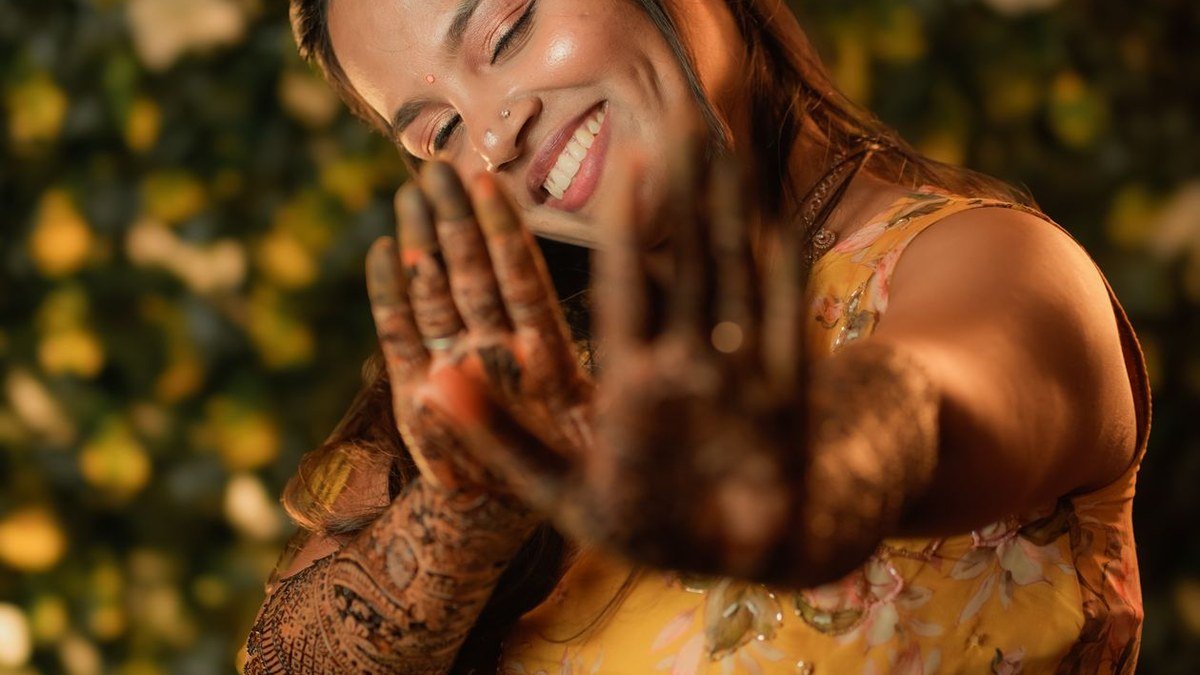
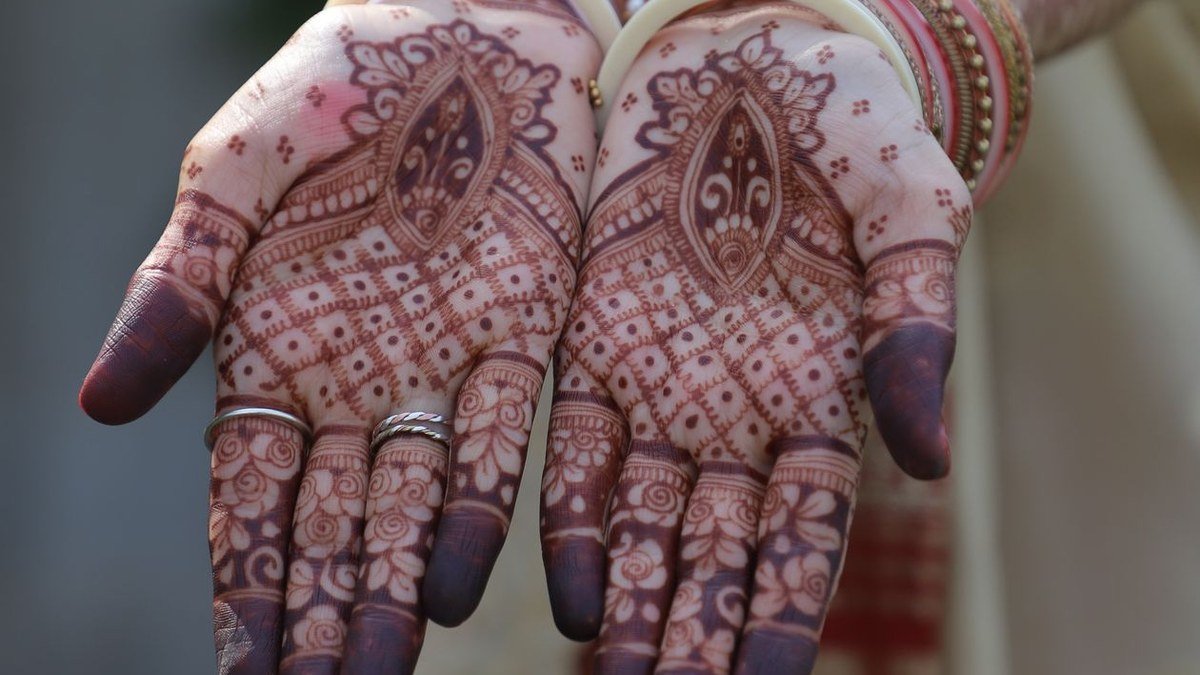
This colour. This is the goal. Deep, even, proper maroon, and notice the palms are darkest, because palm skin grabs henna hardest. Nobody’s hands stain perfectly evenly; anyone whose do is a professional or lying to you on the internet. Follow the boring steps, they’re boring BECAUSE they work, and by Eid afternoon you can get close to this. Close is gorgeous.
Your Eid Mehndi Routine: A Chaand Raat Timeline
Timing is half the result. Here’s how the night runs at ours, hours wobble, order doesn’t.
Late afternoon, before Maghrib. Shower, wash hands properly, set up your corner BEFORE the madness: cones, tissues, lemon-sugar bowl, old dupatta, a chair you can live in for two hours. The year I skipped setup I did a whole hand while hunting for tissue with my feet. Chaos is not a technique.
After dinner, 8-ish, 9-ish. Application starts. House rule, non-negotiable: the mehndi wali gets her own hands done first, or swaps with a cousin. Front hands, then backs. One designated phone-answerer, always the youngest, paid in mithai.
10, 11. Lemon-sugar round. And the late arrivals materialise, cousin back from the parlour, eyebrows done, mehndi forgotten, so keep a ten-minute design mentally loaded. There will be this moment. There always is.
Before sleeping. Tissue round each hand, shopper bags over that. You will wake at 3 am convinced you’ve destroyed everything. You almost certainly haven’t. Go back to sleep.
Eid morning, after Fajr. Scrape, mustard oil, and remind yourself out loud that the pale orange is LYING. Accept every “you sit, I’ll wash up” offer, shamelessly, capital S. By evening it’s deep maroon. Day two, dawat day, is its best.
Eid Mehndi Mistakes to Avoid
Bad drawing ruins very little Eid mehndi. Small dumb mistakes ruin tons of it. The hall of fame, most of them mine:
Mehndi on oiled hands. Paste slides, lines spread, stain comes out patchy like a map. Clean dry skin. Only. Forever.
Your hardest design ON chaand raat. The night is loud, late, interrupted every four minutes. Pick one level easier than your best. Your ego will survive. Your 1 am self will send thank-you notes.
Washing paste off with soap. The Orange Eid mistake. The single biggest cause of pale mehndi in the known universe. Scrape. Every time.
Taking it off too early. Two hours gets you a light wash of colour that fades in days. Four to six hours minimum. There is no shortcut, I have searched extensively.
Old cones and “instant” black mehndi. Stale henna barely stains. The chemical black cones? Itching, blisters, marks that outlast the Eid clothes. Fresh natural cone from the aunty with the line at her stall: slower, SAFE.
Starting after midnight, half asleep. Tired hands shake, the second hand gets rushed, and it ends up looking like the first hand’s distant cousin. Early calm start beats dramatic late start. Says the girl who has done both. Recently.
Frequently Asked Questions
When should I apply mehndi for Eid?
Chaand raat, as early in the evening as your house allows. The stain needs 24 to 48 hours to reach its darkest, so chaand raat mehndi designs for eid are richest on Eid morning and even better on day two. Night before works too. It just peaks a little earlier.
Which Eid mehndi design is best for beginners?
Gol tikki, no contest. One circle, ring of dots, done, and it already looks complete, that’s its magic. Second choice: Arabic trail on the back of the hand. Both forgive wobbly lines like a good friend. Avoid anything tiny and crowded for now. Every family has one resident artist to learn from, and if yours doesn’t, congratulations, it’s you now.
How can I make my Eid mehndi darker without chemicals?
Three things: fresh cone, overnight paste, scrape don’t wash. That’s the podium. Lemon-sugar and keeping water away afterwards are bonus points. And stay away from black mehndi cones, please, yes they stain in twenty minutes, and yes, girls end up with itchy blistered hands ON EID DAY because of them. Not worth it. Ever.
Can I do the same design on both hands?
Please do. Matching hands photograph so much better. If mirroring scares you, keep the same centre on both palms and quietly simplify the fingers on your non-dominant side. Nobody zooms that hard. My own hands have never been identical in fifteen years, they’re sisters, not twins. Sisters are fine.
How long does Eid mehndi last?
Strong for about a week, then it softens, mostly gone in 10 to 14 days, fingers first, they get washed the most. Gloves for dishes help. So does making someone else do the dishes entirely. Mine gets its best compliments around day three, weirdly. Deepest colour plus maximum visiting relatives.
My stain came out light on Eid morning. Can I fix it?
Don’t judge it at breakfast, rule one. It darkens till the next day, and the morning orange once fooled me into a full tears-before-chai panic; by evening it was lovely. Still pale by afternoon? Trace the main outlines with a fresh cone, keep it on two to three hours, scrape, keep water away. It deepens noticeably. What not to do: reach for a chemical instant-darkener. A light stain is a small problem. A skin reaction on Eid is a big one.
Final Thoughts
The truth I come back to every year, usually around 1 am with paste drying on my own hands: Eid mehndi was never actually about the perfect design.
It’s the circle of cousins on the floor cushions fighting, genuinely fighting, over the last good cone. It’s ammi doing her inspection round like an examiner, except her clipboard is a cup of chai. It’s Eid morning, everyone comparing stains like exam results before anyone’s eaten properly. Whose went darkest. Whose chand survived the night. (Mahnoor’s banana chand has entered family history. It will be discussed at her wedding.)
So pick the design that makes YOU happy. Not the hardest. Not the one for the most likes.
Music on. Chai made FIRST this time, before the cones open, learn from my entire life.
Eid Mubarak. May your stain be deep, your lines steady-ish (steady is a lot to ask; steady-ish is achievable), and your eidi extremely, extremely generous.