




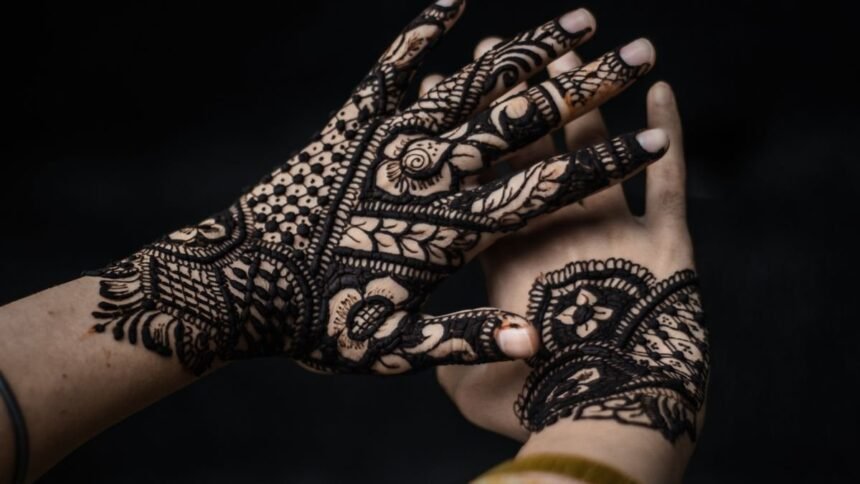
Right, I need to admit something embarrassing first.
For the longest time, the back of my hand got the leftover mehndi. Literally the leftover. I’d sit there all serious about my palm, “ye wala phool, nahi ye wala, thora bara karo”, and then when the mehndi wali turned my hand over, I’d just shrug. Jo marzi bana dein. Jo cone mein bacha hai. Bas ho gaya.
And then? Photo time. Every single photo at that function, guess which side of the hand the camera sees. Not the palm, obviously. The back. Holding a plate. Fixing a dupatta that will NOT stay on one shoulder, we all know that struggle. Picking up a mithai ka dabba like it’s a trophy. And there was my sad little back side, three random dots and one confused-looking leaf, immortalised forever.
My wake-up call was my best friend’s mehndi, and it was not graceful. Picture this: it’s 2 am. Function is the next evening. She’s asleep, whole house is asleep, and I am sitting cross-legged on my bed with a cone stuck in my teeth, because both hands were busy, don’t judge me, phone balanced against a pillow that kept sliding, watching YouTube tutorials at 1.5 speed and rewinding the same ten seconds again and again. My younger sister was snoring, actually snoring, two feet away. My lines were wobbly. My hand kept cramping. I was whispering curses at a flower tutorial.
That shaky beginner attempt got complimented more at her mehndi than mehndi I’d paid proper money for before. A girl I barely knew grabbed my hand near the food tables, “ye kis se lagwayi?” Me. At 2 am. Half asleep. I still feel smug about it, not going to pretend otherwise.
So. This post.
I’ve collected 40+ back hand mehndi designs here, the kinds girls around me actually wear and ask about, tiny minimal ones for everyday, those flowing Arabic trails, bracelet styles that basically replace your jewellery, and the full heavy bridal coverage for shaadi season. Screenshot whatever you like. Send it to your artist. Or go full feral like I did and learn it yourself the night before. Your call.
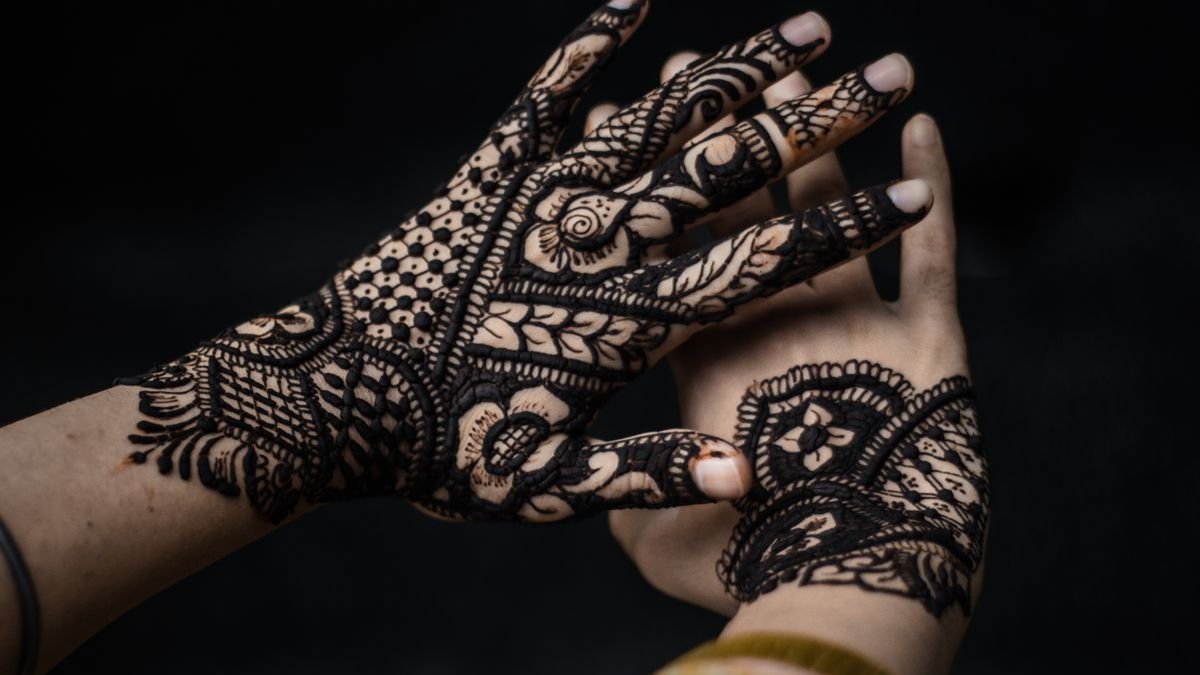
Start with this photo because this is the standard now, at least in my head. Both hands done properly on the back. Nothing looking like an afterthought, no side quietly abandoned. If you’re a bridesmaid or a shaadi guest who wants that full festive feel without crossing into dulhan territory, this lane. Yours.
Is it easy? No. I’m not going to lie to you just because it’s the first photo. This is medium leaning hard. Book a decent artist, or clear an afternoon, clear your mood too, and don’t start it twenty minutes before you need to leave the house. Learned that the hard way. Twice, actually.
Minimal Back Hand Mehndi Designs
Minimal first. Always minimal first when someone asks me, which confuses people, because our mothers firmly believe zyada mehndi = zyada khoobsurat. Ammi, I love you, but no.
One Little Floral Bunch in the Middle
The back of the hand is small. It’s also weirdly… public? Everyone sees it. And on a small, visible space, thin lines with actual empty skin around them just look better. Cleaner. More expensive, somehow. One little floral bunch in the middle. One slim trail wandering up to the middle finger. Khatam. Ten minutes. Fifteen if the cone decides to have a personality that day, which cones do.
Minimal Dries Fast, Stains Fast
There’s also the boring practical reason nobody talks about. Minimal dries fast. Stains fast. And it doesn’t betray you on day four. You know how heavy designs go patchy while fading, one finger dark, one finger gone, palm looking like a map of some country? Minimal fades like a normal thing. My university-going cousins basically live in these, pretty for the weekend function, faded enough by Monday that no teacher is raising an eyebrow during a presentation.
Never Held a Cone in Your Life?
Never held a cone in your life? Start in this section, honestly, and keep our easy mehndi designs page open alongside for when you want more beginner-friendly practice. Everyone starts wobbly. Everyone.
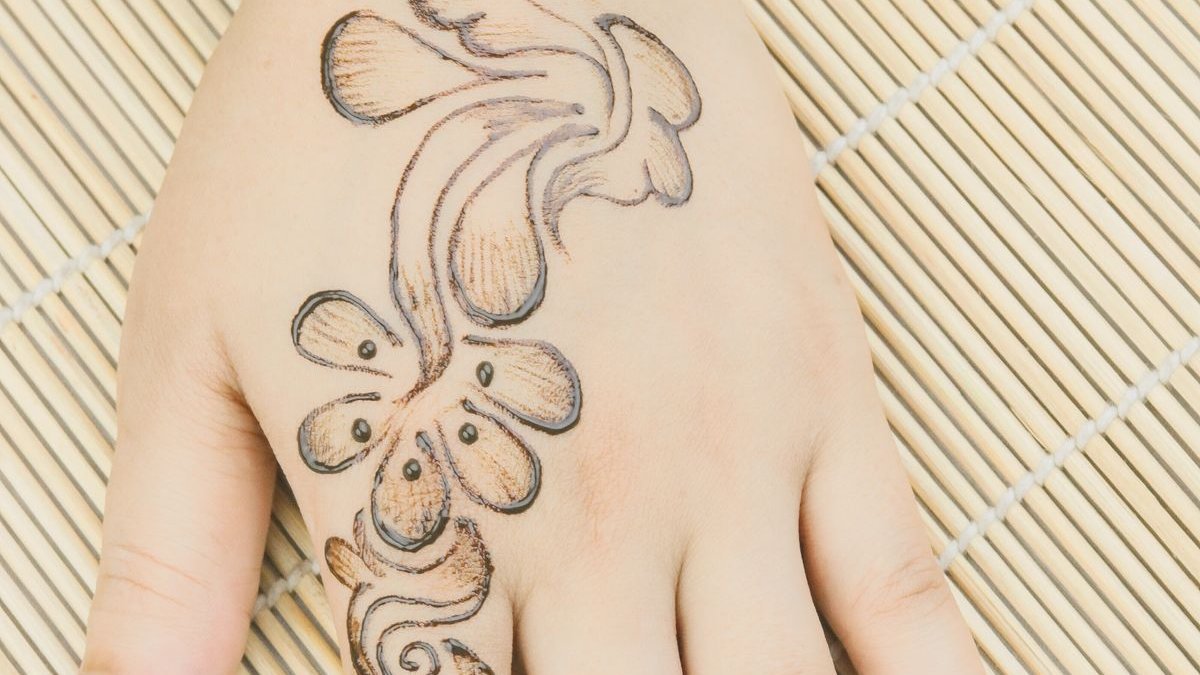
This one photo. This is the entire minimal mood and I keep coming back to it, delicate lines, one soft motif doing all the work, acres of empty skin so the design almost floats there.
True story: I wore something almost identical to this at my cousin’s dholki last winter. My khala, who does not praise easily, who once looked at my carefully done eyeliner and said “theek hai” in the tone people use for average biryani, my KHALA asked me which artist had done it.
Me. At my desk. During loadshedding. Torch light, because the UPS had given up an hour earlier.
Difficulty? Easy. I’m serious. Fine-tip cone, reasonably steady hand, you’re sorted. If I can do it in torchlight with the fan off and sweat running, your conditions are already better than mine were.
And this close-up explains why simple work photographs like a dream. Clean lines. Even spacing. Nothing screaming, nothing fighting. Just… calm.
Small hands, listen up, mine are small, sadly, genetics did me no favours, patterns like this are kind to us. A wobble hides inside a motif like this instead of standing in the middle of an empty hand announcing itself. Dense designs show every mistake. This one shrugs them off.
Easy to medium, if I’m being precise, because it does ask for a little line control. Practise on paper first. Or on your sister. Sisters are basically practice paper that complains and then demands to be paid in fries.
Arabic Back Hand Mehndi Designs
Arabic was my first love. Still is, if my camera roll is any evidence, I scrolled it before writing this and lost count of the saved Arabic references somewhere around forty. Forty. I might have a problem.
They Don’t Fill, They Travel
The idea is completely different from traditional full coverage. Arabic back hand mehndi designs don’t fill. They travel. One bold floral trail starts somewhere near the wrist, sweeps diagonally across the hand, diagonally, that’s the signature, and lands on one finger, maybe two. Thick strokes. Big confident flowers. And bare skin everywhere else, which is not the artist being lazy, that IS the design, someone say it louder for the aunties in the back.
Why Do I Push Arabic So Hard?
Why do I push Arabic so hard for the back hand? Photos, yaar. Simple maths. Bold lines survive a group photo taken from six feet away in a hall with lighting designed by someone who hates us. Delicate jaali just vanishes at that distance; Arabic reads loud and clear. That’s where most of our mehndi gets judged anyway, let’s not pretend otherwise.
Half the Time of Full Coverage
Speed, too. On Chand Raat there is a queue. There is ALWAYS a queue, cousins, neighbours, one phupho who said she didn’t want any and then wants “bas thori si” at midnight. Arabic finishes in half the time of full coverage, so the queue moves, and nobody’s mother is standing in the doorway giving you the look. Half my Eid saves live in this style, and the more festive versions are sitting in our mehndi designs for Eid post for exactly that night.
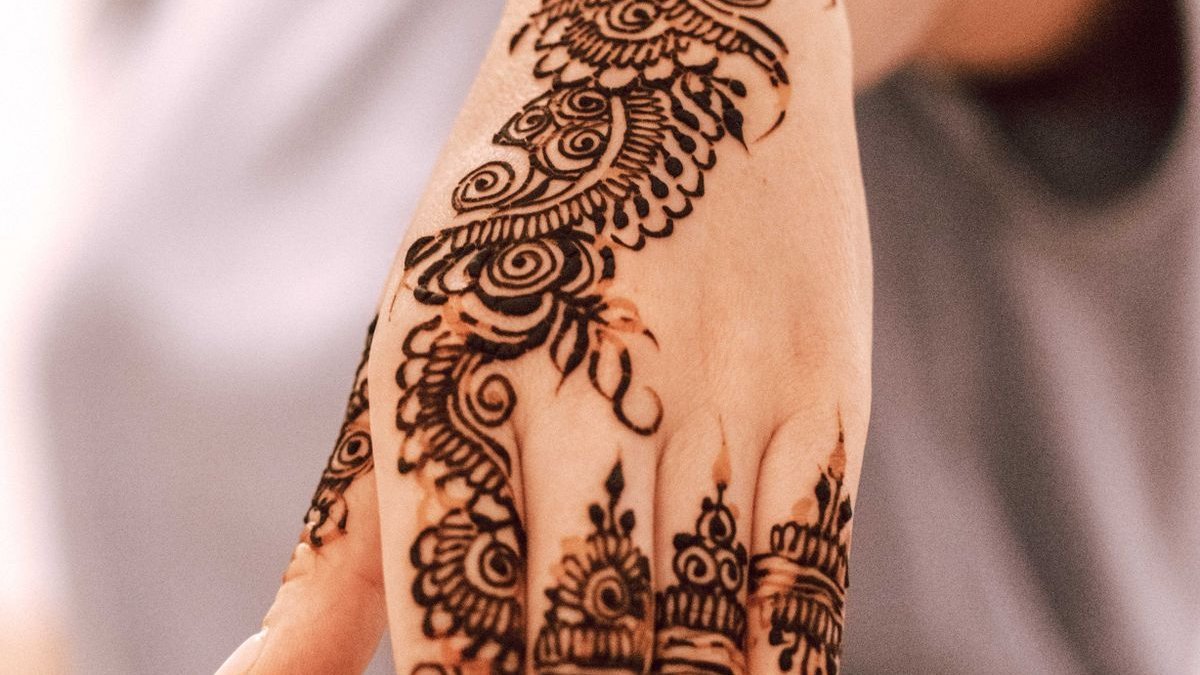
Notice what the trail is doing here. It doesn’t sit politely in the centre like it was placed with a ruler. It slides in from the side, all attitude. That sideways flow is the whole personality of Arabic work, and on long fingers it looks, I’m sorry, there’s no other word, unfair. Especially against a plain solid kurti where there’s no embroidery wrestling it for attention.
Medium difficulty. The flowers themselves? Easy, don’t fear the flowers. Keeping that flow smooth from wrist to fingertip without the line going drunken in the middle… that’s where you’ll swear under your breath a little. We’ve all been there. Wipe, redo, carry on.
Bold strokes. Wide gaps. Still perfectly readable from across a room. If a first-timer asked me “which Arabic do I try on my own hand without crying,” I’d hand her this one and no other. It’s forgiving. It doesn’t punish small mistakes. And at any function where a hundred photos are guaranteed, Eid, a mehndi, your best friend’s anything, this visibility is exactly what you want working for you.
Medium, leaning easy. There. A design with no drama. Appreciate it, they’re rare, like a Chand Raat where the cone doesn’t burst. (It always bursts. Keep a tissue in your sleeve.)
The hand is lying flat in this shot, which makes it perfect for studying the spacing, and I mean really study it before your next attempt. The empty skin is doing half the work here and it gets zero credit. Zero.
Wide hands, this layout is your friend especially. Dense designs can tip into “too much” very fast on a wider hand; open spacing like this keeps everything airy. The hard part isn’t drawing. The hard part is stopping. Copy the gaps faithfully and resist sneaking in one extra motif, and another, and another, that sneaking is how open designs die. Easy to medium, with self-control sold separately.
Bracelet and Jewellery Style Back Hand Mehndi Designs
Now. My favourite story in this whole post. I’ve told it at least six times and I’m telling it again, I don’t care.
A Walima in Lahore
Last shaadi season. A walima in Lahore, one of those halls where the AC is set to Arctic and every woman is freezing in her fancy clothes pretending she’s not. A girl at our table, I didn’t even know her well, she was from the groom’s side, wore a bracelet-style back hand design. Henna band around the wrist. One fine dotted chain running up the hand to a ring motif sitting on her middle finger. That was it. No bangles. No hand harness, no jewellery on that hand at all.
By dessert, dessert, not even the rukhsati, I counted four aunties who had photographed her hand. Four. Plus at least six girls our age. I was keeping count like a weirdo because I couldn’t believe it. Aunties, understand, do not photograph things casually. An aunty photographing your hand is a certification. There should be a stamp.
They Read as Jewellery
That’s the whole magic trick of bracelet designs. They read as jewellery, they cost you one cone, what are cones now, Rs 60, Rs 80 from the bazaar, Rs 100 if it’s Chand Raat and the shopkeeper knows you have no options, and they can never clash with your outfit because they have become the outfit’s jewellery. Sleeves matter though: short sleeves, or chooridar sleeves pushed up a bit, otherwise your masterpiece is sitting under fabric all evening like a secret nobody asked for.
My Own Trick, Steal It Freely
My own trick, steal it freely: leave a tiny clean gap on the wrist exactly where your watch sits. The design frames the watch instead of crashing into it. Looks planned. Looks expensive. Costs nothing. I do this every single time now and people keep assuming an artist thought of it.
Want the full set look? Drop a small tikki mehndi design in the centre of the hand with the bracelet sitting at the wrist and suddenly the whole hand looks like it walked out of a bridal catalogue. Fair warning though, the younger girls in the family will see it and demand the exact same thing in miniature, immediately, at volume. I speak from experience. Keep our mehndi designs for kids open in the next tab and save your own evening.
This. This is basically the walima design living in my head rent-free, wrist band, ring motif, a hand that looks fully dressed with zero actual jewellery on it.
Planning to skip bangles anyway? Good. Bangles eat dupattas. Bangles announce your location to the entire hall every time you move. Bangles get left on washroom counters, ask anyone. Let the mehndi do the jewellery’s job for one night; it does it quietly and it can’t get lost.
Easy to medium. The shapes themselves are nothing, circles, dot chains, a ring. What they demand is patience, because a bracelet design that’s even slightly uneven on the two sides looks off in a way a floral never does. Slow down on the wrist band. That’s my whole advice. Slow down there.
And here’s the dressed-up end of the family, henna sitting right beside real traditional jewellery, holding its own, not looking like the budget option. Take this direction when your sleeves are short and your wrists will be working all evening. Holding plates. Holding your phone at a weird height for the bride’s entry video. Holding the bride’s train while she poses and mouthing “jaldi karo” at the photographer. Your wrists are in every frame; dress them like it.
Medium. The ring-and-chain detailing doesn’t forgive rushing, that’s the only real catch.
Full Back Hand Bridal Mehndi Designs
For the bride herself the back hand is not a side area. It’s prime real estate, possibly THE most photographed real estate of the whole wedding, and I will die on this hill.
Wrist to Fingertip
Full bridal back hand mehndi designs run wrist to fingertip, paisleys, peacocks, jaali work so fine it looks printed, and of course the groom’s initials hidden somewhere for him to hunt for. My cousin’s artist hid them inside a paisley on the back of her hand, a genuinely evil hiding spot. He found them at 1 am. The whole room heard. People in the corridor heard.
Practical Things, Because Nobody Tells Brides
Practical things, because nobody tells brides the practical things. Good bridal artists in shaadi season book out weeks ahead, December brides book in October, don’t be the one acting surprised in November. A proper both-hands package with this level of back coverage runs into several thousand rupees; my cousin’s made my father put his chai down mid-sip. Worth it? I’ve seen her photos a hundred times. Yes.
And timing: two days before the main event, not one. The colour peaks on day two, and you do not want wet, useless hands while guests are arriving and your mother is calling your name from three rooms at once. Mothers can do that. Superpower.
Building the complete look, palms included? Our main guide to simple mehndi designs for girls keeps the front and back combinations in one place.
Full coverage done properly, no forgotten corner near the wrist where designs usually give up. This is the kind of work that makes guests gently take the bride’s hand and turn it over like they’re inspecting jewellery. Bride only, honestly, and it needs a professional: do not attempt this level on yourself the night before your own wedding, that story never ends well. Hard difficulty, two to three hours for a pair of hands is completely normal.
Notice the balance, both hands carrying the same weight, neither looking like the favourite child, because bridal photos expose uneven hands mercilessly. Jaali like this was made for a deep red or maroon outfit. Hard, obviously. One tip: ask your artist for a tiny trial patch a week or two before. Skin reactions and disappointing stains both exist; neither should debut on your mehndi day.
Back Hand Mehndi Designs by Occasion
Same hands, five different lives in one month, a normal shaadi-season calendar, honestly. Match the design to the day; the right weight matters more than the prettiest screenshot on the internet. I learnt that wearing full bridal-style mehndi to run ordinary errands, looking like a runaway dulhan out buying dahi. The shopkeeper asked enough questions for everyone.
Daily Wear and University
Minimal, near the wrist or on one finger. You’ll wash hands twenty times, type, carry bags, a light design survives all that and fades gracefully instead of going patchy by day three.
Eid
Everyone gets photographed that morning holding sheer khurma and chai, so go one step richer than daily. Arabic trails or medium florals, paste on in the evening, kept on overnight if you can sleep like a mummy (plastic bags on hands: no shame, it works), colour at its peak when you wake up.
A Wedding, as a Guest
Medium coverage is the sweet spot, I’ve settled on this and I’m not moving. Fuller Arabic, or bracelet style with one strong central motif. Guest hands hold mithai boxes, envelopes, the bride’s dupatta in rukhsati photos, visible, yes, but you don’t out-bridal the bride. There’s a code. The girl who breaks it gets discussed in the car on the way home.
Your Own Mehndi and Wedding
Full coverage. No debate, no “bas thori si.” Book early, send reference photos beforehand, your artist will thank you, and keep the day before empty for the sitting. Rushed bridal mehndi shows in photographs for forty years. Forty. Years.
Back Hand Designs That Pair With Front Hand Styles
Should front and back match? I get asked this constantly, usually in a panic, usually the night before a function.
No. Not identical twins, sisters. Palm carrying one big central mandala? Keep the back lighter: that mandala shrunk onto one finger, or a small circle near the wrist waving hello at it. Palm gone Arabic? Repeat just one of its flowers on the back. One repeated motif, that’s the whole trick, and suddenly both sides look like one decision instead of two accidents on the same hand. In real life mismatched hands look fine; close-up photos are the strict judges, and there will be close-up photos.
This close-up is the trick caught in the act, one family of motifs travelling across the hands, so front and back stay in conversation whichever way the hands turn. Know your hands will be photographed all evening? Bridesmaids, I’m looking directly at you. Steal this. The motifs are medium; repeating them at roughly the same size twice is the real skill, and it sounds much easier than it is.
How to Choose a Back Hand Design for Your Hand Shape
A design can look perfect on an Instagram model and completely wrong on your hand, and nine times out of ten that’s shape, not skill. Artists know this; they don’t always explain it. I will.
Small Hands
Small and central, everything, one compact flower bunch, one slim tikki mid-hand. Big bridal paisleys swallow a small hand whole and somehow make it look even smaller. Tested extensively; you don’t have to.
Long Fingers
Congratulations, Arabic trails were designed in a laboratory for you. Long flowing lines, wrist to fingertip, little leaves travelling down every finger. This is your home ground; the rest of us are visiting.
Wide Hands
Go open. Breathing space, like the Arabic spacing above, or vertical trails pulling the eye lengthwise. Avoid heavy horizontal bands parked at the wrist, they visually widen everything, sneaky but very real in photos.
Short Fingers
Fingers mostly bare, or tiny dots at the tips. A strong central motif holds attention mid-hand, and skipping long trails stops the design shrinking your fingers on camera.
Step-by-Step: Draw a Simple Back Hand Design at Home
This is the design I teach every beginner who lands in my messages at odd hours, a centre flower with a finger trail. Fifteen minutes a hand once you’ve done it twice. First time, give yourself half an hour and ban the audience. Spectators ruin cones. Unproven science, but still.
Start with clean, dry hands. Plain soap, dried properly, skip the lotion, oily skin won’t grip the paste and the stain comes out patchy in the exact shape of your disappointment.
Draw the centre flower. Middle of the back of your hand: one small circle, five or six simple petals around it. Keep it small. You can always grow a flower; you cannot shrink one. Henna has no eraser. Henna has consequences.
Add a ring of dots around the flower, and if you’re feeling brave, a second, broken ring of tiny leaves outside it. Broken is good. Broken forgives.
Draw the trail. One smooth line from the flower towards your middle finger, stopping just before the fingertip. Small leaves along it, alternating sides, like a tiny vine that pays rent.
Do the fingers selectively. A dot trail on the index and ring fingers only. Empty fingers are a style choice, not a gap you’re apologising for.
Finish at the wrist. One thin line across it, dots underneath. Twenty seconds, and the whole thing suddenly reads as a set instead of a lucky doodle.
Let it dry untouched for 20 to 30 minutes, then follow the aftercare below so your practice design stains like you paid good money for it.
Tips for Photographing Your Back Hand Mehndi
You applied it, you waited eight hours like a statue, the stain came out gorgeous. The photo should not be where this story falls apart.
Natural light near a window beats flash every time, flash turns a rich reddish-brown into a sad orange rumour. Hand flat, fingers slightly relaxed; the stiff claw hand has ruined more mehndi photos than bad cones ever will, and we’ve all taken that photo. Delete it with dignity, take another. Backgrounds plain, please, I’m begging, a busy bedsheet print will fight your design and win. A dupatta corner in frame adds colour, or hold a chai cup: my most-saved Instagram photo ever is my back hand design wrapped around a doodh patti cup, and I’ve made peace with the chai getting half the credit. Shoot on day two, stain at its deepest, one drop of mustard oil rubbed in just before, the colour instantly looks richer.
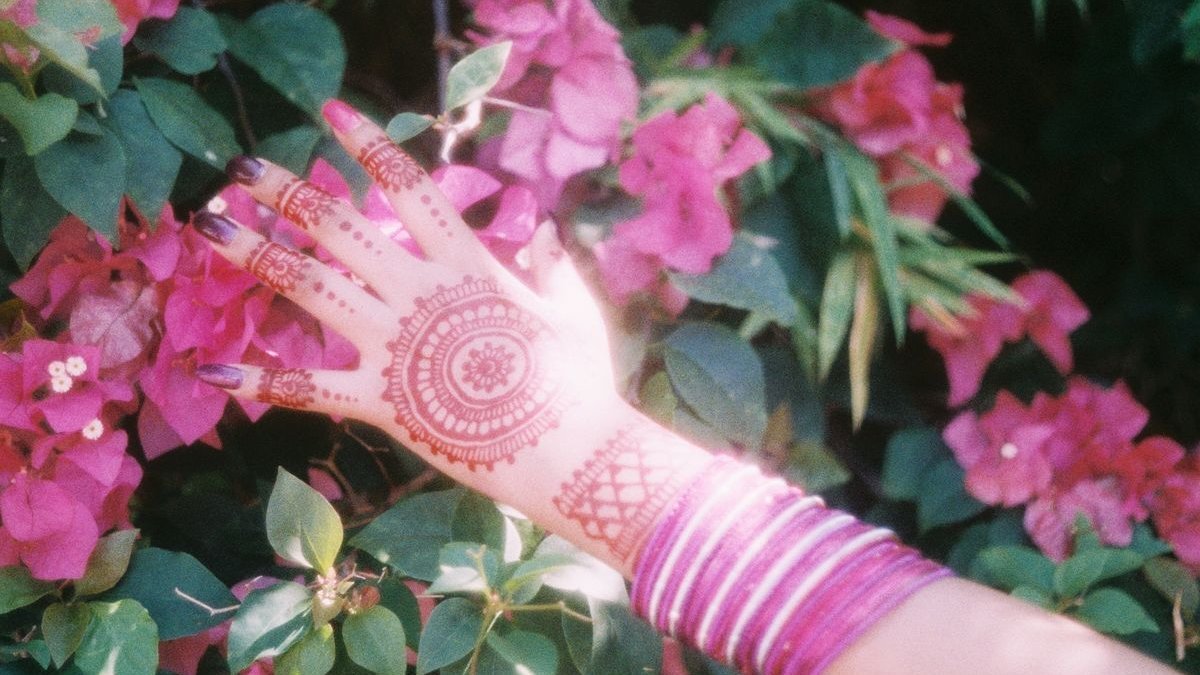
Steal this setup shamelessly: soft daylight, flowers in the frame, hand relaxed like it isn’t posing at all, the best lie photography ever told. Terrace, balcony, one bright window, same result. Even a simple design looks twice as expensive shot like this. You need a phone and one patient friend who owes you a favour. Everyone has one such friend. Collect.
Aftercare: How to Get a Darker, Longer-Lasting Stain
My most embarrassing mehndi story now, because it teaches everything. Years ago I did a back hand design I was genuinely proud of, scraped the paste off, looked at the pale orange ghost underneath and nearly cried, it looked EMPTY, like the cone had betrayed me personally. I sent my sister a dramatic voice note about fake cones. A long one. The kind with pauses.
By the next evening that stain had deepened into the richest reddish-brown I’d ever had on the back of a hand. So I sent a second voice note. Apologising. To a cone. The design was fine the whole time; I’d judged it in its awkward first hours. Don’t be me, learn from me, it’s cheaper.
Use a fresh cone. Old cones that sat in shop heat give a weak orange stain no matter how beautiful your lines are. Fresh, natural cones are basically the whole game.
Keep the paste on 6 to 8 hours, overnight if you can. Paste crumbling early? Dab it with a cotton ball dipped in lemon juice and sugar water, that glues it back down and feeds the stain at the same time. Let each dab dry before the next. Patience. I know.
Scrape, never wash. Scrape the paste off with the edge of a spoon, over a bin. Water at this stage is the enemy wearing a friendly face.
Avoid water for the first 12 hours if you can. Gloves for the dishes, somebody else can do them once, the world will keep turning. Water in those early hours stops the colour mid-sentence, and the stain never quite finishes what it was saying.
Feed it oil. Mustard oil, coconut oil, whatever plain balm the house contains. Not superstition, not a nani myth, it’s simply why your grandmother’s mehndi outlasted yours every time. Oil shields the stain from water and soap for days.
Wait for the colour. Fresh stain is light orange, always; it deepens over 24 to 48 hours into proper reddish-brown. Judge on day two. Only day two. And while it lasts, a little oil before housework stretches a good stain from one week towards two, the back of the hand meets soap and hot water constantly and sheds skin fast, so it needs the help.
Frequently Asked Questions
Which back hand mehndi design is best for beginners?
The minimal centre motif with one finger trail, the exact one in the step-by-step above. All basic shapes, a flower, some leaves, a line of dots, and mistakes genuinely hide inside it. I started there, everyone I teach starts there. Earn your confidence before Arabic; full coverage can wait its turn.
How long does a back hand design take to apply?
Depends on the design, and honestly on how much you talk while doing it, which in my house is a major variable. Minimal takes me 10 to 15 minutes per hand, Arabic trails 20 to 30, and a full bridal back with fine jaali can cross an hour per hand, which is why bridal sittings come with chai, cushions, and one person officially assigned to hold the bride’s phone.
Does back hand mehndi stain darker than palm mehndi?
Usually the palm wins by a little; its skin is thicker and holds colour deeper. But “a little” is doing heavy lifting there. Fresh paste kept on long enough, plus the lemon-sugar dab once it dries, and the back of your hand gets properly rich too. Mine regularly out-stains my palm these days, and it’s aftercare, not luck. Mostly aftercare. A little luck.
Can I do back hand mehndi on both hands myself?
Yes, and most of us do exactly that, standing in the kitchen at midnight. Do your non-dominant hand first while you’re fresh, right-handed? Your left hand gets the good design while your right does the work, then swap and keep the second design simpler. Doing the tricky hand first is the trick nobody tells beginners. I’m telling you.
How long does a back hand mehndi design last?
At its best for about 5 to 7 days, faded completely in roughly two weeks. The back of the hand sheds skin faster than the palm and meets soap and water far more often, so it goes a bit sooner, normal, not a personal failure of your cone. Oil before chores, easy on the scrubs, and you’ll squeeze noticeably more life out of it.
What should I do if I make a mistake while applying?
Move fast, while the paste is wet, wipe the wrong line off with a damp ear bud or a toothpick wrapped in tissue and the skin underneath will barely stain. Already dried? Gentle lemon juice rubs lighten the mark over a day or two. Or use my method: grow the design around the mistake until it looks deliberate. Half the prettiest motifs in my camera roll began as cover-ups. We don’t make mistakes in mehndi. We make plot twists.
Final Thoughts
The back of your hand is small. Fine, it’s small. But it carries your whole mehndi look out into the world, every photo, every handshake, every cup of chai you hold up a little too proudly. Give it a real design, not leftovers from the cone. Minimal for everyday, Arabic for that flowing festive drama, bracelet style when the jewellery is built right in, full coverage when it’s your big day and no shortcut will be forgiven. Save the photos you love, send them to your artist before the function, before, not during, learn from my chaos, and mix styles without fear. Happy mehndi, girls!