




Start strong by learning the old-school drink that never fades. A few smart tricks make it easier than you think. One key step changes everything get it right. Hidden details separate good from great. This is how the pros do it every time.
Old Fashioned Meaning
Ice swirls slowly through the amber liquid, cooling what began as warmth in a heavy glass. A sugar cube dissolves under pressure, crushed slightly before the pour. Whiskey arrives next – not shy, not loud – just present like something remembered clearly after years. Bitters follow, just enough to leave a trace, like footsteps on damp soil.
The whole thing rests awhile, breathing almost, letting time do part of the job. People have stirred similar drinks since long before modern bars existed. Laws changed, tastes shifted, yet this version stayed, tucked into corners of every era. Not because it shouts. Because it doesn’t need to.
Minimalism gives the Old Fashioned its staying power – this drink leans on restraint. Nothing smashed inside it. No fizz dances at the top. You will not find garnishes clinging to the edge. Its quiet strength comes from absence rather than addition.
Time passes, yet it remains unchanged. Back in the 1880s, over at the Pendennis Club in Louisville, Kentucky, a drink took shape – not because someone wanted something fancy, but because too many bartenders kept piling on extras that didn’t belong. Folks started asking for things done how they used to be made. Out of those requests came what we now call the Old-Fashioned.
What makes the Old Fashioned special is how it refuses to hide anything. Because there is no room for shortcuts, each part needs to stand out on its own. Whiskey sets the stage – its character drives everything else.
Bitters shape what lingers beneath, adding quiet depth. Sugar adjusts how it feels in your mouth, tipping balance between rich and sharp. Ice shapes the drink just as much, changing its character while melting bit by bit. Those who see grace in holding back will appreciate this mix most.
Ingredients You Need
The drink called Old Fashioned rests on just four main parts, and that bare setup shows every flaw. When there’s no hiding behind extras, each piece must pull its weight. Start with sugar – it needs to balance, not drown. Ice isn’t just filler.
it controls flow and chill without killing strength. Whiskey stands central – its character shapes everything else. Even the orange twist adds more than scent; it lifts the whole glass. Each choice echoes through the finish.
The Whiskey Base
Start with two ounces of whiskey – that’s what shapes everything else in an Old Fashioned. Choose bourbon if you want soft hints of vanilla and caramel weaving through each sip. Its high corn base adds sweetness that sits well beside sugar and bitters, never stealing attention.
For those drawn to intensity, rye steps forward with spice and crispness, shifting the drink into sharper territory. Whichever you pick shifts the whole feel of what’s in your glass. One leans smooth, the other brings bite – your palate decides which lands better. What matters most is how it hits your tongue. The mood you’re after guides the way.
Angostura Bitters
Two quick drops of Angostura bitters – no more than a pair of dashes – stitch the blend into place, though most overlook their role. Built from deep spices and soil-like tones, they add hush-toned depth below the obvious flavors.
With every taste, their presence slips through quietly, gentle yet vital for harmony. Skip them, and the experience tilts off-center; suddenly flat, stripped of dimension. That shift in bitters alters more than expected. Sticking to the familiar makes sense here. For well over 100 years, Angostura earned its place. Time proves why it remains the go-to choice.
Sweetening Agent
A bit of sweetness can come two ways, each just as good as the next. A quarter ounce of simple syrup slips right in, blending without fuss. On the other hand, a single sugar cube takes its time melting, adding a faint graininess fans often like. That slower melt ties directly to how it was first made, long ago. Tradition leans this way, many say.
However it lands on your tongue, let the whiskey lead without fighting sugar. When done well, edges soften into something even – never biting, never sticky. The moment matters most when flavors sit together quietly.
Ice
One solid piece of frozen water works finest in an Old Fashioned. Slow melting happens because size reduces exposure, so chill stays steady without rushing dilution. Big chunks change less quickly thanks to how their outside compares to what’s inside. If those aren’t nearby, a cluster of tiny ones fills the glass just fine just expect shifts in pace and feel. The way cold spreads alters when shape changes. Tiny bits bring speed; slow cool fades earlier.
The Orange Twist
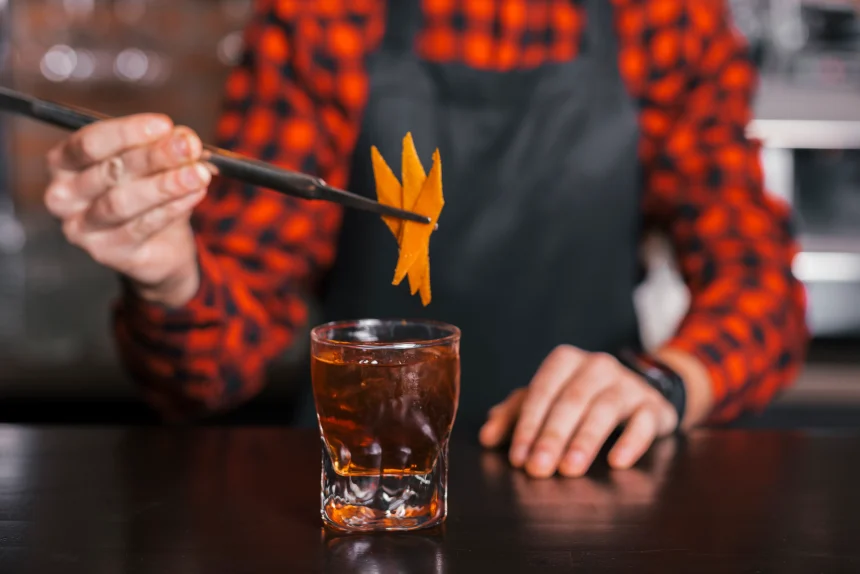
Open the peel wide, lift it high over the rim – then press down fast. Oil sprays out, misting the top layer with bright drops that carry a punch of aroma. Right then, the smell cuts through, waking up your senses ahead of the first sip.
Looks matter less than what happens next: the twist changes how the whole thing tastes, not only how it seems. Smell hits before flavor, guided by whatever drifted into your drink. Miss that moment, the experience shifts completely.
Old Fashioned Cocktail Guide Step by Step
Mix sugar with bitters: Put the simple syrup or sugar cube into a thick, low glass. People usually call this kind of cup a rocks glass or sometimes an old-fashioned one which is where the drink gets its title. After that comes two precise drops of Angostura bitters; no more, never less.
If you are using a sugar cube, gently crush it with the reverse side of any spoon until it crumbles completely no special tool needed here. Spinning the glass once stirs the syrup into place. Right here, everything begins to stick. A steady base forms before anything else lands inside.
Add Your Whiskey:
Right away, drop two ounces of your favorite whiskey into the glass where the sugar and bitters sit. Let it flow low and steady so it starts blending on its own. With a swift turn of the bar spoon, pull everything into alignment alongside the alcohol. Then – suddenly – the scent lifts, hinting this could be something far above average. Watch how the sugar starts to melt, while the bitters spread into the mix.
Chill the drink:
Slowly add the ice, taking your time with each piece. Then comes the turn of the spoon, circling without hurry in steady strokes. Not until the coolness runs deep through every part does it feel ready, usually two dozen seconds or so.
Into the drink slides one large frozen block – though smaller cubes work fine when that’s what you have. While it cools, a hint of melting pulls the flavors into line. Rushing leaves sharp edges behind. Lingering waters down the strength.
Garnish and Serve: Hold a slim strip of orange peel, about one to three inches long, over the glass with the bright side facing down. Twist it quickly, making the oils squirt out a mist flashes in the light. Let the smell rise while dragging the peel around the rim, then drop it in.
Some add a cherry, even if purists frown at that choice. Hand it over right away to someone waiting, or take the first sip yourself without pause.
Choosing Whiskey
That bottle you always grab? It probably works wonders right here. Choose a mellow one when softness feels just right. A punchy pour hits better if you crave intensity. Most folks start with bourbon – it earns its spot for solid reasons.
Start with Bulleit, maybe Buffalo Trace, even Woodford Reserve or Maker’s Mark – each one layers caramel and vanilla into the glass like it was meant to be there. The heavy sugar doesn’t push; instead, it settles next to Angostura bitters as if they’ve known each other for years.
Spice cuts forward when rye whiskey enters the glass, different from bourbon’s rounder touch. Rittenhouse or Knob Creek Rye pour intensity into an Old Fashioned, much like Sazerac Rye holds its own. Less sweetness appeals to some tongues, so this liquor pulls taste toward dry edges, sharp with heat.
These days, Japanese whisky appears on more bar shelves than before, earning nods from drink lovers. Not about sharp impact – Suntory Toki brings quiet hints of blossoms instead. Nikka From The Barrel walks that path too: deep flavor without weight.
Common Mistakes and How to Avoid Them
A wrong move here makes even the simplest beverage fall flat. Pay attention to each step – tiny errors carry big weight. Sugar upsets the mix when there is too much. A touch of sweetness balances the whiskey – no need for more. Stick to the recipe instead of adding extra on your own. Many skip stirring fast, yet that movement does far beyond mixing.
Temperature and moisture levels in your drink depend on this step. Twenty seconds of careful pouring change things in obvious ways. A rushed splash into the cup dulls the flavor, like haste overrides care. Right off the bat, grab real Angostura – knockoffs fall flat. Tiny shards of frozen water fade fast, watering down the drink before it has time to breathe. Rather than crushed crystals, try a single solid chunk.
Old Fashioned Twists You Might Enjoy
Once you’re comfortable with the original, explore known twists – one after another, these shine clearly because they earned their place, standing firm on their own.
The Mezcal Old Fashioned: A different take swaps whiskey for smoky mezcal. Because it has a strong, earth-driven profile, bitters blend right into its rhythm. Agave syrup steps in for sugar water, yet keeps sweetness grounded. Though rich in layers, each taste murmurs rather than shouts – familiar bones remain, just dressed in deeper tones.
The Dark Rum Old Fashioned: Warmth creeps into the mix when dark rums like Mount Gay step in. Aged expressions swap bourbon’s role, layering in hints of caramel alongside whispers of island fruit. Diplomático glides across the tongue with quiet ease. With Angostura’s bite as backup, orange bitters find their moment.
The Oaxacan Old Fashioned: Out of nowhere, smoke drifts into view with the first taste of the Oaxacan Old Fashioned, a cocktail that started gaining attention when Phil Ward poured it in New York. Not limited to a single liquor, it draws depth from tequila meeting mezcal in slow layers. After swallowing, echoes remain dusty textures, fire-kissed hints all hanging on without rush.