




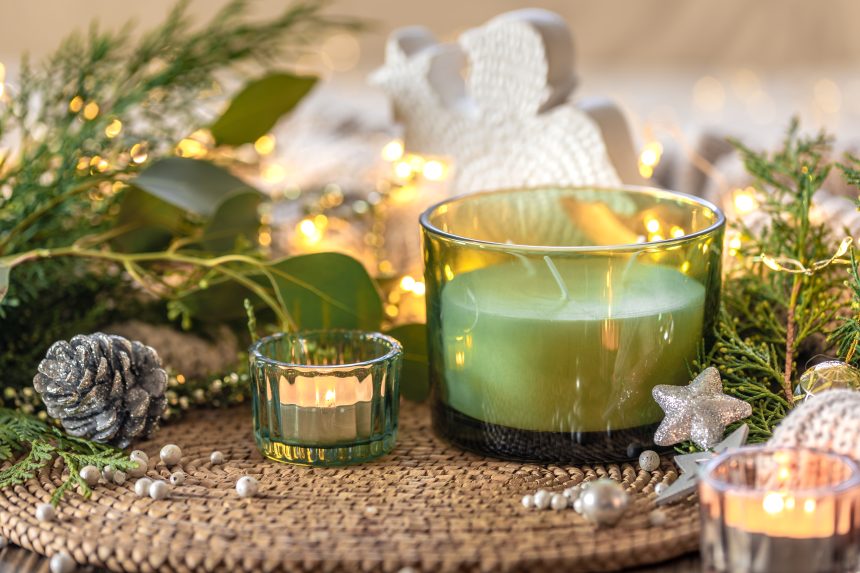
Thinking about a Green Blue Dress Candles for your next tablescape? Here’s everything I’ve learned styling, buying, and burning them the honest version.
I still remember the first time a client handed me one of these and said, “just… put it somewhere pretty.” No brief, no mood board, nothing. Just a candle shaped like a dress, dipped halfway in this moody blue-green that looked like it belonged at the bottom of the sea. I didn’t know what to do with it either, if I’m being honest.
That was maybe two years ago. Now I keep at least three green blue dress candles in my studio at any given time, and I genuinely can’t remember the last shoot or tablescape where I didn’t reach for one. So let’s talk about them properly what they are, why the color combo refuses to go out of style, and how to actually use one without it looking like you bought it in a panic the morning of a dinner party.
What a Dress Candle Actually Is (Nobody Explains This Well)
Here’s the thing most articles skip straight to “how to style” without explaining what you’re even looking at. A dress candle is a sculptural pillar candle shaped like a flowing gown or bodice silhouette. Some have a fitted top and a wide, skirt-like base. Others are more abstract just a suggestion of drapery in the wax.
The green and blue dress candle specifically usually comes in one of two finishes: a smooth ombre fade from deep teal at the hem up to a paler seafoam near the top, or a two-tone dip where the colors meet in a hard, almost painterly line. I have opinions on both, and I’ll get to them.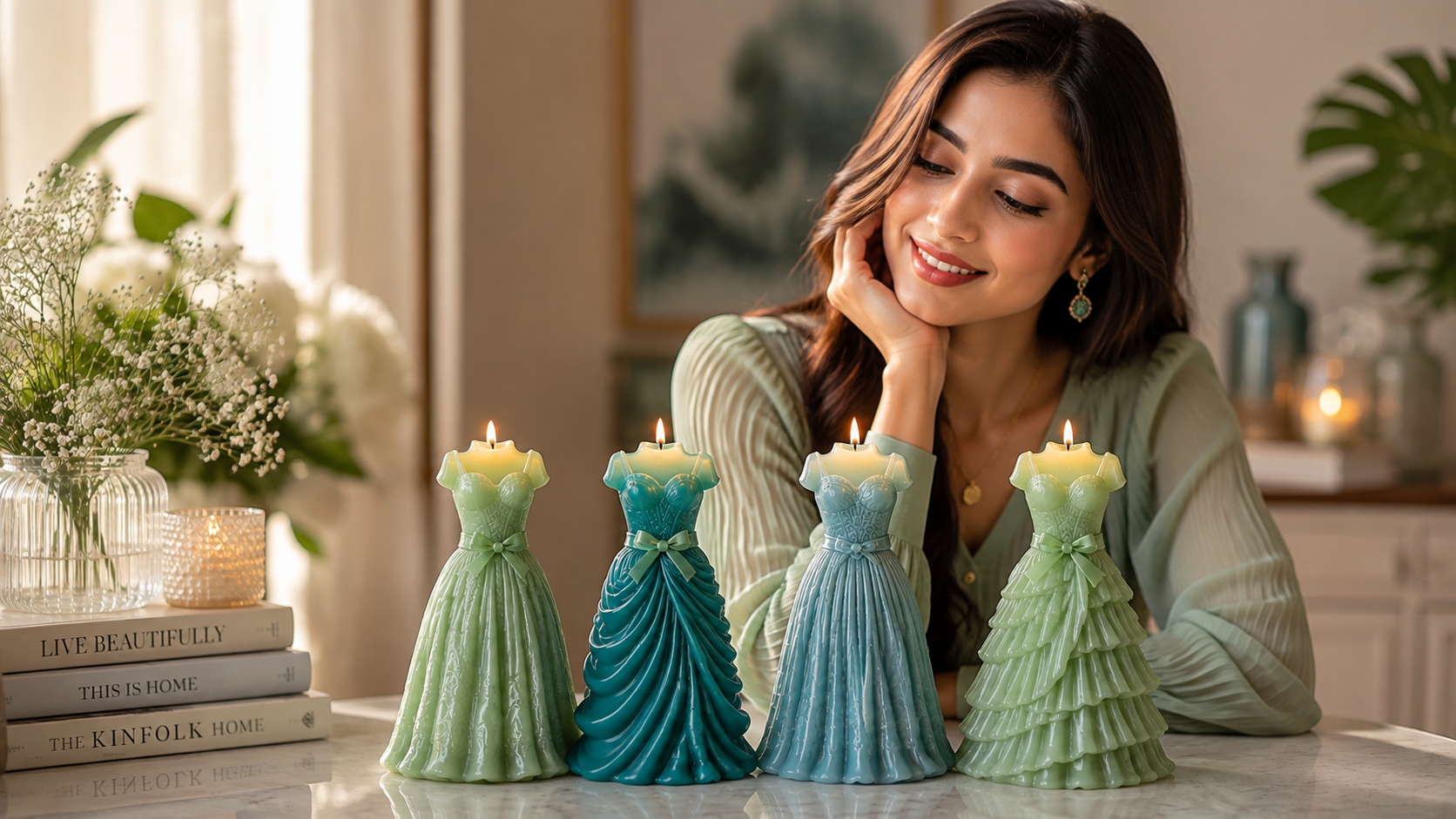
These aren’t new, exactly. Shaped candles as a category have been climbing for a few years now sculptural silhouettes, honeycomb textures, bendy pillars, you name it. But the dress shape specifically has become something of a signature piece, the kind of object that makes a shelf or tablescape look curated rather than just decorated.
Why This Particular Color Pairing Refuses to Die
I used to think blue-green was a “safe” choice. Turns out I was wrong, and the paint industry agrees with me. Behr named a smoky jade essentially a rich blend of blue and green as its 2026 Color of the Year, and their creative director put it plainly.
people want a shade that makes a statement yet still feels understated, part of a broader shift toward tranquil teal palettes taking over interiors next year. That’s exactly the tension a blue green dress candle captures. It’s moody without being dark. Calm without being boring.
Teal Has Officially Left the Coast
What I find genuinely interesting and this is the part most decor writers gloss over is that this color used to be seasonal. Coastal in summer, forgotten by October. Not anymore.
Designers are now working teal into cozy fall bedding, brass-accented winter rooms, blush-toned spring palettes, and breezy summer interiors basically every season gets a version of it now. Which tracks with what I’ve noticed in my own client requests. Nobody asks for “a nautical vibe” anymore. They just want the color, full stop, no theme attached.
It Photographs Better Than Almost Anything Else on My Shelf
Practical opinion here, not a design theory: blue-green catches light in a way that white and beige simply don’t. Put a dress candle near a window at golden hour and the ombre gradient genuinely shifts depth. I’ve photographed maybe forty tablescapes this year, and the ones with a teal or seafoam accent piece consistently get more engagement. Make of that what you will.
Green and Blue Dress Candles: Seven Styling Tips
Green and blue dress candles are a must-have accessory in any home as they effortlessly elevate the mood of an interior. “Dressing” candles means decorating or arranging them in a special way. This project uses blue and green hues to create a harmonious blend of colors reminiscent of the outdoors but with a touch of luxury. Be it a dramatic dinner table or a cozy mantel centerpiece, these seven tips will help you dress your candles like a pro.
1. Dress in Tone-on-Tone Colors
Avoid dressing candles of the same color. Instead, experiment with different shades of blue and green hues. For instance, pair navy blue candles with light blue pillar candles. To achieve a dramatic effect, use pillar candles with mixed heights.
2. Pair Strong Colors With Clear Glass
If you have opted for bright colors, it is best to display them in clear glass holders. The clear glass will allow the beautiful hues of the pillar candles to shine through and will create an illusion that the decorated candles are floating atop your tables.
3. Offset Cool Colors With Metallics and Woods
Cool colors can sometimes be overwhelming, so it is advisable to dress them against metallics and warm-toned woods. Try displaying your green and blue candles on a wooden tray, or complement the candle sticks with gold or brass accents.
4. Use Greenery to Frame and Define Candle Displays
To “dress” candles for table settings or display purposes, use greenery to frame the decorated candles. The rough textures of leaves will provide a lovely contrast to the smooth finish of pillar candles.
5. Create Interesting Displays Using Sculptured and Taper Candle Styles
Avoid using candles of one size or shape when dressing candles. Instead, use a mix of sculptured taper candles, ridged pillar candles, and smooth taper candles. Displaying pillar candles in various shades of green and blue hues makes for a stunning yet modern centerpiece.
6. Set Contrasting Table Linens Against Candles
To create a dramatic effect while dressing candles, set them against contrasting table linens. If you are using light blue candles, pair them with emerald green table linens. On the other hand, if you are using teal candles, set them against white or cream table linens.
7. Set Green and Blue Candle Displays Against Mirrors
Set your dressed candles in front of a mirror on a mantel or console table. This way, you’ll reflect the ambient glow of the candles, amplifying the effect of the cool blue and green hues. The candles will also cast lovely shadows that dance on the walls, creating an altogether new ambience in your home.
How I Actually Style These (Not the Pinterest Version)
Okay, opinions time. Most guides tell you to “cluster candles of varying heights,” which, sure, fine, but it’s not useful advice on its own.
Wedding and Event Tables
For tablescapes, I never use more than two dress-shaped candles per table, and honestly one is usually plenty if it’s a focal piece. Pair it with a single fluted pillar candle in a warm ivory the contrast between the sculptural shape and the plain column does most of the visual work for you.
Skip the greenery overload people love to pile around these; the candle’s already doing the “organic shape” job, so let it breathe.
Everyday Shelf Styling
On a normal bookshelf or mantel, I treat a green blue dress candle the way I’d treat a small sculpture not something to hide behind books, but something with its own six inches of negative space around it.
If your shelf already has a lot going on in warm tones (wood, brass, rattan), the cool blue-green reads as a deliberate contrast rather than clutter. If your shelf is already cool-toned, honestly, skip it you’ll lose the impact.
Bathroom and Vanity Moments
This is my slightly unpopular opinion: these candles work better in bathrooms than bedrooms. Something about the wet, glossy finish on the wax echoes tile and water in a way that just feels right. I’ve started recommending clients put their statement dress candle on a vanity tray instead of a nightstand, and every single one has come back thanking me.
Ombre, Dip-Dye, or Solid Which One to Actually Buy
I get asked this constantly, so here’s the real breakdown instead of a wishy-washy “it depends.”
- Ombre finish best if you want something that photographs beautifully but don’t want a hard color statement. It’s forgiving in almost any room.
- Dip-dye / two-tone more graphic, more modern, but it dates faster in my experience. Great for a short-term event, riskier as a permanent decor piece.
- Solid deep teal the boldest option. Only works if the rest of your palette is neutral enough to let it be the star. Don’t put this next to other saturated colors; it’ll fight for attention and lose.
If you can only own one, I’d tell you to go ombre. It’s the version I reach for nine times out of ten.
Scented or Unscented? My Honest Take
Most sculptural pillar candles, dress shapes included, are unscented and that’s on purpose. The whole point of the shape is visual, not aromatic, and heavy fragrance oils can actually mess with how evenly the colored wax layers cure.
That said, if you want something with a light scent, look for a soft, unobtrusive note like driftwood or sea salt nothing food-adjacent. A dress candle smelling like vanilla cupcake is, in my opinion, a genuine crime against the aesthetic.
Where This Trend Is Actually Headed
I’ll admit I was skeptical this was a passing Pinterest moment. It’s not. Interior stylists are describing this whole category as part of a wider sculptural pillar candle trend, with pillar candles moving from literal silhouettes toward something more abstract and almost architectural a genuine shift in how people decorate, not just a seasonal fad.
And separately, design writers have been rounding up uniquely shaped candle picks as go-to statement pieces for anyone who wants their tabletop to look intentional rather than default.
What that tells me: the dress silhouette specifically is probably going to keep evolving less literal gown, more abstract drape while the blue-green colorway sticks around regardless of shape, because the color trend and the shape trend are really two separate conversations that just happen to be peaking at the same time.
Burning and Care Tips Nobody Mentions
A few things I learned the hard way, so you don’t have to:
- Trim the wick to a quarter inch before every burn these candles are often wider at the base, so an untrimmed wick will tunnel unevenly and ruin the shape faster than you’d think.
- Never burn it flat on wood without a dish underneath. The dress silhouette means uneven melting, and you will get wax pooling somewhere you didn’t expect.
- Keep it out of direct sun when not lit. Blue and green pigments fade faster than warm tones I’ve watched a gorgeous teal ombre turn washed-out pastel over one summer on a sunny windowsill.
- If you’re not burning it at all (a lot of people buy these purely as decor), dust it gently with a soft brush rather than wiping, since the textured drape catches dust in the folds.
DIY or Buy What I’d Actually Do
I’ve tried making my own dip-dyed pillar candles at home, and I’ll be straight with you: the shape is the hard part, not the color. Getting a convincing drape or silhouette without a proper mold is genuinely difficult, and most DIY attempts end up looking more “blob” than “gown.”
If you’re comfortable with basic candle-making and want to practice layered dye techniques, go for it it’s a fun weekend project. But if you want the actual sculptural silhouette, I’d just buy one. It’s not worth the frustration.
Mistakes I See Constantly
Buying one green blue dress candle and expecting it to anchor a whole room by itself it won’t, and it shouldn’t have to. Pairing it with other bold colors instead of letting it be the accent.
And this one’s minor but it drives me a little crazy: displaying it somewhere with harsh overhead lighting, which flattens the ombre gradient completely. These need side light or ambient light to actually show off what you paid for.
Frequently Asked Questions
What is a green blue dress candle exactly?
It’s a sculptural pillar candle shaped like a dress or gown silhouette, typically finished in an ombre or dip-dye blend of teal, seafoam, or blue-green tones. They’re mostly decorative rather than fragrance-focused.
Are dress-shaped candles safe to actually burn?
Yes, most are made from standard paraffin or soy wax and burn like any pillar candle. Just trim the wick, place it on a heat-safe dish, and never leave it unattended near fabric or curtains.
Will the color fade over time?
It can, especially with direct sunlight exposure. Blue and green pigments tend to fade faster than warm tones, so keep unlit candles away from bright windows if you want the color to last.
Do these work outside of coastal or beach-themed decor?
Definitely. The blue-green colorway has moved well past seasonal or coastal styling and now shows up in everything from cozy autumn tablescapes to formal winter dinners it’s become a year-round neutral in its own right.
How many should I use in one space?
Less is more here. One or two per table or shelf as a focal piece works better than clustering several together, since the sculptural shape needs room to actually be seen.
Final Thoughts
Honestly, I didn’t expect to become this attached to a candle shape, but here we are. There’s something about the green blue dress candle that manages to feel both sculptural and a little bit playful like decor that doesn’t take itself too seriously but still looks expensive.
If you’re on the fence, start with one ombre piece on a shelf that already has some warmth to it, and see how it changes the room. I’d genuinely love to hear how yours turns out drop a comment or send me a photo once you’ve styled one. And if you’ve found a finish or brand you swear by, I’m always taking notes.