




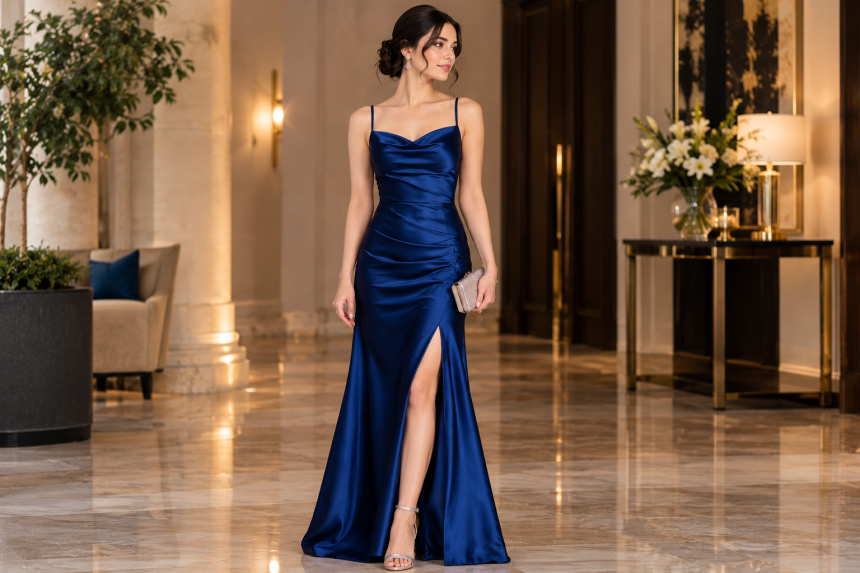
Looking for beautiful dresses for women that actually flatter and last? Here’s a real, opinionated guide to silhouettes, fabrics, and styling that works.Someone asked me, again, at a dinner last week: “okay but what’s actually a good dress to buy right now?”
I get this question constantly, and every time I pause before answering, because the honest answer was never a single dress. It’s a whole way of thinking that almost nobody explains properly.
Beautiful dresses for women aren’t about chasing whatever’s trending on your feed this week. They’re about knowing your own shape, understanding what fabric actually does on a body versus a hanger, and having two or three go-to pieces that never let you down. That’s it. That’s the whole thing, and somehow nobody says it out loud.
I’ve spent years pulling dresses for shoots, helping friends pack for weddings they were dreading, and returning far too many online orders myself before I got smarter about this. So here’s everything I wish someone had told me sooner — no fluff, no “wear what makes you feel confident” nonsense that says nothing at all.
Here’s what’s funny, actually. The more dresses I’ve handled and lived in, the more I’ve realized the industry oversells complexity. Brands want you to believe there’s a secret formula, some exact combination of neckline and hem that unlocks perfection. There isn’t. There’s fit, fabric, and a bit of honesty about your own habits do you actually iron things, or are you lying to yourself about that linen dress you keep buying anyway.
So pour whatever you’re drinking, because this one runs long and I’m not pretending otherwise.
Why Beautiful Dresses for Women Still Rule Every Wardrobe
A good dress solves a problem in about four seconds. You put it on, you’re done no matching required, no second-guessing whether the top works with the bottom. That’s the whole appeal, and it’s underrated.
Here’s the thing most people miss, though a dress does more visual work than almost any other single garment you own. One piece of fabric is shaping your entire silhouette, so fit matters ten times more than it would on a top or a pair of trousers. Get it right and you look pulled together without trying. Get it wrong and no amount of accessorizing saves it.
I’ve noticed that people who “don’t feel like dress people” usually just haven’t found their silhouette yet. It’s rarely the category itself. It’s the fit.
There’s a practical case too, one nobody markets properly: laundry math. One garment instead of two means less to wash, less to iron, less to hunt for in a suitcase. I pack almost exclusively dresses for anything longer than four days now, and my suitcase has never been lighter or my outfits more consistent.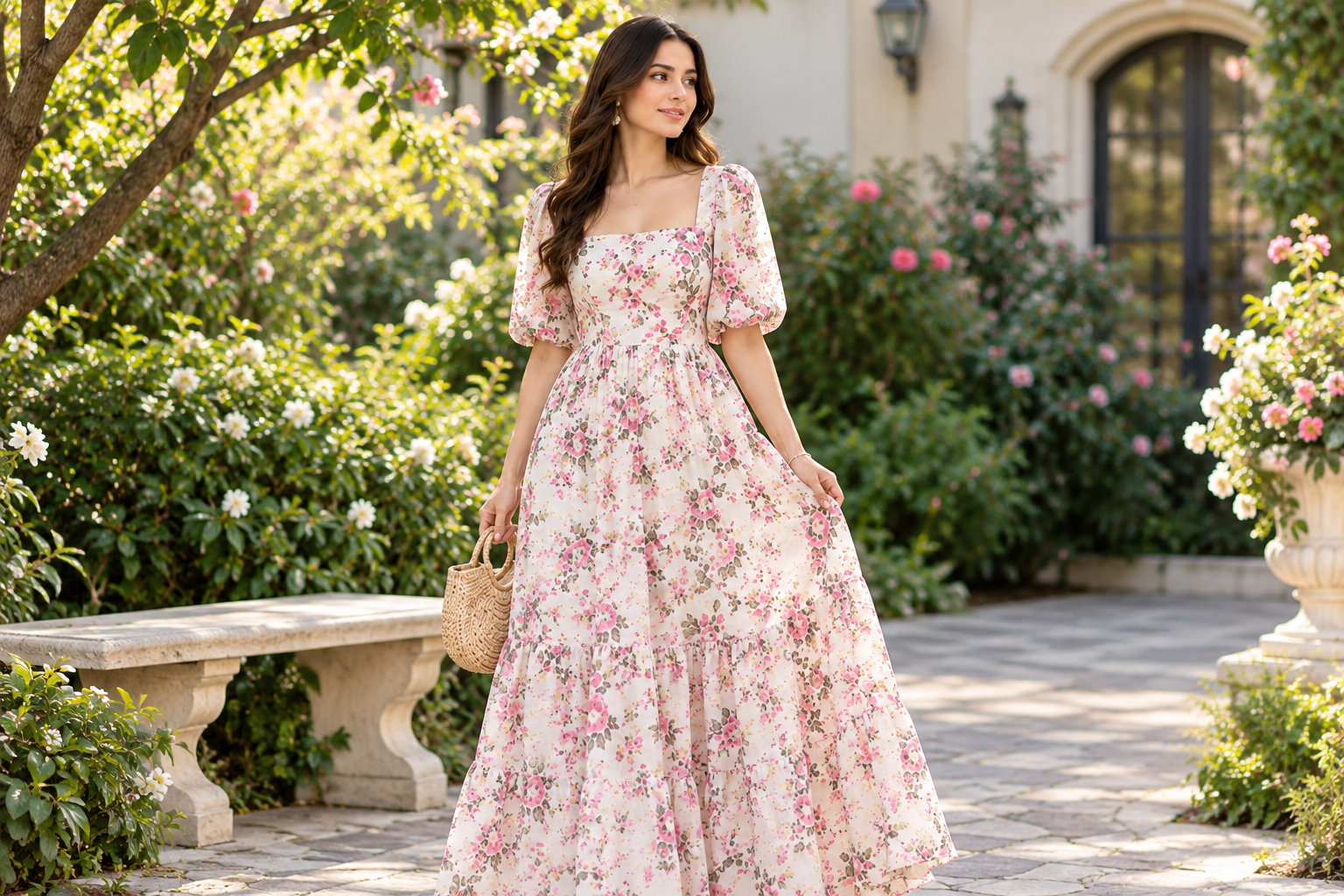
And there’s an emotional piece, which sounds like a stretch until you’ve watched it happen. A dress that fits well changes how you stand. I’ve seen it in fitting rooms more times than I can count someone walks in slouched, zips up the right dress, and their shoulders drop back like a switch flipped. That’s not magic. That’s just what correct proportion does to posture.
The one styling rule I actually stand by
Fit the biggest part of your body first, then build everything else around that. Sounds obvious, but almost nobody shops this way they buy the print or color first and hope the fit sorts itself out. It doesn’t, usually.
I learned this the expensive way, buying a gorgeous printed midi that fit my shoulders and gaped everywhere else because the pattern seduced me before I checked the cut. Now I do it backwards on purpose cut first, color second, print a distant third.
Why “one dress fits all” is mostly marketing
You’ll see listings claiming a dress is “universally flattering,” and I’d take that with a healthy dose of skepticism. No single silhouette flatters every body. What’s true is that certain shapes flatter a wider range of bodies than others. That’s a meaningfully different claim, worth remembering next time a product page oversells itself.
Finding Beautiful Dresses for Women That Match Your Actual Shape
I keep steering clients and friends toward the same starting point: figure out your shoulder-to-hip relationship before you look at a single dress online. Sounds tedious, but it saves three return boxes a month.
Broad shoulders and a narrower lower half? A-line and flared skirts do a lot of quiet work here, pulling visual weight downward so your proportions read as balanced rather than top-heavy one of the more genuinely useful things I’ve picked up from watching this play out in fitting rooms, over and over.
Fuller hips, smaller waist up top? Fit-and-flare is your best friend, full stop. It nips in exactly where you want definition and skims rather than clings everywhere else.
Straighter build, not much waist definition? Honestly, this is where you get to have the most fun belts, wrap styles, structured seaming. You can basically manufacture a waist out of nothing with the right cut.
Curvier through the middle, fuller bust and hips with less waist taper? Empire waistlines are doing quiet, unglamorous heavy lifting here. They sit just under the bust and let fabric fall away from there, skimming rather than clinging through the section most people feel self-conscious about. Not the flashiest silhouette. Reliable, though, in a way flashier cuts often aren’t.
Petite frame, worried about looking swallowed by fabric? Skip anything with a drop waist or heavy horizontal seaming below the natural waistline it tends to visually shorten the leg line. A higher waist, empire or otherwise, does the opposite.
Reading your own silhouette without overthinking it
Stand in front of a mirror in something fitted, not baggy. Notice where your body’s widest, and where it’s narrowest. That’s the whole exercise. No stylist required.
I’ll be honest the “body type” language can feel clinical, even outdated to some people, and that’s fair. Think of it less as a label and more as information. Not a box you’re stuck in.
One thing I’d add, because it gets lost in most guides: don’t treat your shape as fixed forever. Bodies shift with age, with seasons, with life stuff nobody warns you about. The dress that flattered you at twenty-five might not flatter you now, and that’s not a failure of your body it’s just biology doing its thing. Re-check your proportions every couple of years instead of assuming last decade’s rules still apply.
What actually happens when you try something “wrong”
Sometimes the fun part of shopping is trying the silhouette you’ve been told to avoid, just to see. I’ve had clients swear off a certain cut for years because some magazine once said it wasn’t “for their shape,” only to try it on almost as a joke and end up buying it. Rules are useful starting points. They’re not laws.
The Fabrics That Make or Break a Dress
Nobody talks about fabric enough, and it drives me a little crazy, because fabric is honestly half the reason a dress looks expensive or looks cheap. Same silhouette, wildly different result depending what it’s cut from.
Silk and silk-blends drape instead of cling. They move with you. They also wrinkle if you sit wrong for ten minutes, so know what you’re signing up for.
Cotton and linen blends are forgiving, breathable, great for daytime but linen especially will crease if you so much as look at it wrong. I’ve made peace with that. Some people never will.
Structured fabrics like brocade or heavier crepe hold their shape without you doing anything. If you want a dress that looks intentional even when you’re running on fumes, this is the category to shop.
Jersey and other knit fabrics get a bad reputation for being “boring,” but they’re the unsung workhorse of a good wardrobe. A well-cut knit dress moves with your body all day, doesn’t wrinkle in a suitcase, and goes from desk to dinner with a jacket swap. I own more of these than I’d probably admit publicly.
Velvet deserves its own mention because people either love it or actively avoid it, and I get both reactions. It photographs beautifully under warm light and feels genuinely luxurious, but it shows every crease and attracts lint like nothing else I own. Worth it a handful of times a year. Not something I’d wear weekly.
Reading a fabric tag like you mean it
Check the fiber content before the price tag, not after. A dress that’s mostly polyester behaves completely differently on your body than one that’s mostly viscose or silk, even when they look identical in a product photo.
A quick trick I use shopping online: if a listing doesn’t disclose fiber content clearly, that’s a small red flag. Reputable sellers put it front and center because they know it matters. When it’s buried or vague, I get more cautious about the quality overall.
And worth knowing a higher price doesn’t automatically mean better fabric. I’ve bought forty-dollar dresses with gorgeous drape and hundred-dollar dresses that felt like a shower curtain. Price is a hint, not a guarantee. Read the actual fabric composition every time.
Beautiful Dresses for Women by Occasion, Because Context Actually Matters
A dress that’s perfect for brunch is often completely wrong for a work event, and the reverse is just as true. Seems obvious written down, but I still see people show up to interviews in something that belongs at a beach wedding.
Work and daytime dresses should move with you without gaping, riding up, or requiring constant adjustment. Sheath and shirt-dress silhouettes tend to handle this best professional without looking stiff.
Evening and event dresses get to be a little more dramatic. This is where you can lean into a bolder silhouette, richer fabric, or a statement neckline you’d never wear on a Tuesday.
Casual everyday dresses are, in my opinion, the most underrated category. A good T-shirt dress or simple wrap style earns its keep more than almost anything flashy in your closet.
Wedding-guest dresses deserve their own category, because the rules shift with the venue, the time of day, how close you are to the couple. Garden weddings favor lighter, flowier fabrics. Evening receptions can handle more structure and shine. And the one universal rule don’t wear white, don’t wear anything that could photograph as white, full stop, no exceptions, I don’t care how “off-white” you think it reads.
Travel dresses are their own little niche too, worth planning for separately. You want wrinkle-resistant, easy to layer, forgiving after a long flight when you’re bloated and tired and just want to look presentable getting off the plane. Jersey knits and technical crepe blends win here every time.
Dressing for weather without losing the look
Layer with a fitted cardigan or blazer in cooler months rather than switching to a bulkier dress altogether you keep the silhouette you know already works and just add warmth around it.
Tights and boots do more than most people give them credit for. A summer dress doesn’t have to retire in October if you swap sandals for boots and add opaque tights underneath. I’ve gotten a solid extra three months out of dresses this way, and it always feels a little like cheating in the best way.
Color Choices That Actually Flatter, Not Just Trend
I have opinions here, and they’re a little unpopular. Everyone obsesses over “finding your season” and color analysis, and sure, that has some value. But in my experience, contrast matters more than the specific hue.
If you have high contrast between your hair, skin, and eyes, bold saturated colors read as intentional rather than overwhelming. If your coloring is softer and more blended, muted tones usually look more expensive on you than a bright primary color would, even in the exact same silhouette.
That said genuinely just my take nobody looks bad in a well-fitted black dress. It’s a cliché because it works. I’ll die on this hill.
Undertone matters more than most color quizzes suggest, too. Warm undertones tend to glow next to golds, warm reds, olive, camel. Cool undertones do better with icy blues, true reds, silver-toned metallics. It’s a five-minute check hold a warm gold swatch and a cool silver swatch near your face in daylight and see which one brightens your skin rather than washing it out. That single test has saved me from more wrong purchases than any formal color session ever did.
The two-color rule I use when shopping
Pick one dominant color and one accent, tops. When an outfit has more than two colors competing for attention, it starts looking busy instead of intentional, at least to my eye.
Prints are a slightly different game. A busy print already counts as your “two colors” worth of visual noise, so keep shoes, bags, and jewelry quiet when you’re wearing one. I’ve seen plenty of great printed dresses get undercut by a loud statement necklace fighting for the same attention.
When to just break the rule entirely
Special occasions are exactly when I’d tell you to ignore all of this. A wedding, a big birthday, an anniversary dinner these are the moments where a slightly-too-bold color or a print you’d never wear on a Tuesday actually belongs. Rules exist for the ordinary ninety percent of days. Save the boldness for the ten percent that deserve it.
Caring for Beautiful Dresses So They Actually Last
Here’s something that annoys me: people spend real money on a gorgeous dress, wash it however, hang it wherever, then wonder why it looks tired after four wears. Fabric care isn’t glamorous, but it’s the difference between a dress lasting two seasons or ten.
Delicate fabrics like silk, lace, and fine cotton blends need cool water, gentle detergent, and patience no wringing, ever. Air drying flat or on a padded hanger keeps the shape intact in a way a dryer simply can.
Structured or embellished pieces, especially anything beaded or sequined, usually do better with professional cleaning. I learned this the hard way with a beaded dress that came out of a home wash looking like it had lost a fight.
Storage habits worth adopting
Use padded hangers for anything silk or delicate, and fold heavier knit dresses instead of hanging them gravity stretches a knit out of shape faster than you’d think.
Rotate your dresses instead of wearing the same three on repeat, too. Fabric fibers need rest between wears to bounce back, and constant wear without a break wears down elasticity faster than the washing itself does. Counterintuitive, but true the dress you love enough to wear weekly is exactly the one that needs the occasional week off.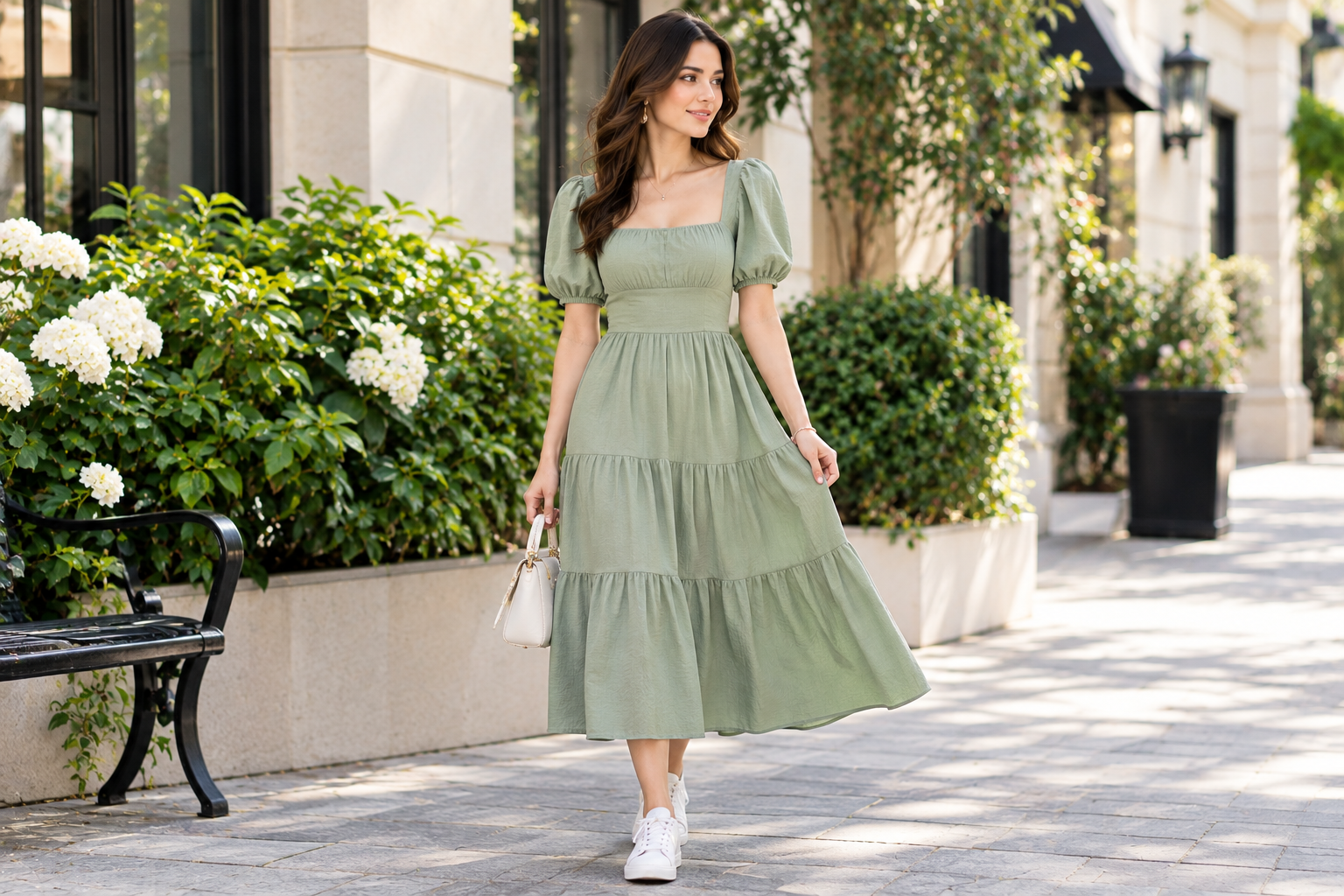
Steam instead of iron whenever you can, especially for anything delicate. A hot iron presses texture out of fabric permanently in some cases, while steam relaxes wrinkles without flattening the weave.
Building a Small Dress Wardrobe That Covers Everything
You genuinely don’t need twenty dresses. You need maybe five or six that each do a specific job, with little enough overlap that you’re not choosing between near-identical options every morning.
Here’s roughly how I’d build it from scratch:
- One structured sheath or shirt dress for work
- One flowy midi for weekend errands and casual outings
- One statement piece for events bold color, interesting neckline, some personality
- One little black dress that fits like it was made for you
- One breathable summer option in linen or cotton
- One knit dress for cooler months that layers well
That’s six pieces, and it covers roughly ninety percent of situations most people run into over a year.
Notice what’s missing from that list: nothing trendy, nothing tied to a season’s micro-trend, nothing you’d feel dated in within eighteen months. Deliberate. Trend pieces have their place, but they shouldn’t be the foundation — they’re the fun extras added once the foundation actually exists.
Quality matters more on the foundation pieces than on the trend pieces, too. Spend more on the black dress and the work sheath, since those get worn hardest. It’s fine to be cheaper and more experimental with a trend piece you might wear a handful of times before it feels dated.
Avoiding the closet full of “almost right”
Before buying anything new, ask whether it does a job your current dresses don’t already do. If the answer’s no, it’s probably going to sit unworn I’ve got a closet section that proves this theory better than I’d like to admit.
A trick that’s helped me: before checking out, picture three specific occasions you’d actually wear it to, right now, not hypothetically. If you can’t name three, put it back. This one rule has saved me more money than any budgeting app ever has.
Necklines Nobody Explains Properly
Necklines get treated as an afterthought compared to silhouette, and I think that’s backwards. A great silhouette with the wrong neckline still photographs oddly, especially from the collarbone up, which is where most people’s eyes land first in a photo.
V-necks elongate the neck and draw the eye downward in a way that flatters almost everyone, which is probably why they show up so often in “safe” recommendations. Square necklines do something different they frame the collarbone and shoulders in a way that reads structured and a little more formal, even on an otherwise casual dress.
Boat necks are underrated, honestly. They widen the visual line across the shoulders, which works beautifully if you’ve got a narrower upper body and want a bit more balance up top. I resisted them for years thinking they’d look boxy on me. They didn’t. I was wrong, and I’ll admit that freely.
High necklines and halters get a bad reputation for being unflattering on a fuller bust, but that’s more myth than rule. What actually matters is the fabric behind the neckline a stiff, structured fabric in a high neckline can look boxy, while the same neckline in a soft draping fabric reads completely differently.
Matching neckline to jewelry, finally explained simply
Busy neckline, simple jewelry. Simple neckline, room to play with a statement piece. This is genuinely the entire rule, and it took me embarrassingly long to internalize it, because I spent a solid chunk of my twenties piling a chunky necklace on top of an already-detailed neckline and wondering why the whole look felt cluttered.
Shoes and Accessories That Actually Complete a Dress
A dress rarely finishes the outfit on its own, though a really good one comes close. Shoes and accessories are doing more of the heavy lifting than people give them credit for, especially when it comes to shifting a single dress between completely different occasions.
The same little black dress can go from office-appropriate to date-night with nothing more than a shoe and jewelry swap. Flats and a structured bag read as daytime. A heeled sandal and a smaller, more delicate bag shift the entire mood without changing a single thing about the dress itself. This is, in my opinion, the single most cost-effective styling trick nobody teaches early enough.
Belts deserve a mention too, since they’re the fastest way to reshape a silhouette you already own. A shapeless shift dress becomes a defined waist in about four seconds with the right belt, no tailor required. I keep two or three in rotation specifically for this reason one thin, one wider, one in a neutral that goes with almost everything.
Bags matter more than most people think, structurally speaking. A boxy, structured bag next to a flowy dress creates a nice visual contrast. A slouchy bag next to an already-structured dress can end up fighting the silhouette instead of complementing it. Small detail, but it shows up in photos more than you’d expect.
Nobody warns you about this enough, so I will. Sizing is wildly inconsistent across brands, and even within the same brand across different dress styles. A size that fits perfectly in one cut can run tight or loose in another from the exact same label.
Check the actual measurements on a size chart rather than trusting the label size, especially online where you can’t try before buying. Bust, waist, and hip measurements in inches or centimeters tell you far more than “medium” ever will. When you’re between two sizes, sizing up is almost always the safer bet for a dress you can take a seam in with a tailor, but you can’t add fabric that isn’t there.
I’d also gently push back on the idea that you need to “fit into” a specific size at all. The number on the tag is arbitrary and varies so much between brands that it’s basically meaningless outside that brand’s own internal chart. What matters is how the fabric sits on your actual body, not what number’s sewn into the label.
Final Thoughts
Beautiful dresses for women aren’t complicated once you stop chasing trends and start paying attention to what your body actually looks like in different shapes and fabrics. Know your silhouette, respect the fabric tag, keep your color palette a little disciplined, and take care of what you buy. That’s genuinely most of it.
If you take one thing from this whole ramble, let it be this: fit beats trend, every time. A five-year-old dress that fits you perfectly will always look better than this season’s “it” piece worn in the wrong shape.
Frequently Asked Questions
What’s the most flattering dress silhouette for most body types?
A-line tends to work across the widest range of shapes because the fitted top defines the waist while the flare skims rather than clings over the hips. Not universal, but the safest starting point if you’re unsure.
How do I know if a dress fabric is good quality before buying online?
Check the fiber content listed in the product details, not just the photos. Natural fibers or high-percentage viscose blends generally drape and last better than fully synthetic polyester, even when they look similar in pictures.
Can I machine wash a delicate dress, or does it need dry cleaning?
Depends on the fabric and construction. Simple silk or lace pieces can often be hand washed in cool water, but anything with beading, structured boning, or heavy embellishment is safer left to a professional cleaner.
What length of dress is most versatile for everyday wear?
Midi length tends to work across the most occasions casual enough for daytime, dressy enough for evening with the right accessories. It also flatters a wider range of heights than either mini or full maxi lengths.
How many dresses do I actually need in a practical wardrobe?
Somewhere around five to six well-chosen pieces covers most situations one for work, one casual, one statement piece, a reliable black dress, and seasonal options for warm and cool weather.