




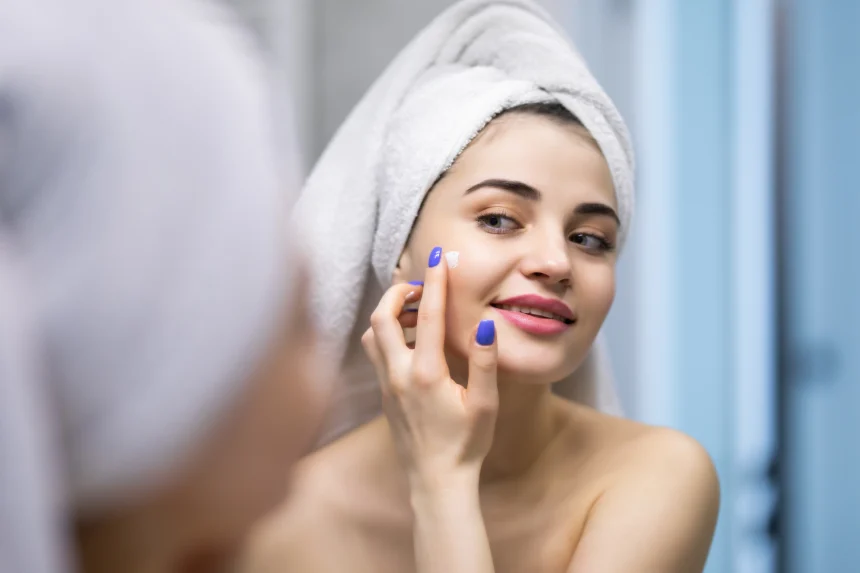
My cousin stopped face moisturizer her face almost two years ago. Her reasoning was simple her skin was oily by 11 am, her T-zone was glossy enough to reflect sunlight, and she had no intention of adding to the moisture content. Her T-zone was already contributing to the local humidity.
Her reasoning was not wrong. Her skin, however, stopped being healthy.
By the end of the second year, she had dry patches on her nose that she constantly peeled off, oil that appeared more frequently and thicker than before, and a strange sensation of dryness twenty minutes after washing her face, which she had convinced herself was normal.
So, if you are reading this article and you have oily skin and you are wondering whether moisturizing is worth your time, here is the short answer: yes, and the right moisturizer will probably make you less oily than you were before. The long answer is this article because, while “use a gel moisturizer” is good advice, it doesn’t tell you much.
Oily skin is often dehydrated
The most surprising thing about oily skin is that it is often dehydrated. Sebum and water are two different things, and there is no particular connection between the skin’s oil production and its hydration levels. A dehydrated skin barrier will cause the skin to produce more oil in an attempt to restore its protective function, but the same oily skin will be more sensitive to topical treatments and have trouble tolerating cleansers.
A good moisturizer will prevent this cycle, but it will not stop it immediately or overnight.
There is science behind it all, and it is not particularly complicated. The top layer of the skin, or the epidermis, needs to contain roughly 20-30% water to function correctly. Anything below that, and the skin cannot retain moisture well, causing it to become dry and irritable. Oil cannot replace water, which is why oily skin is often dehydrated.
Are you oily or dehydrated?
It is worth distinguishing between the two because the causes and the solutions are different.
Oily skin is characterized by a generally shiny appearance after washing, larger pores on the T-zone, and infrequent dryness. Blotting paper will reveal oil, and the skin will rarely feel tight after cleansing. This type of skin is often genetic and is caused by high androgen levels, and it will rarely disappear with age, although it may become less noticeable.
Dehydrated skin, on the other hand, may feel dry and uncomfortable, particularly after washing. It may also have a blotchy texture and occasionally feel oily. The two often go together, particularly in combination skin, which is the most common type.
Combination skin is oily in the T-zone and has dry patches on the cheeks and around the chin.
The importance of this distinction lies in the fact that a heavy moisturizer for dehydrated skin will make oily skin even oilier, and a rich cream will not be tolerable for dehydrated skin. The same goes for oily skin – it will not respond well to a heavy moisturizing cream. A good rule of thumb is to use a lighter moisturizer for combination and oily skin and a richer one for dehydrated skin.
A quick test to see whether your skin is dehydrated is to wash your face with a gentle cleanser, pat it dry, and wait for thirty minutes without applying any products. If your skin feels tight and uncomfortable, it is dehydrated; if it feels generally oily but not tight, it is not.
What to look for in a moisturizer for oily skin
Do not get hung up on whether the moisturizer is oil-free or not. The term itself is not an industry standard, so there is no particular reason to trust it. “Non-comedogenic” is also not an industry standard, which means that companies can use it at their discretion. You can look at the ingredient list instead.
The most useful ingredients to look for in a moisturizer for oily skin are
niacinamide,
hyaluronic acid or glycerin,
ceramides,
squalane,
zinc PCA,
Niacinamide
Niacinamide is a skin-friendly amino acid that has been proven to reduce sebum production. It is found in most skincare products for oily and acne-prone skin, and it is generally safe and effective. It is best to look for a product that has around 4 or 5% niacinamide; anything higher can irritate the skin.
Hyaluronic acid
Hyaluronic acid and glycerin are both humectants, meaning that they help the skin retain water. They are particularly useful for oily skin because they are lightweight and do not leave a greasy film after application. Glycerin, in particular, is an affordable and underrated moisturizing ingredient that is used in most drugstore skincare products.
Ceramides are lipids that are a part of the skin’s natural barrier. They hold moisture in and protect the skin from the outside environment. If the skin barrier is compromised, the skin will feel irritated and sensitive. Ceramides are particularly useful for people with oily and sensitive skin.
Squalane is a lightweight oil that is easily absorbed into the skin. It is found in many moisturizers and serums for oily skin because it is non-comedogenic and helps the skin retain moisture. It is a popular ingredient among oily skin because it generally does not irritate it, although it is not tolerated by everyone.
Zinc PCA is another ingredient to look for in a moisturizer for oily skin. It helps reduce excess sebum production and has antibacterial properties, meaning that it can help with acne.
Salicylic acid is a popular ingredient in skincare products for oily and acne-prone skin. It is a keratolytic agent, which means that it helps the skin shed dead cells and unclog pores. It is often found in cleansers and treatments for oily skin. It is best to look for a moisturizer with around 0.5 to 2% salicylic acid, as higher concentrations can irritate the skin.
Dimethicone is a silicone oil that is often used in skincare and makeup products. It provides a smooth and silky finish while protecting the skin. It is a good moisturizing agent for oily skin because it is lightweight and does not clog the pores.
Ingredients to avoid in a moisturizer for oily skin
Some ingredients in moisturizers for oily skin are best avoided, as they can irritate the skin and worsen the condition.
Coconut oil is comedogenic, which means that it can clog the pores and cause breakouts. It is often found in natural skincare products, but it is best to avoid it if you have oily skin.
Shea butter, cocoa butter, and other natural butters are also comedogenic and should be avoided. They are often used in body lotions and creams, but they are too heavy for the facial skin.
Alcohol denat or SD alcohol is a drying agent that is often used in skincare products for oily skin. It is best to avoid it if your skin is sensitive or dehydrated.
Alcohol is often used in moisturizers for oily skin because it provides a matte finish, but it can also dry out the skin, which leads to increased oil production. A small amount of alcohol towards the end of the ingredient list is generally safe, but if it is in the first few ingredients, it is best to avoid the product.
Heavy perfumes and essential oils are generally irritating and should be avoided in skincare products. Lavender, citrus, peppermint, and other essential oils are often used in perfumes, but they can cause allergic reactions in some people. If the skin is sensitive, it is best to avoid perfumes in skincare products.
Isopropyl myristate and isopropyl palmitate are comedogenic oils that should be avoided in moisturizers for oily skin. They are often used in makeup products, but they can also cause breakouts. Algae extract is another ingredient to avoid in moisturizers for oily skin, as it can irritate the skin and cause allergic reactions.
The texture of the moisturizer is often more important than the ingredients.
The most important consideration when choosing a moisturizer is its texture. A moisturizer for oily skin should generally be lightweight and non-greasy. There are several types of moisturizers, each of which is suitable for different types of skin.
Gel moisturizers are transparent and water-based and are absorbed quickly into the skin. They are best for oily skin in warm weather but may not be the best choice in cold weather. They are generally less hydrating than other types of moisturizers.
Gel-cream moisturizers are a hybrid of gel and cream moisturizers. They are lightweight and non-greasy but provide more hydration than gel moisturizers. They are a good choice for most people with combination or oily skin.
Lotion moisturizers are the thinnest type of moisturizers. They are best for combination skin and can be used in both warm and cold weather. They are generally good for people with sensitive skin.
Water cream moisturizers are a relatively new type of moisturizers that are made of water and have a cream-like consistency. They are lightweight and hydrating and are a good choice for oily skin.
Cream-in-a-jar moisturizers are the heaviest type of moisturizers and are generally not suitable for oily skin.
The best moisturizers for oily skin, according to my experience
There is no single best moisturizer for oily skin, but there are several good options to consider.
CeraVe PM Facial Moisturizing Lotion is a good all-around moisturizer for oily skin. It is lightweight and non-greasy and is suitable for most skin types. It contains niacinamide, three types of ceramides, and hyaluronic acid, making it a good choice for people with oily and sensitive skin. It is also affordable, which is a big plus.
La Roche-Posay Toleriane Double Repair Face Moisturizer is another good option. It is similar to the previous moisturizer but is a bit richer and is better for people with dehydrated skin.
The Ordinary Natural Moisturizing Factors + HA is an affordable option that is suitable for most skin types. It is a bit heavier than most moisturizers for oily skin, but it is still a good choice for people with combination skin. It does not contain any fragrance, which is a big plus for people with sensitive skin.
Simple Water Boost Hydrating Gel Cream is another affordable option that is good for most skin types. It is a gel-cream moisturizer that is lightweight and non-greasy. It is a good choice for people with oily skin who want a bit of hydration without the heaviness.
Sebamed Clear Face Care Gel is a good option for people in South Asia or the Middle East, as it is widely available in these regions. It is an affordable moisturizer that is suitable for oily and acne-prone skin. It has a low pH, which makes it gentle on the skin.
Paula’s Choice Clear Oil-Free Moisturizer is a good option for people with oily and acne-prone skin. It contains niacinamide and is non-greasy. It is a good choice for people who want a lightweight moisturizer that does not irritate the skin.
La Roche-Posay Effaclar Mat is a good option for people with oily skin who want a bit of oil control. It has a matte finish that lasts for several hours and contains sebulyse technology that reduces excess oil production. It may be a bit drying for some people, so it is best to patch test it before using it regularly.
Cetaphil Oily Skin Moisturizer is a good, affordable option for people with oily skin. It is a lightweight moisturizer that is suitable for most skin types. It is also recommended by many dermatologists.
If you have oily skin and you live in a hot and humid climate
such as Karachi, Dubai, Bangkok, or Lagos, you may want to look for a lighter moisturizer. Neutrogena Hydro Boost Water Gel is a good option, as it is a gel moisturizer that is absorbed quickly into the skin. It does not leave a greasy film, making it a good choice for hot and humid weather. It is generally safe for most skin types, but the fragranced version may irritate sensitive skin.
Belif The True Cream Aqua Bomb is another good option for hot and humid weather. It is a water cream moisturizer that is lightweight and hydrating. It is a good choice for people who want a bit of hydration without the heaviness. It does contain fragrance and essential oils, so it may not be the best choice for people with sensitive skin.
In particularly hot and humid climates, some people with oily skin choose to forgo a moisturizer altogether and use a hydrating toner or essence and a sunscreen. It is a perfectly acceptable choice, as there are no hard and fast rules about skincare.
If you have sensitive or reactive oily skin, you may want to look for a fragrance-free moisturizer. Vanicream Daily Facial Moisturizer is a good option, as it is free from most irritants. It does not contain fragrance, dyes, essential oils, lanolin, or formaldehyde releasers.
Bioderma Sébium Hydra is another good option for sensitive oily skin. It is designed for oily skin that is dehydrated due to acne treatments, which is a common problem for people with oily skin.
If you are using retinol, tretinoin, or other active ingredients, you may want to look for a richer moisturizer. Cerave Moisturizing Cream is a good option for people with oily skin who are using retinol, as it is not too heavy but still provides enough hydration.
Most people can tolerate it, even if they have oily skin, and it can be used as an occasional treatment for a longer period of time. If you have sensitive skin, you may want to patch test it before using it regularly.
A real-life example
My sister-in-law came to me about a year ago and told me that she had a problem with her skin. She is 29, and she has had oily skin since she was a teenager, but the last year was particularly taxing for her. She used a foaming cleanser twice a day, a clay mask three times a week, an alcohol-based toner, and benzoyl peroxide treatment on her T-zone.
She did not moisturize because it made her skin oily. She had oily and congested skin, redness around the nose, and a few bumps on her forehead that never seemed to come to a head.
We made four changes to her skincare routine. We changed her cleanser, stopped using the toner, started using a gel-cream moisturizer at night, and reduced the use of benzoyl peroxide to spot treatments. We made the changes one at a time, roughly a month apart, to see how her skin would react.
We changed her cleanser first – we switched from the foaming cleanser to a gentle gel cleanser with a low pH and reduced the morning cleansing to just water for the first week. She did not like it at first and told me that she felt dirty, but by day five, she told me that her face did not feel as tight as it used to after washing. We stopped using the toner next, and we started using a simple gel-cream moisturizer at night.
After about a month, we reduced the use of benzoyl peroxide to spot treatments and started using a niacinamide serum in the morning. After six weeks, her skin was much better – the redness was almost gone, and she barely felt any tightness after washing her face.
Around the three-month mark, she told me that she was blotting her face only once a day, as opposed to four or five times before, and the bumps on her forehead had almost disappeared. She still has oily skin – she always will – but it was no longer a constant battle.
The most surprising part of the whole process was that stopping using the toner and reducing the use of benzoyl peroxide made a bigger difference than switching to a new cleanser and a moisturizer.
How to apply a moisturizer
It may seem silly, but it is important to apply a moisturizer to damp skin, not dry skin.
After cleansing, pat your skin dry with a towel, leaving it slightly damp. Hyaluronic acid and other humectants will draw water from the top layer of the skin if there is nothing else for them to bind to, which will leave the skin feeling drier than before. This is why hyaluronic acid is often drying – it is not the acid itself, but the way it is used. Always apply it to damp skin.
It is also important to apply the right amount of moisturizer. Use only a pea-sized amount or as little as it takes to cover your face. A heavier moisturizer will leave a greasy film, especially on oily skin. If your face still feels wet or oily five minutes after applying the moisturizer, you have used too much.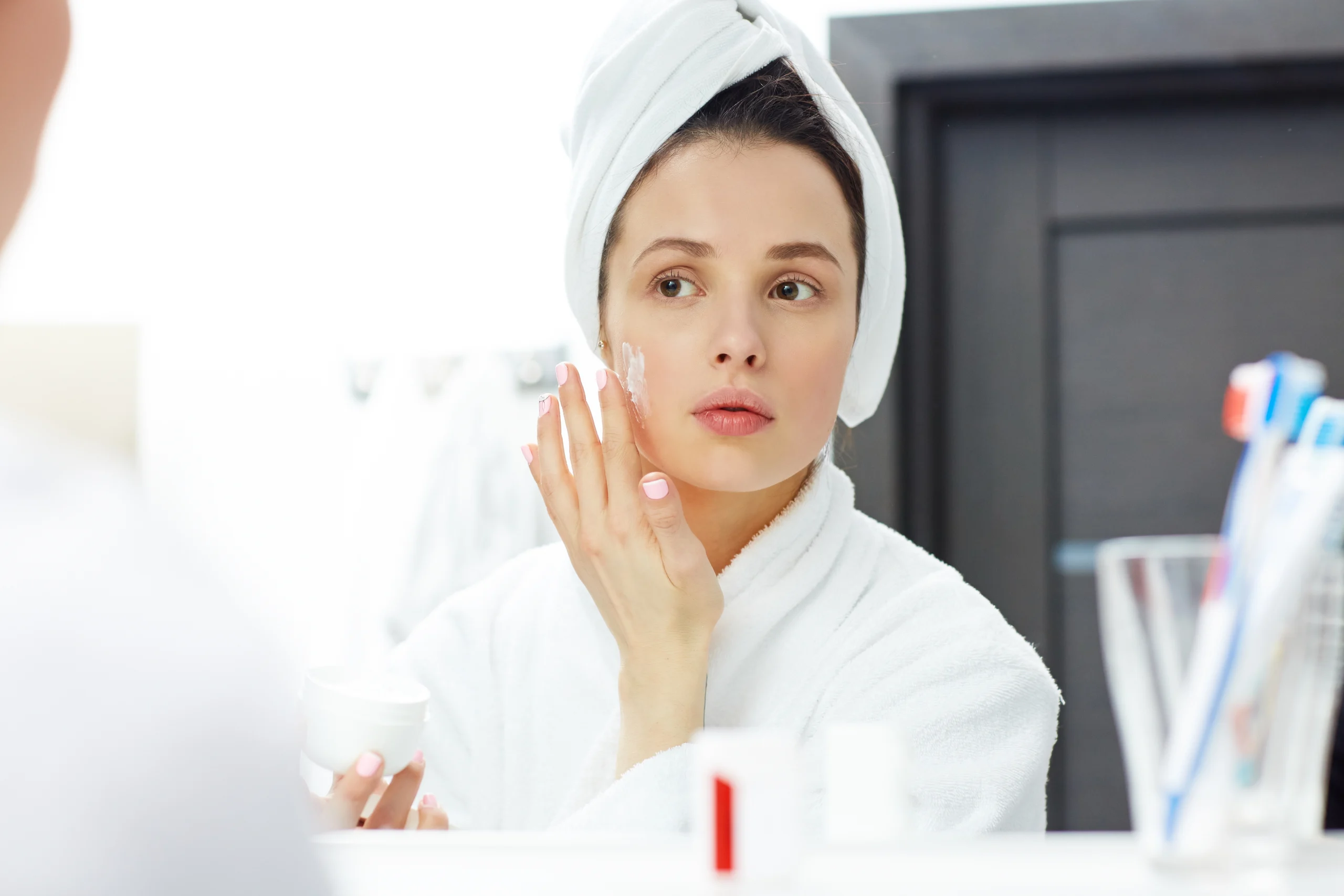
It is best to press the moisturizer into your skin rather than rubbing it in. Rubbing can irritate the skin, and it can also spread bacteria if you have acne. Press it in with your fingertips and let it absorb for thirty seconds.
The order is also important – it is best to apply the lightest products first and the thickest ones last. Apply a cleanser, a toner or an essence if you use one, a serum, and a moisturizer in that order. Wait for thirty seconds before applying the sunscreen in the morning. At night, you can be a bit more generous with the moisturizer, as there is nothing to interfere with its absorption.
Common mistakes
Some of these mistakes are mine, but there are also mistakes that other people make often.
Judging a moisturizer by how it feels right after applying it. A moisturizer that feels too heavy or oily is often full of alcohol, which evaporates quickly after application, leaving the skin feeling tight. A moisturizer that feels too light or watery may have a good consistency an hour or two after application.
Changing too many products at once. If your skin reacts badly to a new product, you will not be able to tell which one is the cause. It is best to change one product at a time and wait a month or two before changing anything else.
Not moisturizing in the summer. Air conditioning dehydrates the skin, so it is important to moisturize even in the summer. If you spend eight hours in an air-conditioned office, your skin is exposed to dry air for eight hours a day, regardless of the weather.
Thinking that expensive products are always better. Drugstore products are often just as good as expensive ones, and they are much cheaper. This is especially true for moisturizers, where the difference between most products is largely in their marketing.
Using a mattifying primer as a moisturizer. A primer is not a moisturizer, and it is not meant to be used as one. It is a makeup product, and it will not provide the same benefits as a moisturizer.
Not paying attention to the neck. It is not often an issue for oily skin, but it is still important to take care of it.
How long should I use a moisturizer before deciding that it does not work?
It takes about a month for the skin to respond to a new moisturizer in terms of hydration, and three months for it to respond in terms of oil production and breakouts. Skin cells turnover roughly every 28 days, so it is best to give a new product at least three months before deciding that it does not work.
The only exception is if the product irritates the skin, in which case, it should be discontinued immediately. Irritation is not the same as purging, and a product that irritates the skin should not be used for longer than a few days. Purging, on the other hand, is a normal response to a product that accelerates cell turnover, such as retinol or alpha hydroxy acids.
It usually lasts for a few weeks and should subside on its own. If a moisturizer irritates the skin, it should be discontinued immediately.
If you are unsure whether a product irritates the skin, patch test it on your inner forearm or the back of your ear for four or five days before using it on your face. It is not foolproof, but it should help you identify most irritants.
Does sunscreen count as a moisturizer?
Sometimes, and it is a convenient option for people with oily skin.
Many sunscreens, particularly Korean and Japanese ones, contain moisturizing ingredients that are beneficial for the skin. If you have oily skin and you find that a moisturizer and a sunscreen are too much for your skin, you can try using a hydrating sunscreen in the morning and a moisturizer at night. I have been using this method for years in the summer, and it has worked well for me.
However, a sunscreen is not a moisturizer, and it does not provide the same benefits as one. If your skin is dehydrated, it is best to use a moisturizer in the morning as well, regardless of the sunscreen.
Frequently Asked Questions
Does moisturizer make oily skin oilier?
The right moisturizer should not make oily skin oilier, but a heavy cream with occlusive butters may feel greasy and may clog the pores. Hydration does not increase oil production, but chronic dehydration often causes the skin to produce more oil to compensate. Gel and gel-cream moisturizers with niacinamide are the best options for oily skin.
Should I use moisturizer twice a day if I have oily skin?
It is best to use a moisturizer at night, and in the morning, it depends on the climate and the type of sunscreen. If the sunscreen is hydrating and the skin feels comfortable, it may be possible to forgo a moisturizer in the morning. If the skin feels tight after washing in the morning, a moisturizer is necessary.
Is oil-free moisturizer better for oily skin?
An oil-free moisturizer is generally better for oily skin, but some oils, such as squalane and rosehip oil, are lightweight enough to be tolerable for most people with oily skin. The term “oil-free” is not an industry standard, so it is best to look at the ingredient list and choose a moisturizer that does not contain heavy butters.
What is the best drugstore moisturizer for oily skin?
The best drugstore moisturizers for oily skin are CeraVe PM Facial Moisturizing Lotion and Neutrogena Hydro Boost Water Gel. They are both affordable and suitable for most skin types. Cetaphil, Simple, and Sebamed also have good moisturizers for oily skin.
Can I use hyaluronic acid serum instead of moisturizer?
Hyaluronic acid serum cannot be used as a moisturizer because it does not contain any occlusive or emollient ingredients. It may even dehydrate the skin if used on its own, especially in dry weather.