




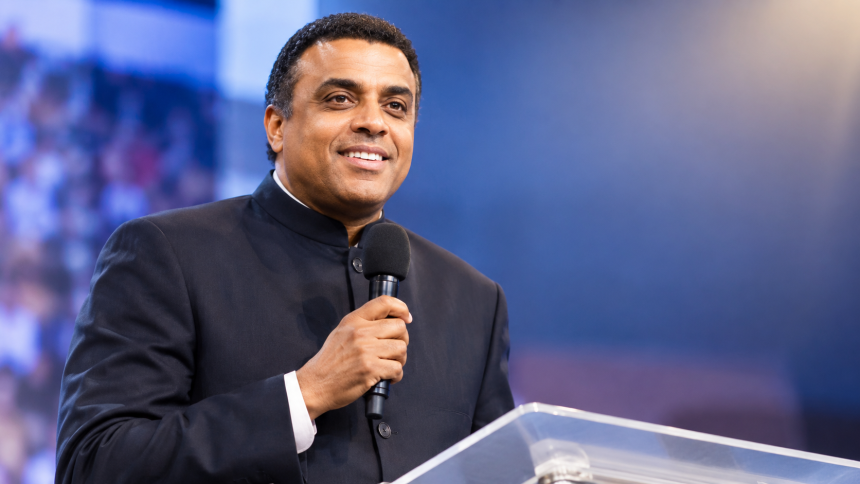
I’ll be honest with you upfront: nobody outside Dag Heward-Mills’ own accountants actually knows his exact net worth. Anyone who tells you a precise figure is guessing, and I’m not going to pretend otherwise.
What I can do is walk you through what’s actually documented about his ministry, his books, and his businesses and how those pieces add up to the estimates floating around online.
I’ve spent a good chunk of time digging through biography sites, church records, and old interviews for this one, and here’s the thing that struck me most: the net worth conversation around him gets treated like a settled fact when it’s really more of an educated guess stitched together from public numbers.
Why Does This Search Term Get So Much Traffic?
Before diving into the biography, it’s worth pausing on why “Dag Heward-Mills net worth” is even a common search in the first place because the answer says something about how these queries generally work.
Curiosity about a religious leader’s money tends to spike for a few predictable reasons: a viral sermon clip, a new book release, an anniversary of the church’s founding, or simply someone stumbling across one of the countless “richest pastors” listicles and wanting to check a specific name against it.
In this case, his sheer visibility millions of YouTube views, a massive book catalog, decades of international travel makes him a natural inclusion on those lists even without any single triggering news event. That’s a bit different from searches tied to a scandal or a lawsuit, where the intent is usually more pointed.
Here, it reads more like general curiosity about how far a self-made ministry can actually go financially, which is a fair question to ask about any large organization, religious or not.
Who Is Dag Heward-Mills, Really?
Before we even touch numbers, it helps to know where this man came from. He was born in London in 1963 to a Ghanaian father and a Swiss mother, and the family moved to Ghana not long after. He trained as a medical doctor at the University of Ghana Medical School that detail matters, because it tells you he had a stable, respected profession before ministry ever entered the picture.
He didn’t jump straight into full-time preaching either. In my experience reading founder stories like this, the ones that stick tend to start small, and his did too a classroom gathering he ran while still a medical student in the early 1980s, which grew into a group called Calvary Road Incorporated.
before eventually becoming Lighthouse Chapel International, officially named in 1987. He kept working as a hospital doctor for years while pastoring on the side, only stepping into ministry full time around 1991. That’s not the image most people have of a megachurch founder, but it’s the documented one.
His path into faith itself is worth a mention too. He attended Achimota School for secondary education, and it was there, through the Scripture Union a Christian student fellowship active in many Ghanaian schools that he says he was born again as a teenager.
In his own later writing, he’s credited the group with teaching him basic spiritual disciplines: keeping a daily quiet time, reading scripture consistently, fasting. That’s a fairly ordinary on-ramp into faith, honestly, which I find more believable than the more dramatic conversion stories some ministry biographies lean on.
A few personal details round out the picture: he married Adelaide Baiden in 1990, and the two now have four children together. He’s also the founder and chancellor of the Anagkazo Bible and Ministry Training Center in Ghana’s Eastern Region, which is where a good chunk of his organization’s pastors get trained before being sent out.
In 2023, he was named among the 100 most reputable Africans by Reputation Poll International a recognition that speaks more to public standing than to money, but it’s worth mentioning because reputation and wealth get conflated so often in these conversations.
A Quick Timeline of How the Ministry Grew
Numbers land better with a timeline behind them, so here’s the rough arc, stitched together from his own organization’s records and outside reporting.
He started a small Christian youth group called Calvary Road Incorporated in the early 1980s while still studying medicine. By 1985, that group had grown into what was then called The Lighthouse Chapel, meeting in a former cinema hall. The name changed to Lighthouse Chapel International in December 1989, the same week he married Adelaide Baiden.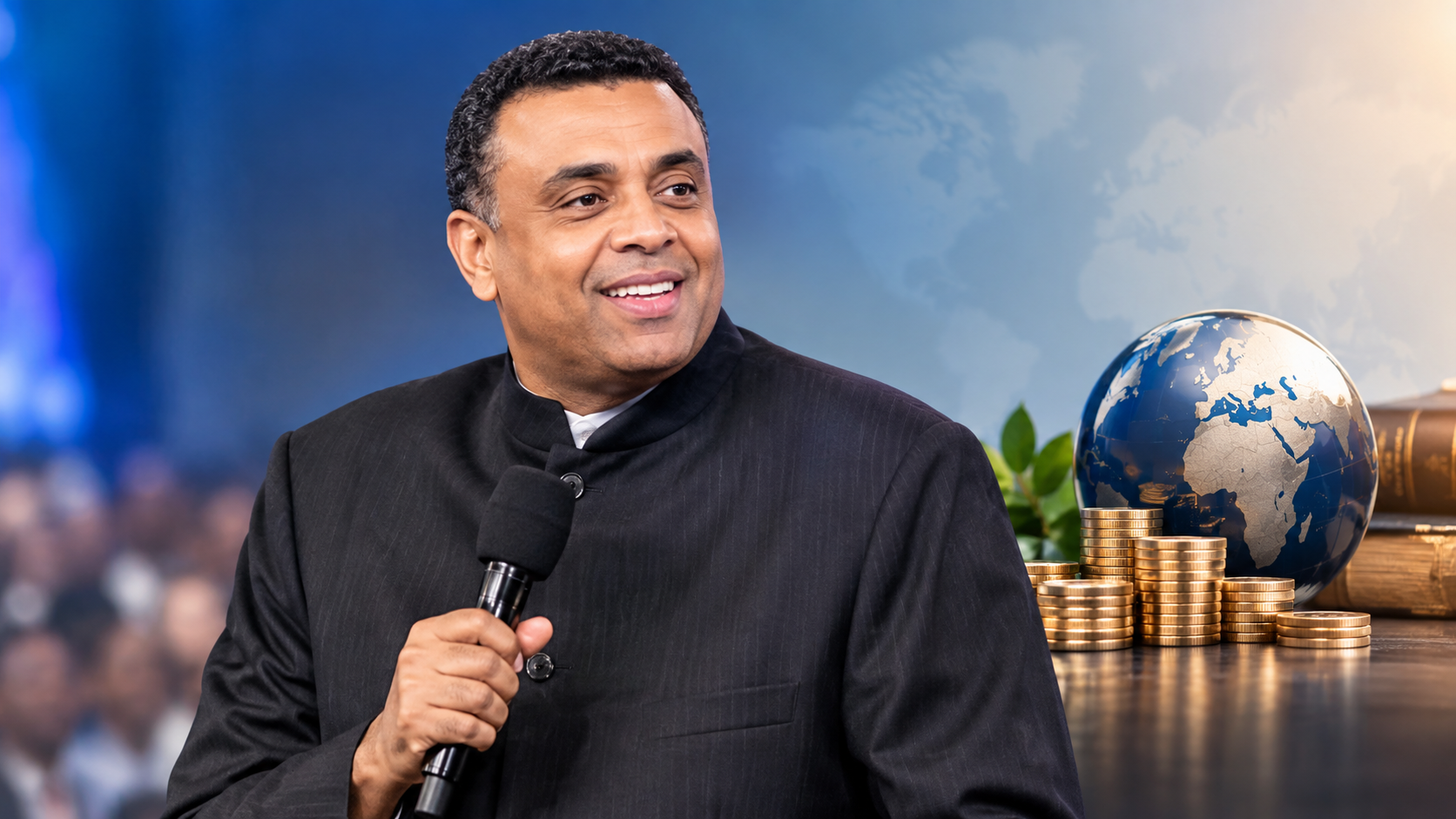
He was ordained in 1990 and consecrated as a bishop in 1996 by the International Ministerial Council of Great Britain a formal religious credential, not a financial milestone, but one that mattered for how the church positioned itself internationally afterward.
Through the 1990s and 2000s, the expansion accelerated: hundreds of church buildings across dozens of countries, the launch of the Anagkazo Bible school, and a growing publishing catalog. In 2011 he took on pastoring First Love Church, aimed specifically at university students, which was later reorganized in 2020 into what’s now called the United Organization of First Love Churches.
The umbrella organization was renamed again around the same period to the United Denominations Originating from the Lighthouse Group of Churches, reflecting just how many semi-independent branches and sub-organizations now sit under his leadership.
That structural sprawl is, honestly, a big part of why nailing down one clean net worth figure is so difficult you’re not looking at one entity, you’re looking at a federation of them.
How Big Is the Church He Built?
This is where the numbers actually get interesting, because unlike his personal finances, the church’s growth is fairly well tracked.
The scale, honestly, is hard to overstate
Lighthouse Chapel now operating under the name United Denominations Originating from the Lighthouse Group of Churches has built or acquired hundreds of physical church buildings across dozens of countries. Estimates on branch count vary wildly depending on the source and the year, ranging from a few thousand to figures north of five thousand.
He’s also trained close to two thousand pastors and sent out hundreds of missionaries over the decades. That’s not a side hustle. That’s an institution.
The headquarters tells its own story
The Qodesh, the church’s international headquarters in Accra, is regularly described as one of the largest church complexes on the continent. Big buildings cost real money, and that’s part of why net worth speculation attaches itself to him visible scale invites financial curiosity, fair or not.
The Healing Jesus Campaign angle
Alongside the church itself, he runs something called the Healing Jesus Campaign large open-air evangelistic events held across cities, towns, and even smaller villages, aimed at reaching what the organization describes as 100 million people with the gospel.
These campaigns are logistically expensive to run at scale stages, sound systems, travel, security, local coordination and they’re funded through the same donor and church network that funds everything else. It’s another data point for why estimators assume real money moves through this organization, even without a public ledger to check it against.
He’s also credited with writing more than 300 songs used across the church’s various congregations, which is one more small revenue thread album sales, streaming, licensing to affiliated churches layered on top of the books and the buildings.
What About the Books?
Here’s where I think a lot of the wealth assumptions actually come from, and it’s a reasonable place to look. Heward-Mills is genuinely prolific his publishing arm, branded The Makarios, is described as a library running to roughly 130 titles, and different sources put his total book count anywhere from 40 to over 100 depending on how you count reprints and compilations.
Circulation figures cited online range from around 30 million to more than 80 million copies, translated into dozens of languages.The subject range is wide too leadership, marriage, church growth, prayer, humility, demonology, pastoral ethics.
Titles like Loyalty and Disloyalty, The Art of Leadership, and How to Pray show up repeatedly as his best-known works, and on reader platforms like Goodreads his catalog runs into the hundreds of listed editions with a solidly high average rating. That’s not a vanity project; that’s an actual publishing operation with real production and distribution infrastructure behind it.
I’ll admit I’m a little skeptical of the highest circulation claims in my experience, self-published religious authors rarely have that kind of number independently verified, and “copies in circulation” often blends outright sales with free ministry distribution, which isn’t the same thing financially.
But even if you cut the estimate in half, that’s still a substantial publishing operation, and publishing at that volume does generate income, whether through direct sales, ministry distribution, or licensing to affiliated churches worldwide.
So What Do the Net Worth Estimates Actually Say?
Let’s get to the number everyone’s actually searching for.
The range you’ll see most often
Most biography and celebrity-net-worth sites cluster his estimated net worth somewhere between $1 million and $5 million, with $5 million showing up most frequently as the headline figure. A few outlets have grouped him among Africa’s wealthier pastors, though notably below the highest-profile names in that conversation.
Why I don’t treat that number as gospel
None of these figures come from tax filings, audited financial statements, or anything close to a primary source. They’re built from a mix of visible assets buildings, book sales, ministry footprint run through someone’s back-of-envelope math.
That’s not a knock on the researchers; it’s just the nature of estimating wealth for a religious leader who, like most in his position, doesn’t publish personal financial statements. Treat the number as a rough ballpark, not a bank statement.
Media income is a smaller piece than you’d think
One thing that surprised me digging into this: his YouTube channel, despite millions of views, is estimated to generate a relatively modest amount in ad revenue figures I found put lifetime earnings in the low tens of thousands of dollars, not the windfall you might assume from a channel with that reach. That’s a useful reminder that visibility online doesn’t automatically translate into personal wealth at scale.
How Does He Compare to Other African Pastors?
Short answer: he’s often mentioned in the same conversations as some of the continent’s wealthiest religious leaders, but the estimates put him well behind names associated with private jets and multimillion-dollar real estate portfolios. He shows up on “richest pastors” lists, sure, but usually in the middle of the pack rather than at the top.
The names that usually top these lists
Bishop David Oyedepo of Nigeria’s Living Faith Church (Winners Chapel) is the name that comes up first almost every time, with widely circulated estimates putting him around $150 million and reports of him owning multiple private jets and two universities.
Pastor Enoch Adeboye of the Redeemed Christian Church of God shows up next, with estimates commonly cited between $55 million and $110 million depending on the source and year. Shepherd Bushiri, the Malawian-born preacher now based in South Africa, gets similar $150 million estimates tied to a wider network of businesses rather than just the church itself.
A couple of other names round out these lists for context: Pastor Chris Oyakhilome of Christ Embassy is regularly cited somewhere in the $30–50 million range, tied to a large media operation and international real estate.
Matthew Ashimolowo of Kingsway International Christian Centre in London gets a much more modest figure by comparison, with some estimates pointing to an annual ministry income in the low hundreds of thousands rather than a multimillion personal fortune a useful reminder that not every well-known international pastor lands in the same wealth bracket, even within the same broad “prominent African-founded church” category.
Set next to those numbers, the $1–5 million range attached to Heward-Mills looks almost modest which is a genuinely useful bit of context, because headlines about “Africa’s richest pastors” tend to get applied to the whole category without distinguishing between a $150 million estate and a $5 million one.
Those are very different financial realities, even if both get filed under the same “wealthy megachurch pastor” narrative.
Why I’d still take every figure with a grain of salt
Here’s why it matters to me: every single one of those comparison numbers Oyedepo’s, Adeboye’s, Bushiri’s, and Heward-Mills’ comes from the same kind of unaudited, listicle-driven estimation. None of these men publish personal balance sheets.
So when I say he’s “less wealthy” than his Nigerian counterparts, I mean less wealthy by the same rough, unverified yardstick, not according to some independently confirmed accounting. Lumping every prominent pastor into one “prosperity gospel millionaire” bucket flattens real differences in scale, lifestyle, and how transparent each one is about money — but comparing rough guess to rough guess is still just comparing guesses.
Why African Megachurch Finances Stay So Murky
This is a bit of a tangent, but I think it’s the tangent that actually explains everything above, so bear with me.
Independent churches across West and Southern Africa Heward-Mills’ included generally operate outside the kind of financial disclosure rules that apply to publicly traded companies or registered charities in countries with stronger oversight regimes.
Tithes, offerings, book royalties, and building funds often flow through a mix of personal and institutional accounts, and in many jurisdictions there’s no legal requirement to separate “the church’s money” from “the founder’s money” in a way outsiders can audit.
That’s not necessarily evidence of wrongdoing plenty of pastors keep clean books internally it’s just structurally why nobody outside the organization can produce a real number.
In my experience covering this kind of topic, journalists and researchers who’ve tried to pin down exact figures for prominent African pastors almost always end up doing the same thing these biography sites do: estimating from visible assets buildings, vehicles, media reach because that’s literally the only data available from the outside. The number you read in any “net worth” article, mine included, is downstream of that same limitation.
How Do Sites Even Calculate These Estimates?
I promised I wouldn’t just hand you a number without explaining where it comes from, so here’s the actual methodology or lack of one behind most net worth figures you’ll find for a pastor like this.
Asset spotting, not accounting
Most of these estimate sites work backward from visible signs of wealth: the size and number of church buildings, the scale of the book catalog, media presence, reported vehicles, and public statements about the ministry’s reach. None of that is a balance sheet.
A large building owned by a church isn’t automatically personal wealth for its founder, and a bestselling book doesn’t tell you the royalty split between the author and the publishing arm. The estimate is really a proxy for “this person clearly has access to significant resources,” rounded into a dollar figure that reads cleanly in a headline.
Why round numbers dominate
You’ll notice almost every figure in this space lands on a suspiciously round number $1 million, $5 million, $150 million. That’s not a coincidence; it’s a symptom of the estimation method.
When there’s no hard data, writers anchor to a plausible-sounding range and round for readability. Once one site publishes a number, it gets copied by the next, and the next, until the estimate looks more authoritative simply from repetition than from any new evidence backing it up.
The Prosperity Gospel Backdrop
You can’t really talk about net worth and African megachurch pastors without touching this, so let me lay it out fairly rather than picking a side.
Heward-Mills is often discussed in the same breath as prosperity-gospel-associated preachers, though his own teaching emphasis going by his book titles and public sermons leans more toward leadership, loyalty, and pastoral conduct than the explicit “give money, receive wealth” framing associated with the most prominent prosperity preachers.
Critics of the broader movement argue that framing personal financial success as a sign of spiritual favor creates pressure on congregants, particularly poorer ones, to give beyond their means, and that it blurs the line between a pastor’s personal wealth and the congregation’s collective resources.
Defenders counter that successful ministries naturally generate legitimate income through books, media, and donations, that visible success can be an effective evangelistic tool in cultures where poverty carries real stigma, and that scrutiny of pastors’ finances is applied unevenly compared to other public figures.
I’m not going to adjudicate that debate here it’s a genuinely contested question with reasonable people on both sides, and it deserves its own deep dive rather than a paragraph in a net worth explainer. But it’s the backdrop against which every one of these estimate articles gets written and read, so it’s worth naming directly instead of pretending the numbers exist in a vacuum.
Financial Controversies Worth Knowing About
If you’re researching his finances specifically, a couple of real, reported disputes are worth knowing about not because they settle the net worth question, but because they’re the closest thing to concrete financial friction on record.
The pension contribution dispute
In 2021, six former pastors of the church publicly accused the organization of failing to make required SSNIT (Ghana’s social security) contributions on their behalf during their years of service a claim that, if accurate, points to gaps in how the church handled formal employment obligations for its clergy.
Heward-Mills responded with a brief public statement rather than a detailed rebuttal, and I haven’t found a documented resolution or independent audit of the claim either way.
The comment about paying musicians
Around the same period, remarks he made about not paying church musicians drew public criticism from at least one prominent Ghanaian musician, who called the position unfortunate.
It’s a smaller story than the pension dispute, but it fits the same pattern questions about how money and compensation move through a large, multi-country religious organization, raised by people who worked inside it.
Neither story gives you a number to plug into a net worth calculation. What they do is add useful texture: an organization this size inevitably generates internal financial friction, and the fact that some of it becomes public is arguably a healthier sign than total silence would be.
A Quick Note on Taking These Numbers Seriously
I’d be doing you a disservice if I didn’t say this plainly: net worth figures for religious leaders are among the least reliable numbers on the internet. They get copied from site to site, rounded for headlines, and rarely updated with anything new.
If precision actually matters to you for research, journalism, or just personal curiosity treat every number in this piece, including mine, as an estimate pulled from public reporting, not a verified fact.
What Would a Rough Estimate Actually Require?
Just to make the uncertainty concrete rather than abstract, let’s walk through what you’d actually need to know to produce a real number not to land on one, but to show why nobody has.
You’d need his personal share of book royalties versus what flows to the ministry’s publishing arm, which isn’t public. You’d need to know whether church-owned property the Qodesh, hundreds of buildings across dozens of countries is legally held by the denomination as an institution or by a personal trust connected to him, which changes whether it counts as “his” net worth at all.
You’d need his personal bank holdings, any investments outside the ministry, and his actual annual compensation or stipend from the church, none of which is disclosed anywhere I could find. And you’d need to net out debt building projects at this scale are rarely paid entirely in cash, and loan obligations against church property would reduce any real net worth figure, not just the gross asset value.
Every single one of those inputs is missing from the public record. That’s not a criticism specific to him it’s true of nearly every independent church leader operating in a country without mandatory financial disclosure for religious organizations. It just means the $1–5 million figure you’ll see everywhere is, at best, an outside guess at the asset side of that equation, with none of the debt or ownership-structure questions actually answered.
Final Thoughts
At the end of the day, the honest answer is this: Dag Heward-Mills likely sits somewhere in the low millions by most public estimates, built on decades of church expansion, a large book catalog, and a global ministry footprint but nobody outside his own circle has the real number. I’d rather give you that honest uncertainty than a confident figure I can’t actually back up.
What I think is actually more interesting than the dollar figure is the institution behind it a medical doctor who built one of the more far-reaching independent church networks to come out of Ghana, largely without the kind of jet-and-mansion imagery attached to some of his regional peers.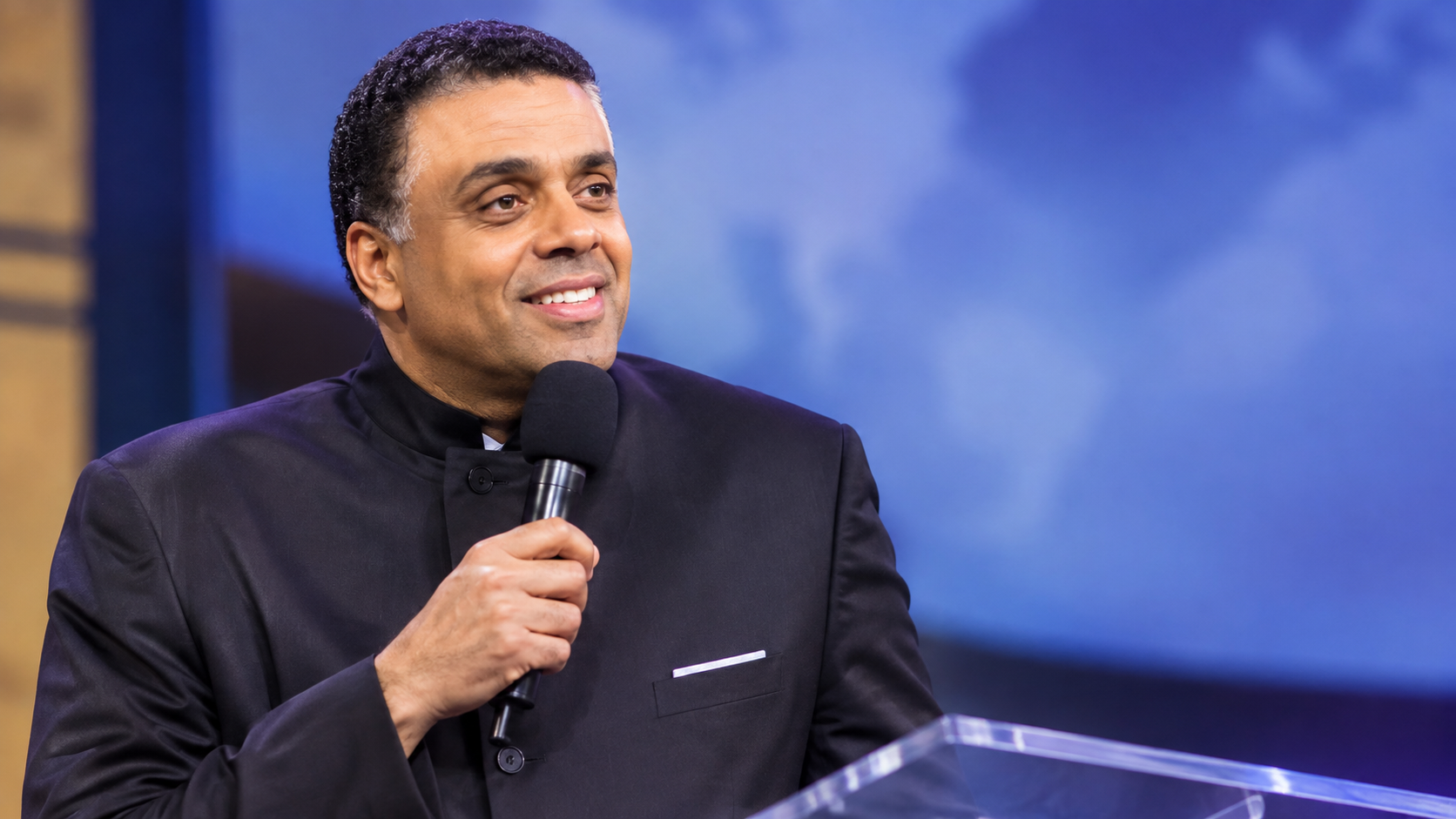
Whether that reflects genuinely different financial choices or just a less aggressive public relations strategy, I honestly can’t tell you from the outside, and neither can anyone else writing about this topic. If you’re researching him for something specific — journalism, academic work, or just personal curiosity I’d lean on the primary sources listed below rather than any single “net worth” listicle, mine included.
Frequently Asked Questions
What is Dag Heward-Mills’ estimated net worth?
Public estimates typically range between $1 million and $5 million, with $5 million cited most often. There’s no verified, audited figure available publicly.
How did Dag Heward-Mills build his wealth?
Primarily through decades of church growth, publishing more than 40 books, and running a global ministry network with hundreds of physical buildings.
Is Dag Heward-Mills still a practicing medical doctor?
No. He trained and worked as a doctor early in his career but transitioned fully into ministry decades ago after Lighthouse Chapel grew significantly.
How many books has Dag Heward-Mills written?
Sources vary, citing anywhere from around 40 to over 100 titles, covering topics like leadership, marriage, and church growth.
How does his net worth compare to other African megachurch pastors?
He’s generally estimated to be less wealthy than the continent’s highest-profile prosperity preachers, sitting more in the middle tier of published “richest pastors” lists.
Why is it so hard to find an accurate net worth figure for pastors like him?
Independent churches in most African countries aren’t required to publish audited personal financial statements for their founders, so every public estimate is built from visible assets rather than actual accounts.
Does Dag Heward-Mills make significant money from YouTube?
Not really, by most estimates. Despite millions of views, publicly cited figures put his channel’s lifetime ad revenue in the tens of thousands of dollars, not a major income source relative to the size of his ministry.
Does Dag Heward-Mills own the church buildings personally?
This isn’t publicly clear. Large church properties are typically held by the denomination as an instituition rather than by an individual, but ownership structures for independent African churches are rarely disclosed in detail.
Is Dag Heward-Mills associated with the prosperity gospel movement?
He’s sometimes grouped with prosperity-associated preachers because of his church’s scale, but his own teaching focus based on his book titles leans more toward leadership and pastoral conduct than explicit wealth-and-faith messaging.
Dag Heward-Mills — Wikipedia, the University of Ghana Alumni Relations Office biography, and reporting from MyJoyOnline and YEN.com.gh.
Net worth figures are drawn from publicly available estimate sites and should be treated as unverified approximations rather than confirmed financial data.