



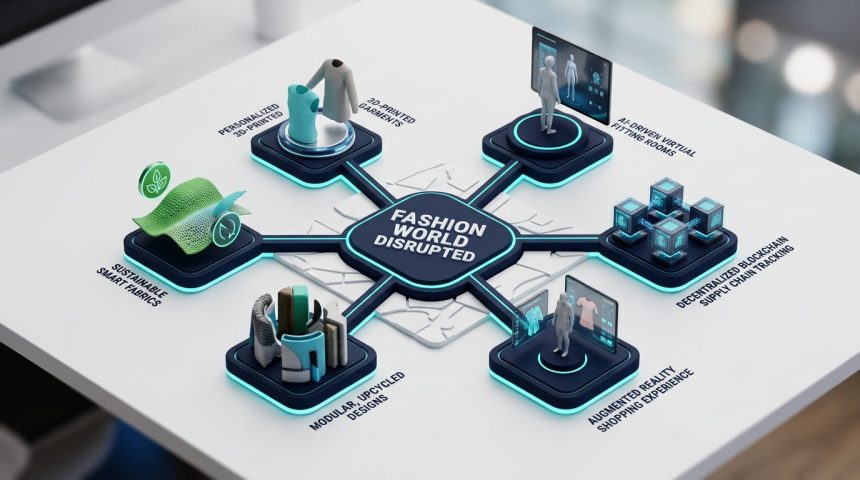
You want to know what’s actually happening in the fashion world right now? Forget the runway glamour for a second. The industry’s getting shaken up in ways that matter to investors, retailers, and anyone with a closet. I’ve been watching this space long enough to see patterns that most headlines miss, and honestly, this moment feels different.
The fashion industry isn’t just evolving it’s fracturing. Some segments are printing money while others are fighting for relevance. The gap between what’s working and what’s dying has never been wider. That’s either terrifying or thrilling depending on where you’re positioned.
The numbers don’t lie though. According to recent analysis on luxury groups like LVMH and Hermès approaching 2026 with caution, the market’s uncertainty is real. Revenue declined 5% to €80.8 billion for LVMH in 2025, with net profit dropping 13%. But here’s the thing this isn’t a collapse. It’s a restructuring. And restructurings create opportunities for people paying attention. fashionnetwork
The Sustainability Shift That Actually Stuck (Unlike Past Promises)
Here’s what I’ve noticed: sustainability stopped being a marketing gimmick around 2024. It became a business requirement. Luxury brands aren’t suddenly virtuous they just realized their customers actually care now, and they’ll vote with their wallets if you don’t.
According to research on luxury consumer behavior, six out of ten consumers now incorporate sustainable development into their purchasing decisions, with 80 percent believing that luxury fashion houses should commit to product life-cycle management beyond production and sales. That’s not niche. That’s mainstream .the-ethos
The numbers back this up. Consumers aged 18-35 will straight-up abandon brands that greenwash. They’ll research the supply chain, check labor practices, verify material sourcing. This wasn’t true five years ago. Back then you could slap an “eco-friendly” label on something mediocre and call it a day.
Now? You need the receipts. Literally.
Brands investing real capital into sustainable practices are seeing better margins, not worse ones. Recycled materials cost less than virgin materials when you buy at scale. Ethical factories in developed countries have lower turnover, which means better quality and fewer recalls. The business case for sustainability stopped being theoretical around 2025.
Fashion companies that resisted? They’re bleeding market share. The ones that went all-in are actually gaining. Wild timing, honestly. Most business improvements take years to show up in the bottom line. Sustainability’s different the payoff’s almost immediate.
Secondhand Becomes Mainstream (Not Niche)
I used to work at a luxury retailer. Mentioning secondhand inventory would’ve gotten laughed out of the room. Now? It’s 15-20% of total volume for smart brands, and it’s growing faster than new inventory.
The resale market is massive and getting bigger. Secondhand sales are growing nearly three times faster than in other sectors, with expected market value to tick past $82 billion by 2026, nearly doubling over 2021’s figures.
Companies like Vestiaire Collective and Rebag aren’t cute side projects anymore they’re serious revenue channels. Luxury houses are launching their own certified pre-owned programs because they realized something: secondhand sales don’t cannibalize new sales. They actually expand the addressable market. the-ethos
Someone who buys a $3,000 pre-owned designer bag? They’re now engaged with the brand. They’ll eventually buy new pieces. The resale platform is the gateway drug to full loyalty. Plus you’re selling something that has 60-80% margin because you already made the piece years ago.
The shift’s created a weird dynamic though. Fashion world investors need to rethink valuation models. Revenue from secondhand isn’t the same as revenue from new different margins, different patterns, different customer psychology. Analysts still struggle with this. They undervalue the strategic importance of owning the resale channel.
What’s Driving 2026 Fashion Trends
The fashion world in 2026 is experiencing a blend of nostalgia and innovation. The 2024-2025 fashion landscape shows a captivating blend of classic elegance and innovative designs, with a renewed focus on sustainability and individual expression, featuring bold color palettes, innovative fabric choices, and striking silhouettes. illinois
What’s fascinating is how fragmented consumer preferences have become. There’s no single trend anymore there are several competing aesthetics, each with dedicated followings. Y2K nostalgia’s huge with younger consumers. Bohemian chic’s making a comeback. Athletic wear continues dominating casual wardrobes. Sustainability’s no longer optional it’s baseline.
The luxury sector’s responding differently than mass market. Premium brands are focusing on heritage, craftsmanship, and exclusivity. Mass market’s stuck between fast fashion (unsustainable but profitable short-term) and sustainable positioning (expensive to implement but required for future relevance).
Mid-market retail’s getting crushed in the middle. They can’t compete with luxury on prestige or fast fashion on price. Finding their positioning has become critical and painful.
Direct-to-Consumer Is Consolidating (Winners and Losers Emerging)
Everyone and their cousin launched a DTC brand in 2019. Most of them are gone now. The ones surviving? They’re not just surviving they’re thriving at scales that would’ve seemed impossible.
Here’s the thing: DTC looked easy when acquisition costs were cheap. You’d spend $2 to acquire a customer worth $50 in lifetime value? Slam dunk. Then cost-per-acquisition quintupled. Suddenly your math doesn’t work.
DTC fashion brands that made it through have brutal operational discipline. They obsess over unit economics. They don’t spend money on vanity metrics. They’ve built real logistics infrastructure instead of relying on dropshipping. They know their customer acquisition cost down to the penny.
The ones that didn’t make it? They’re still burning investor money trying to be the next Warby Parker. They’re competing on brand, not value. That’s a losing game when you’ve got no moat.
Consolidation’s happening quietly though. Larger DTC players are acquiring smaller ones, rolling them into their infrastructure, cutting the duplication. The market’s correcting toward fewer, stronger players. Better for everyone honestlyretail’s more efficient when you’re not bleeding capital.
AI’s Actually Changing How Clothes Get Made
This one’s not hype. AI’s moved from “future thing” to “operational reality” in fashion manufacturing.
Predictive analytics on fabric waste? Companies are cutting waste by 20-30% using machine learning models that optimize cutting patterns. That’s not negligible when you’re running production at scale. Fashion world manufacturers who adopted this stuff early are seeing real competitive advantages.
Design assistance AI is weirder but more useful than people expect. It’s not replacing designers it’s making them faster. A designer who used to spend a week on variations now spends a day. AI generates dozens of options based on trend analysis and historical sales data. The designer picks the best ones, refines, ships.
Quality control via computer vision? Same thing. Defect detection that used to require human inspection is now automated. Catches things humans miss. Speeds things up. Cuts cost.
The catch is you need capital to implement this stuff. Smaller companies can’t access it yet. Creates a widening gap between scaled players and smaller makers. Fashion companies with resources are pulling further ahead.
Micro-Trends Are the New Normal (Fast Fashion’s Final Form)
Fast fashion used to mean quarterly cycles. Now it’s weekly. Actually, it’s daily for some brands.
TikTok trends spike, die, and resurrect in the span of a month. Fashion world brands that can’t respond at that speed get left behind. Shein doesn’t win because they’re ethical (they’re not) or sustainable (they’re not). They win because they go from trend identification to warehoused inventory in 14 days. Competitors take 6-8 weeks minimum.
This creates chaos in supply chains. You need flexibility, agility, and massive inventory management systems. You’re predicting demand on products that didn’t exist three months ago. Forecast accuracy is impossible. You just produce volume and hope.
The environmental cost is disgusting, which is why this model’s days are numbered. But it’s printing money right now. Investors backing these companies are making returns while fundamentals deteriorate. That’s a temporary situation.
Smaller brands are finding an angle though. They’re slow in a different way deliberately artisanal, limited drops, high margins. The premium positioning makes the slower pace part of the brand story. Works better than it should.
Luxury Brands Are Actually Winning (For Now)
Here’s something that doesn’t get talked about enough: luxury’s crushing it.
While fast fashion’s caught between unsustainable growth and environmental pressure, luxury’s in a sweet spot. Margin structure protects them. Customer loyalty is deep. They can afford to be selective about production and distribution. The fashion industry’s wealth concentration is real, and luxury brands are benefiting.
According to recent market analysis, France’s luxury fashion market is experiencing strategic recalibration with an estimated market size of €22-24 billion projected for 2026, growing at a compound annual growth rate of 4-5%, with LVMH maintaining market capitalization of $276.26 billion and Hermès at $225.63 billion. sourceready
Hermès, LVMH, Kering these companies are seeing demand that seems detached from economic reality. When the general consumer’s tightening their budget, luxury consumers are increasing spend. It’s weird, but it’s real.
The strategy’s sophisticated too. Limited production creates scarcity. Scarcity creates demand. Demand justifies price increases. It’s a cycle that works as long as brand cachet holds. And luxury’s gotten really good at protecting brand.
Small independent luxury makers are struggling though. They don’t have the infrastructure or the scale of LVMH. Retail partners want size and stability. Indies can’t compete on those dimensions.
Generational Shift Is Rewiring What People Buy
Gen Z and younger millennial fashion preferences are not what older millennial retailers expected.
They don’t care about trend cycles the same way. They’ll wear the same outfit repeatedly without shame. They’re mixing luxury with thrift without irony. They’re building identity through individual curation instead of brand conformity.
Fashion world businesses built on seasonal trends and brand loyalty are struggling. Businesses built on enabling individual expression are thriving. That’s the insight most retailers missed.
This shifts spending patterns in weird ways. Less money on basics (they’ll thrift). More money on statement pieces. Less on trends (they fade too fast). More on quality pieces they’ll actually keep. Different inventory mix entirely.
Retailers who grasped this early are seeing different unit economics. Higher price point per item. Lower volume but better margins. Different customer acquisition strategy. Different retention patterns.
The ones who didn’t adapt? They’re still producing seasonal collections for nobody.
Metaverse Fashion Is Real, But Not the Way Anyone Expected
Remember when everyone was hyping virtual clothing? Yeah, that mostly didn’t happen.
But here’s what did happen: digital fashion became real revenue. Not in immersive worlds in social platforms. Skins for games, digital-only pieces for social apps, filter fashion, AR try-ons. Fashion brands are making genuine money from digital-only products.
It’s not the sci-fi vision we imagined. No metaverse empire. Just smart monetization of digital space. Someone buys a $30 digital outfit for their game avatar. Margin’s probably 90%. Scales infinitely.
Luxury’s been smartest here. They’re producing limited digital drops of pieces that don’t exist physically. Creates hype around physical releases. It’s marketing that people pay for.
Some brands are experimenting with physical-digital hybrids. Buy a physical piece, get the digital equivalent. Adds value without much cost. Works surprisingly well.
The volume’s still small compared to physical retail. But growth rate’s spooky.
The Used Clothing Import Crisis (And Who Benefits)
Here’s something that matters for investors: used clothing imports are destroying local textile industries in developing economies.
Western countries export used clothing at volume. Poor countries can’t compete because they’re flooded with $1 hangers of Western secondhand. It kills local manufacturing. Sounds like a story about exploitation, but fashion world companies actually benefit from the chaos.
They get cheap labor, minimal environmental regulation, undercutting margins. The race to the bottom continues. It’s unsustainable, obviously. But economically efficient in the short term.
Policy’s starting to address it though. Some countries are banning secondhand imports. Creates opportunity for local manufacturing to revive. Which means opportunity for companies to establish regional supply chains. Could be disruption or it could be rebalancing. We’ll see.
Rental, Subscriptions, and the Ownership Debate
Clothing rental’s been “the future” for like seven years. It’s still struggling because the unit economics don’t quite work.
Fashion rental works for special occasions (rent a dress for an event, return it). It doesn’t work for everyday wear because logistics costs exceed customer willingness to pay. You can charge $30/month for 3-4 items. It costs you $15 to launder and ship each item each time.
Subscriptions are different. Stitch Fix and similar work because they’re curating + shipping, not managing inventory in rotation. Margin structure is better. But the business is still small relative to overall retail.
I think we’ll see hybrid models win. Rent for one-time events, buy for everything else. Or subscribe for curation but ship less frequently. The pure-play rental vision didn’t pan out, but elements of it are working.
Retail Real Estate Is Finally Restructuring
Malls are dead. Everyone knew that. But the restructuring took longer than expected.
Luxury retail’s moving to street-facing locations. Flagship experiences in major cities. Fewer but bigger stores. Much higher productivity per square foot.
Mid-market retail’s consolidating heavily. Department stores are bleeding (RIP). Specialty retail’s found pockets that work. Fashion retail footprint is shrinking but becoming more efficient.
The real opportunity’s in secondary markets. Major cities are oversaturated. Small cities and mid-tier metros have actual customer demand with competitive undersupply. Smart retailers are taking that route.
Real estate investors benefited from the chaos. Prices compressed, then selected properties rebounded. Few people made money on both transitions, but someone did.
The Luxury Goods Sustainability Performance Gap
Here’s an uncomfortable reality: luxury brands talk about sustainability constantly but their actual environmental impact is massive.
Luxury items are made to last, which is genuinely better than fast fashion. But they’re made from expensive materials, often in smaller batches with higher waste. The transportation costs (air freight for time-sensitive pieces) is brutal.
Fashion world luxury companies have better stories than actual impact. They’ve mastered ESG communication without transforming operations at scale. Investors buying the narrative might be disappointed when they dig into reality.
The ones with genuine operational transformation? They’re not the ones shouting about it loudest. Interesting pattern. Usually the opposite’s true.
According to recent luxury industry reporting, the fashion industry is now facing paradigm shifts with consumers increasingly expecting luxury fashion houses to show responsibility beyond production and sales. But talk and action remain separated. the-ethos
Why Employment Patterns Are Shifting
Fashion manufacturing is getting automated or relocating simultaneously. Not one or the other.
High-value items are moving toward nearshoring (produced closer to markets) and automation. Lower-value items are moving to lower-cost countries with better automation infrastructure. Middle-tier manufacturing is getting squeezed.
Fashion industry employment’s shifting toward design, e-commerce, and customer experience roles. Away from traditional manufacturing. Away from retail floor roles. Different skill requirements entirely.
This creates regional disruption that’s not really discussed. Towns built around textile manufacturing are getting hollowed out. Urban e-commerce hubs are expanding. Population’s redistributing based on which fashion jobs exist where.
Financial Performance Divergence (The Numbers Tell a Story)
Stock performance in fashion world companies is wildly divergent right now.
Luxury conglomerates are trading near all-time highs. Mid-market retail is getting destroyed. DTC darlings are collapsing then recovering. Fast fashion is growing revenue while margins compress. Specialty retail is finding pockets of strength.
The usual correlations broke down. You can’t predict fashion stock performance based on overall retail trends anymore. It’s too segmented.
Investors need to think about fashion differently. It’s not one market. It’s five different markets with different dynamics, different economics, different futures. Mixing them up costs money.
The Counterfeit Problem (And Why It Matters)
Counterfeit apparel costs legitimate brands billions. But more importantly, it’s actually good for luxury brands in a weird way.
Counterfeits create hype. Someone wearing fake Hermès is signal-boosting Hermès. The counterfeit industry is the world’s largest marketing engine for luxury. Free awareness that actually drives demand.
This creates perverse incentives. Luxury brands could probably eliminate counterfeits if they tried (tech exists). They don’t, because counterfeits drive demand for authentics.
Fashion world doesn’t talk about this openly, but smart investors understand it. Counterfeit volume is correlated with authentic demand. When counterfeit production ramps up, it usually precedes authentic demand spikes.
The Next Five Years: What’s Coming
Looking ahead, three things seem certain: sustainability becomes mandatory (not optional), consolidation accelerates (weak players exit or get absorbed), and digital integration deepens (but not in the metaverse way people expected).
What’s uncertain is how fast these changes happen and who adapts quickly enough. Fashion’s been disrupted before. It’ll get disrupted again. The winners will be companies that understand their customer, maintain operational discipline, and accept that yesterday’s strategy won’t work tomorrow.
FAQs
Is luxury fashion a good investment right now?
Yeah, but you need to pick carefully. LVMH and Hermès are expensive but justified. Smaller luxury holdings are riskier. Luxury’s holding up better than mass-market retail, but valuations are stretched. Entry point matters way more than you think.
Will secondhand fashion destroy new sales?
No. Resale expands the market. Someone buying used gets comfortable with the brand, eventually buys new. It’s funnel top-of-funnel. Revenue structure changes but total market expands. Smart brands are partnering with resale platforms instead of fighting them.
Is fast fashion dying?
Slowly. Economic pressure and environmental regulation will eventually kill it. But probably 5-10 years out. Growth markets still driving volume. But financial returns are deteriorating. Profitability’s declining even as revenue grows.
Should I invest in DTC fashion brands?
Only the profitable ones. Most DTC companies are still burning money. The winners have real unit economics and disciplined spending. The losers are expensive mistakes dressed up as innovation. Check their CAC (customer acquisition cost) and LTV (lifetime value) ratio before investing.
What’s the next big shift in fashion?
Probably localization of manufacturing. Supply chain consolidation near markets. Less global shipping. Higher regional variation. More complexity but better resilience. Companies investing in nearshoring right now will have massive competitive advantages by 2028.
Real talk: The fashion world is in transition, and that creates opportunity for people paying attention. The old rules don’t apply the same way. Luxury’s winning, fast fashion’s struggling, sustainability became table stakes, and technology’s quietly reshaping operations.
If you’re investing in fashion, understand which segment you’re actually buying into. Don’t assume the whole industry moves together it doesn’t. Pick your thesis, understand the economics, and know your exit.
The industry’s got another few years of exciting disruption ahead. Could be chaos or clarity depending on your position. But one thing’s certain: it won’t look the same in 2028 as it does right now. Smart investors are positioning for that shift today.